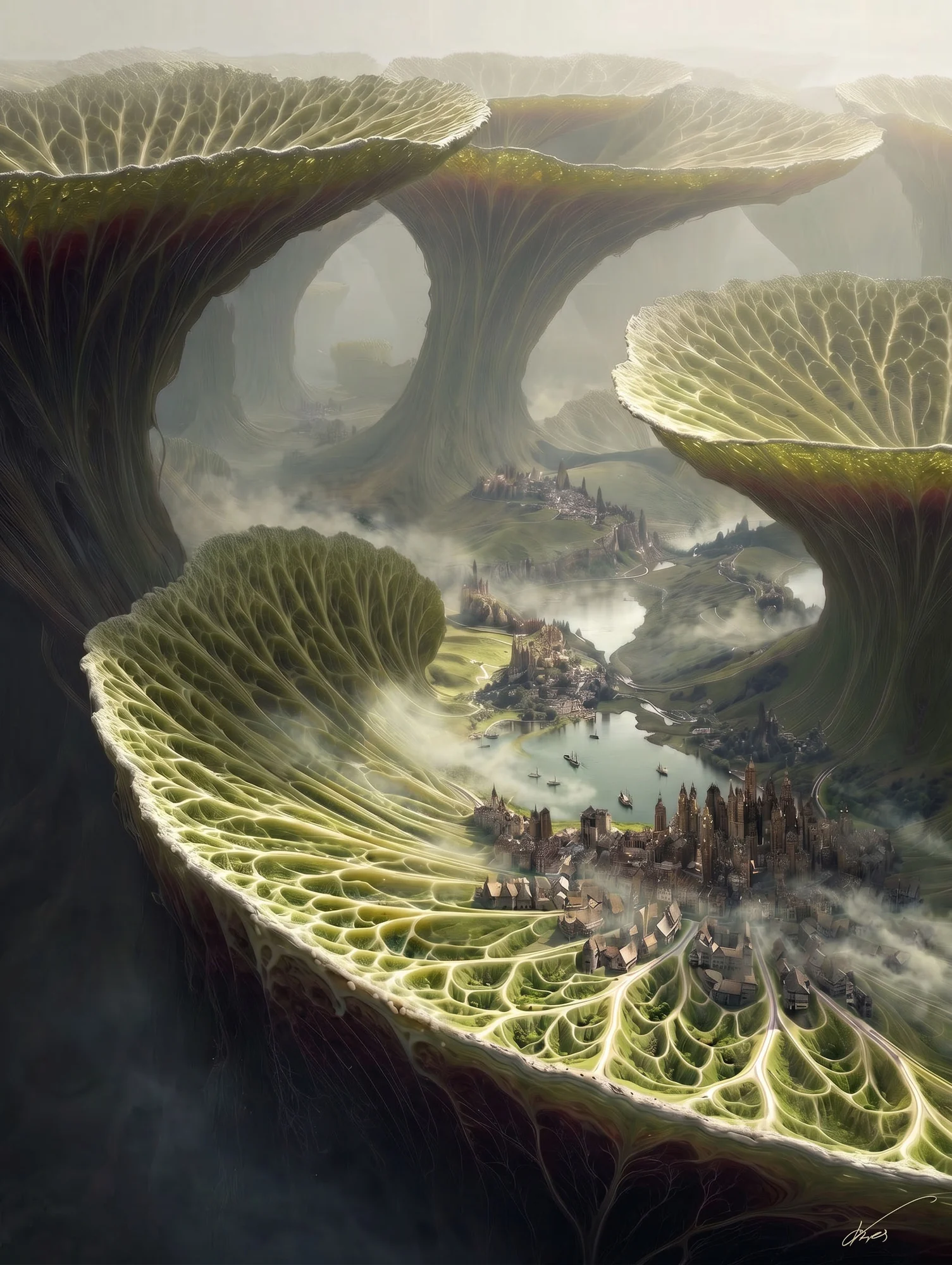
World 01 · Megaflora Planet
Chloris IV
Biomorphic landscape where plant organisms replace mountains, cliffs and natural city structures.
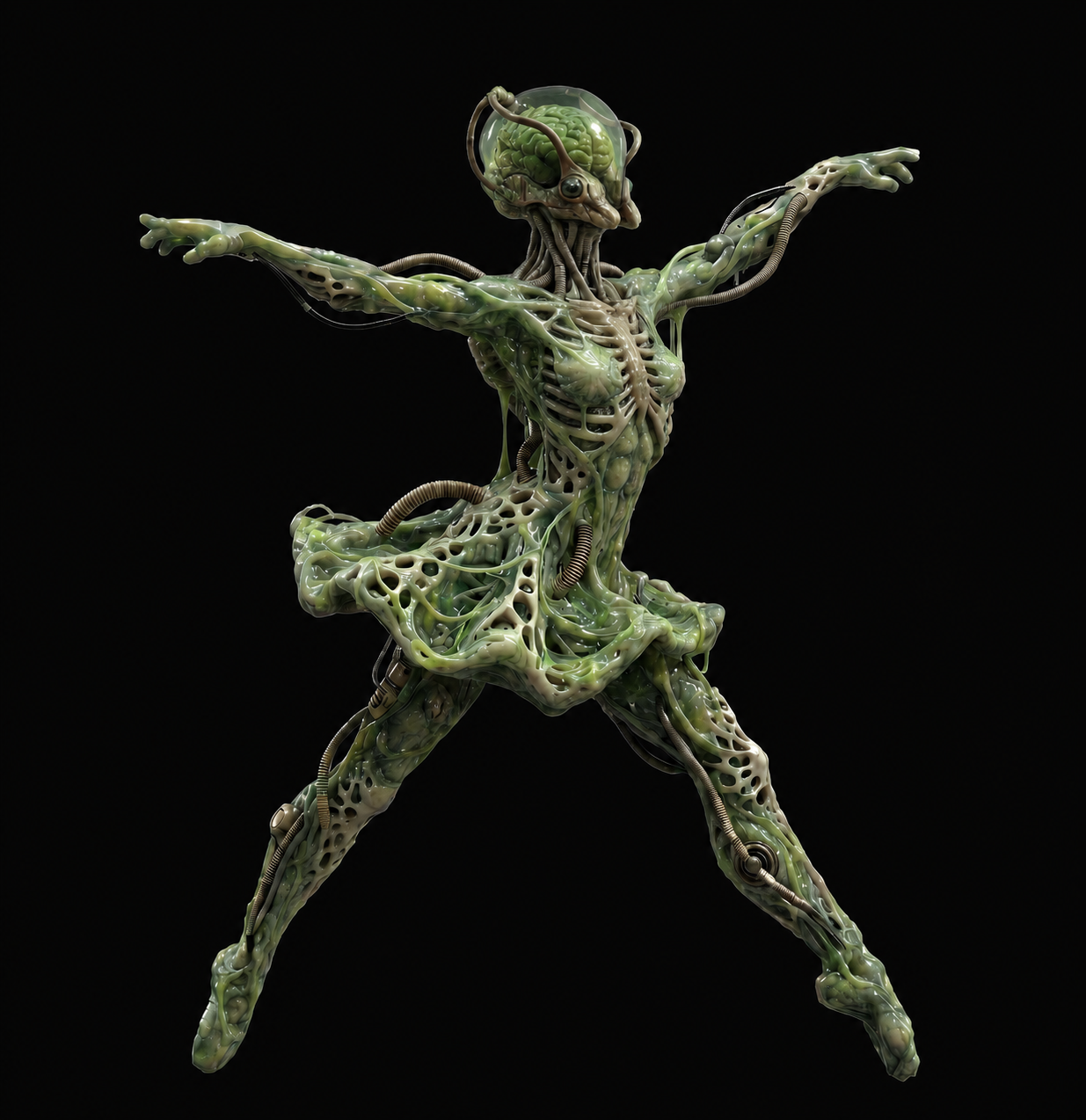
Imagined ecosystems, species and civilizations from beyond our galaxy.
BioGlitch Ballet is a visual field journal exploring distant worlds where unfamiliar lifeforms, organic structures and alien societies evolve within their own environments.
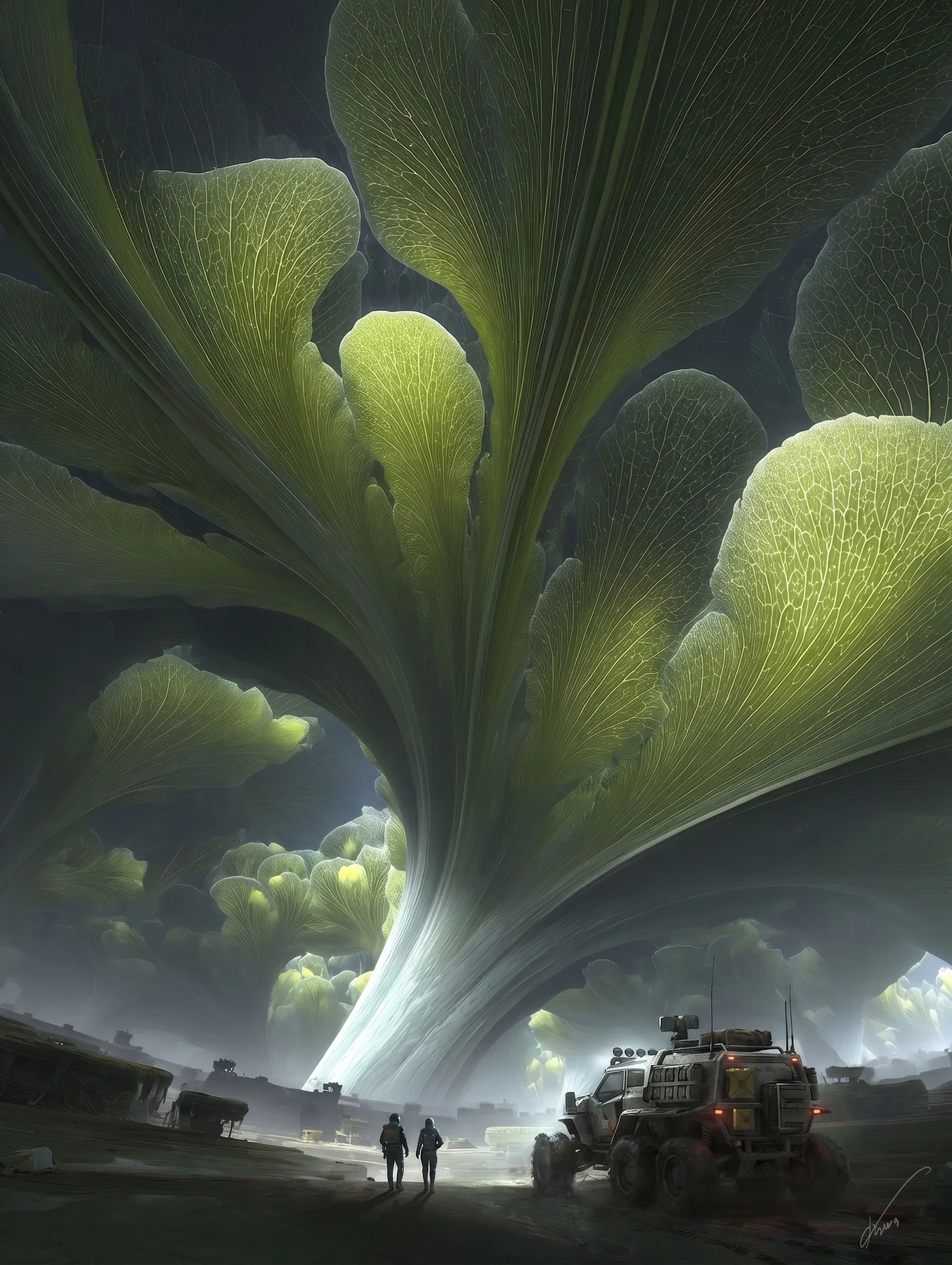
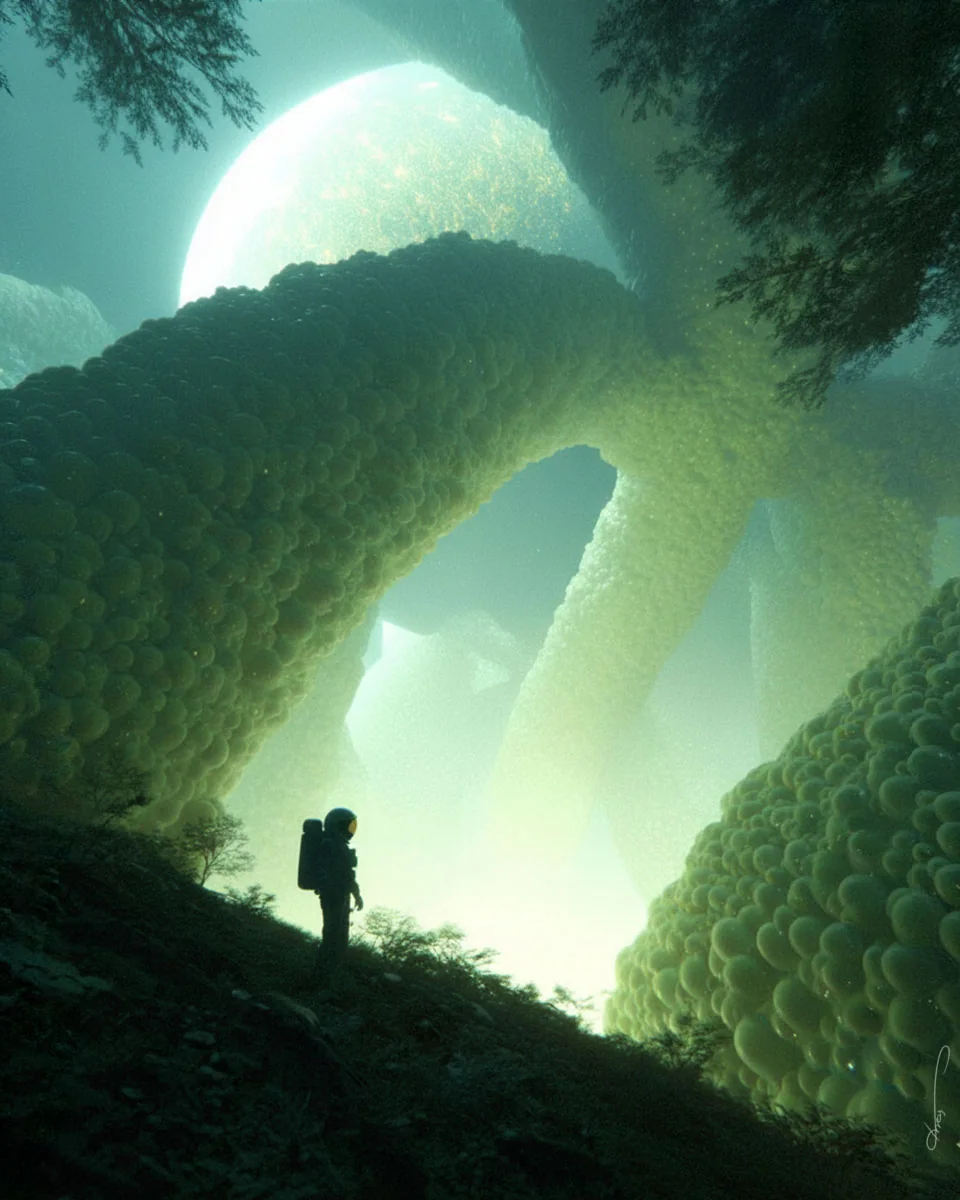
▶Enter the ArchiveField Journal AccessOn Chloris IV, geology has been almost replaced by biology. Colossal plant organisms take the role of mountains and rock formations, growing into valleys, ledges, tunnels and settlement basins over thousands of years.
Biomorphic landscape where plant organisms replace mountains, cliffs and natural city structures.
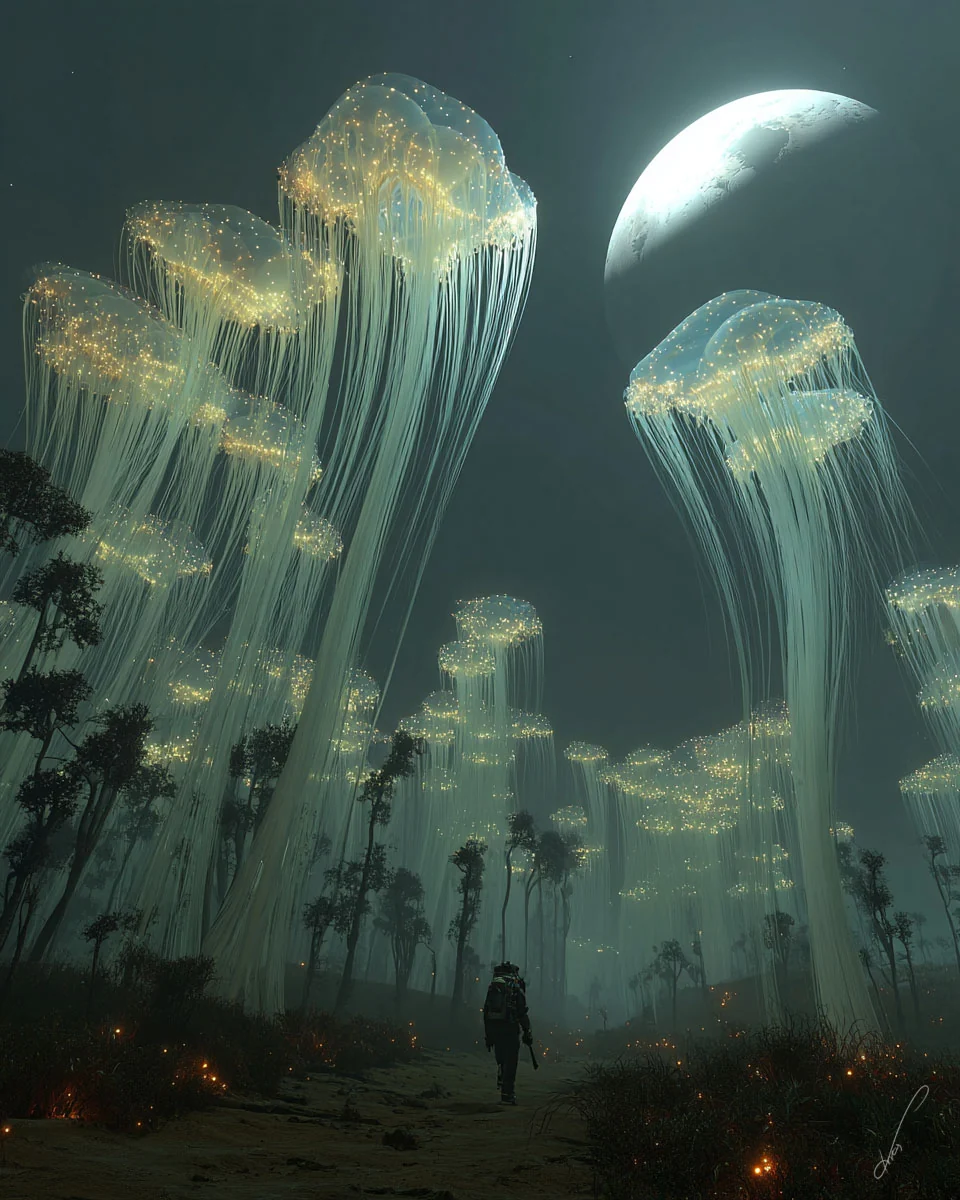
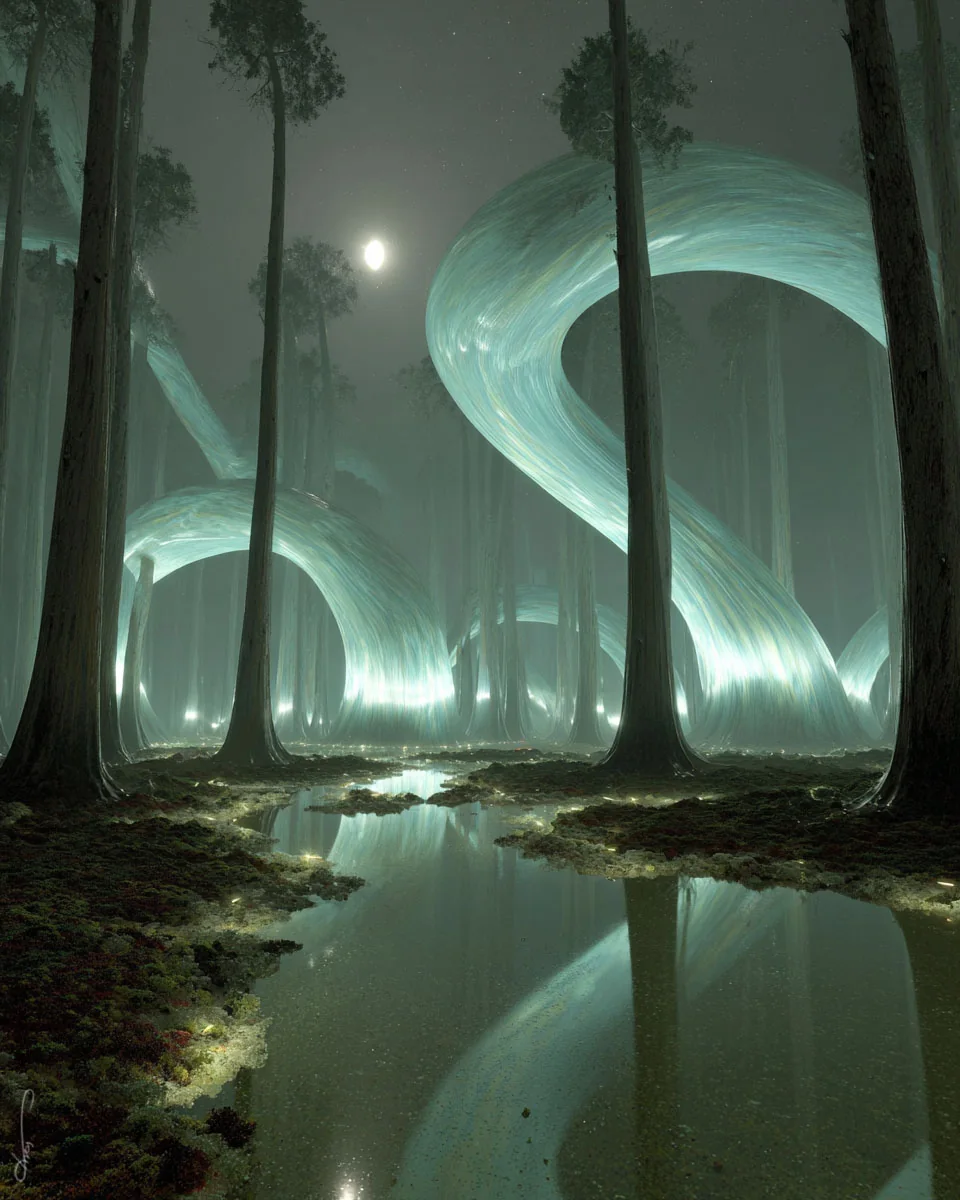
Cold, misted forests of fibrous translucent megaplants, luminous roots and living arcades.
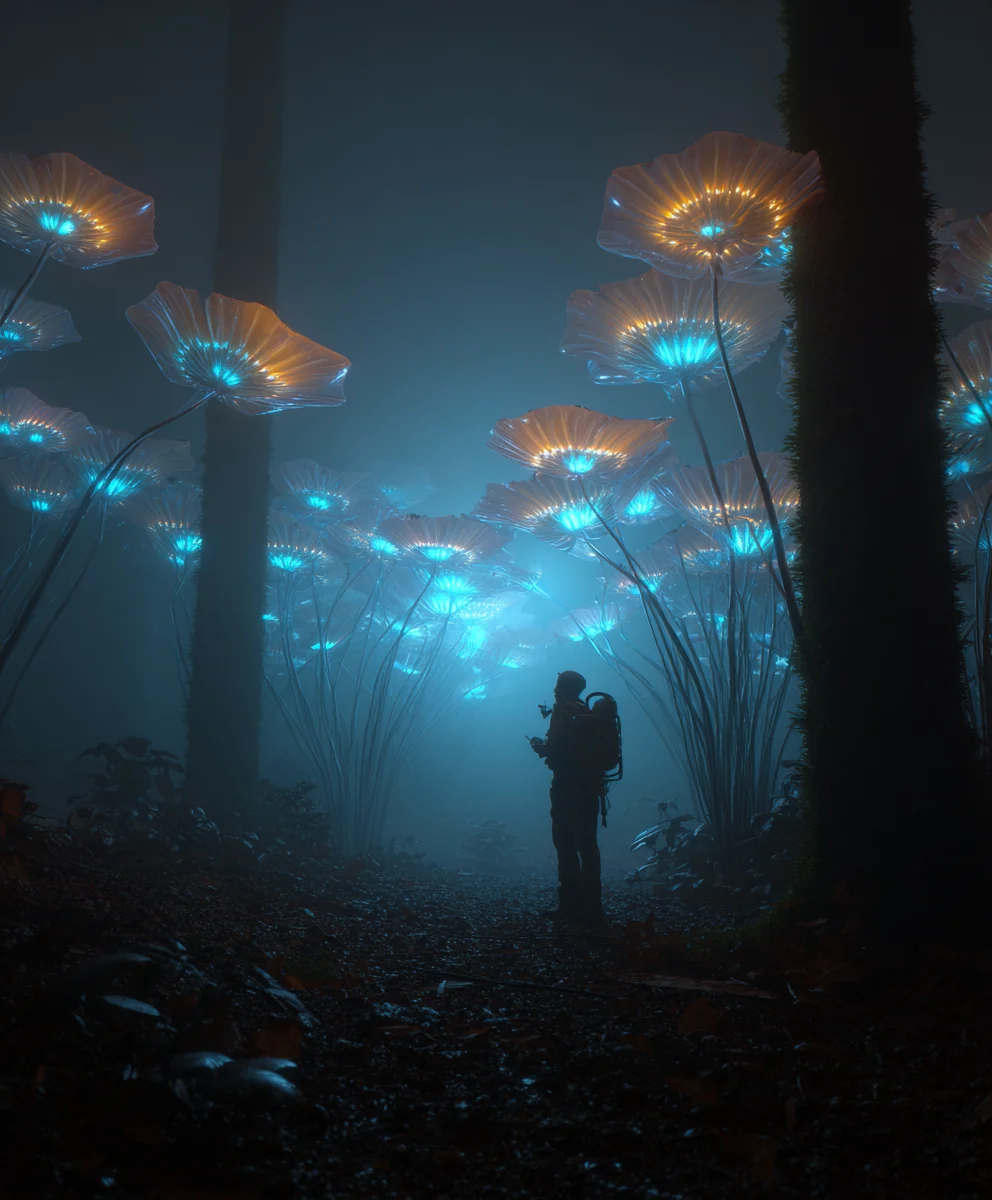
Dark wet valleys, sponge-like ground and bird-flower-insect lifeforms glowing from within.
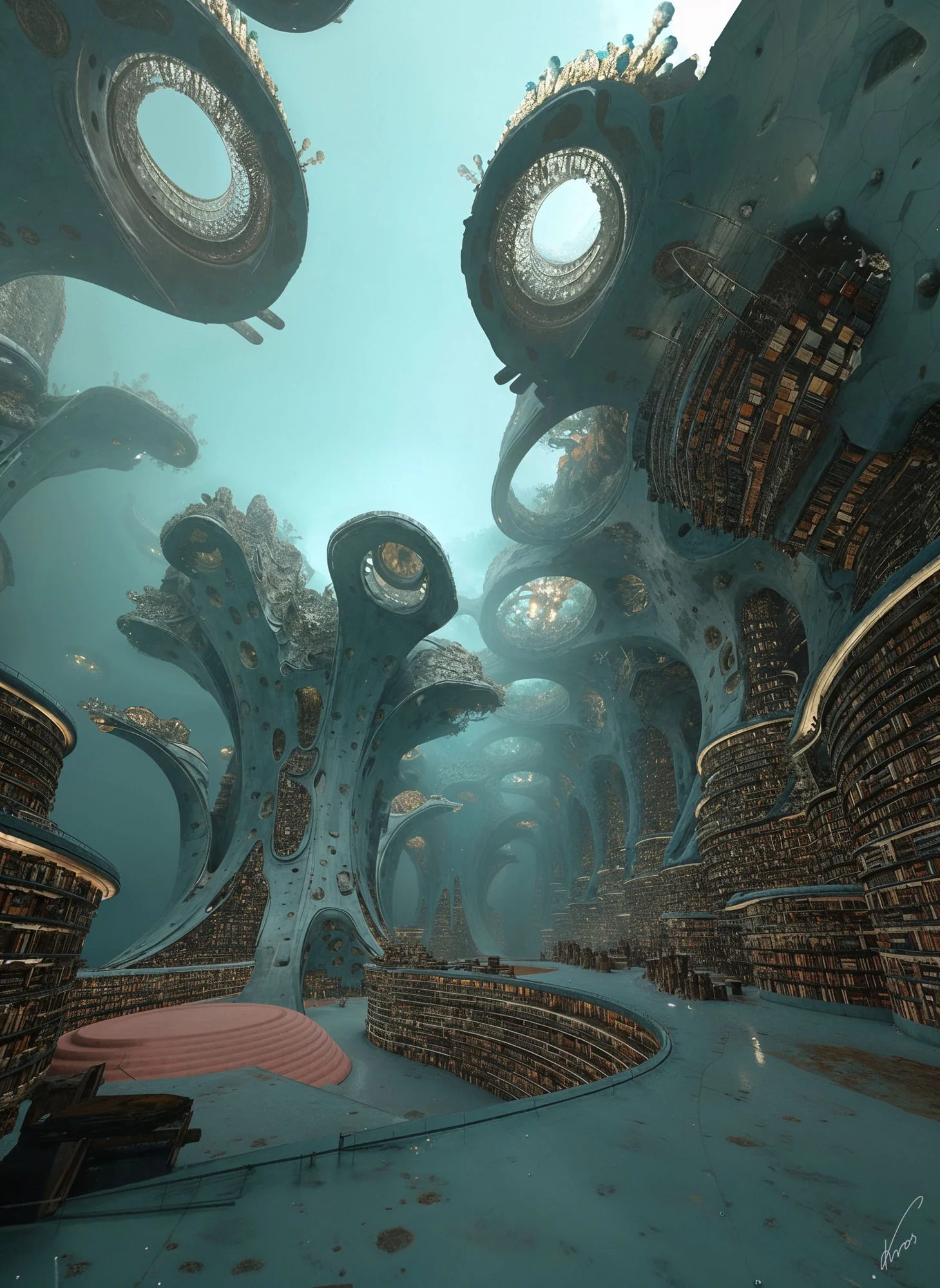
A living sanctuary built to preserve knowledge from worlds lost to war, collapse and disaster.
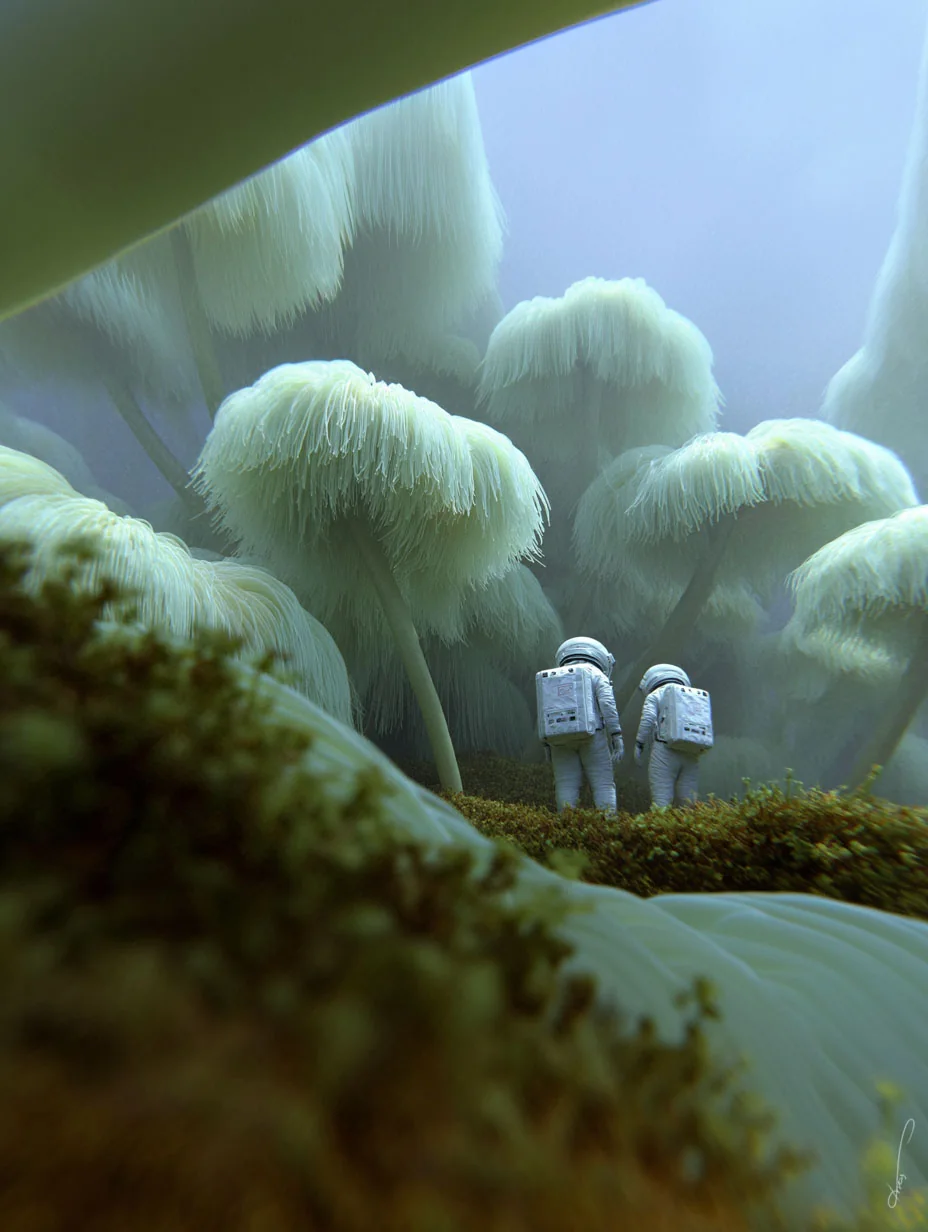
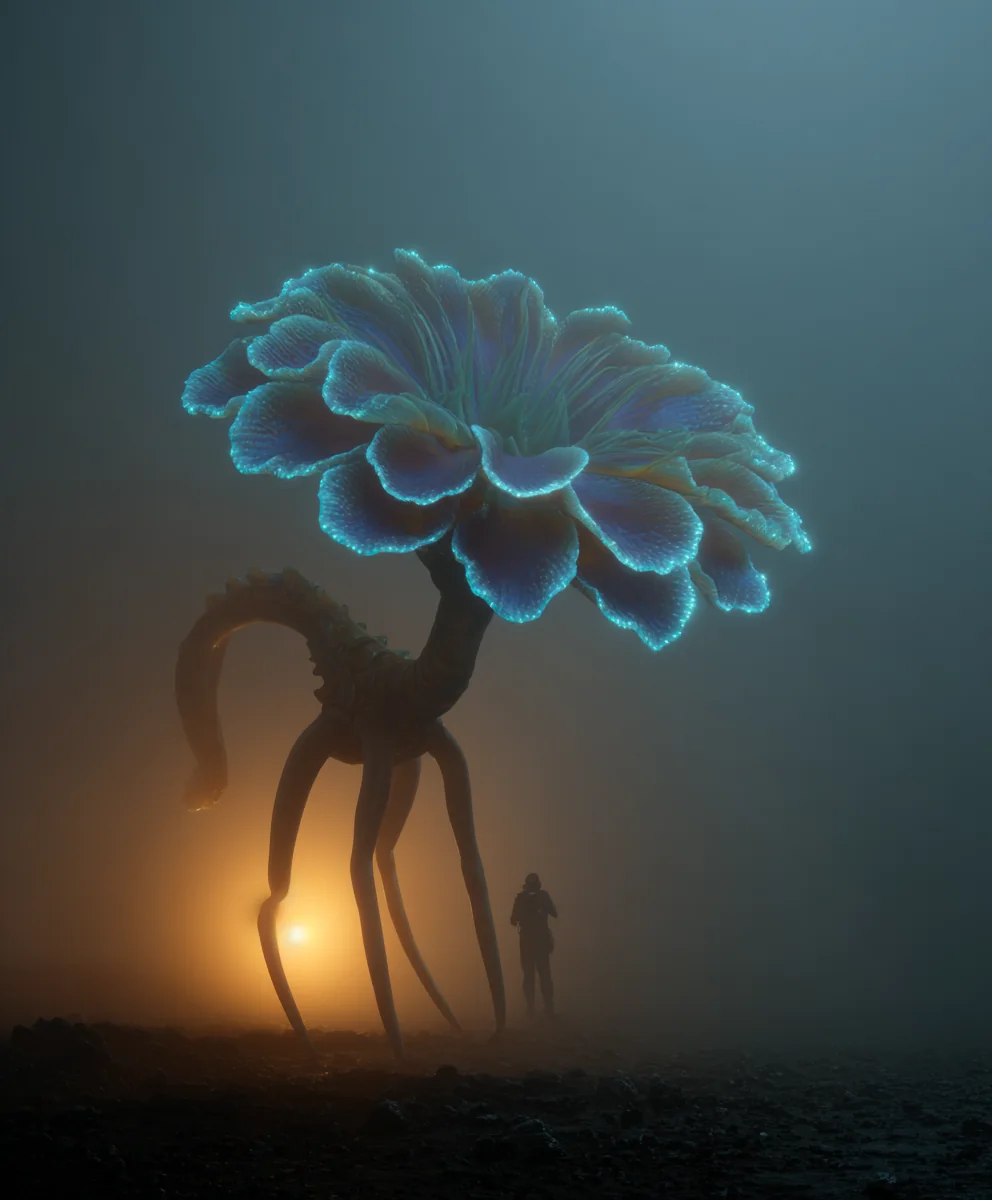
On Chloris IV, geology has been almost entirely replaced by biology. The planet’s largest formations are not stone, but layered megaflora organisms that grow for millennia into valleys, shelves, tunnels and natural cities.
The atmosphere is humid and misted, diffusing light reflected from living surfaces. Native settlements are integrated into the organic topography; local humanoids show plant-amphibian traits and enlarged sensory organs.
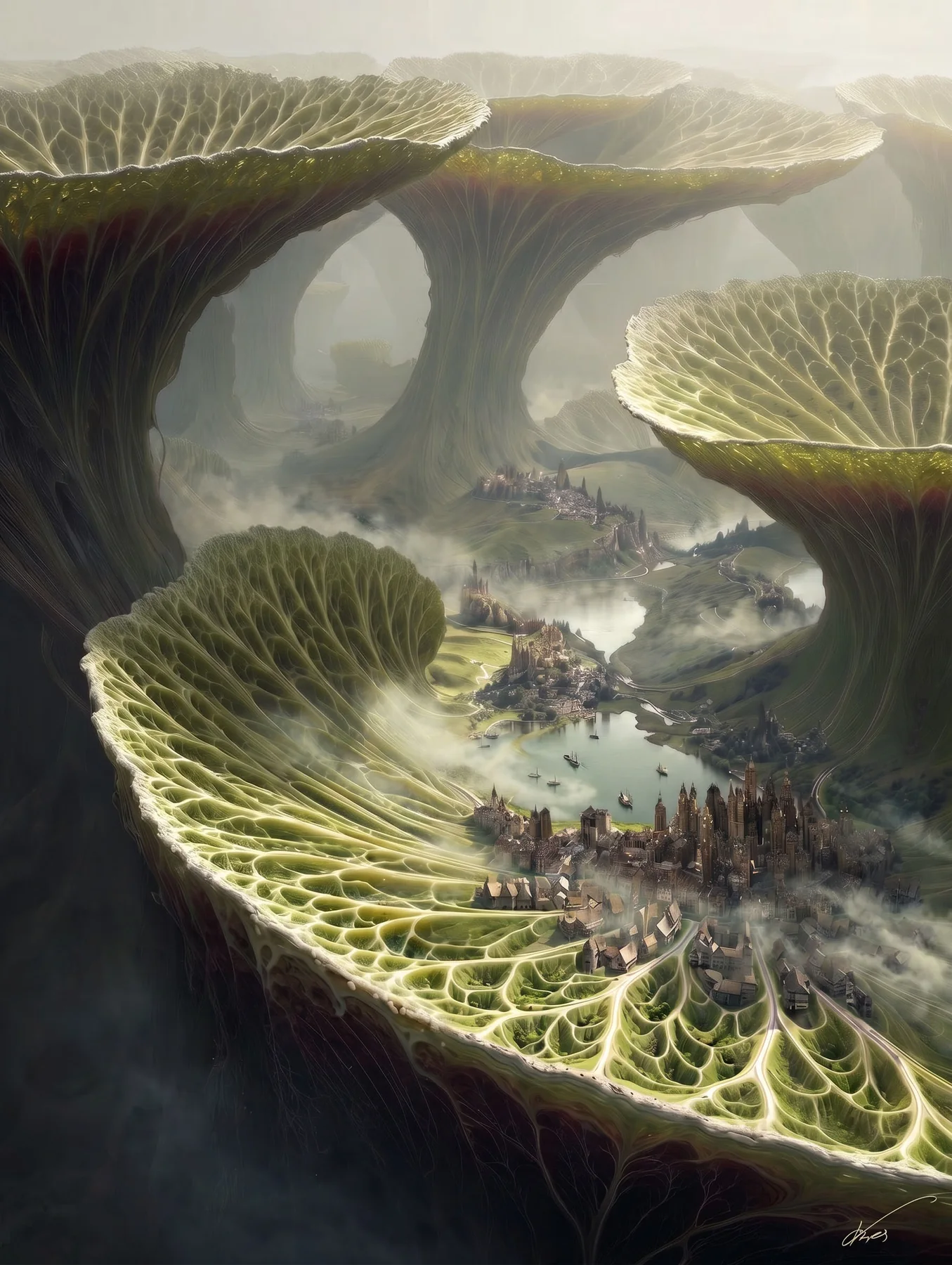
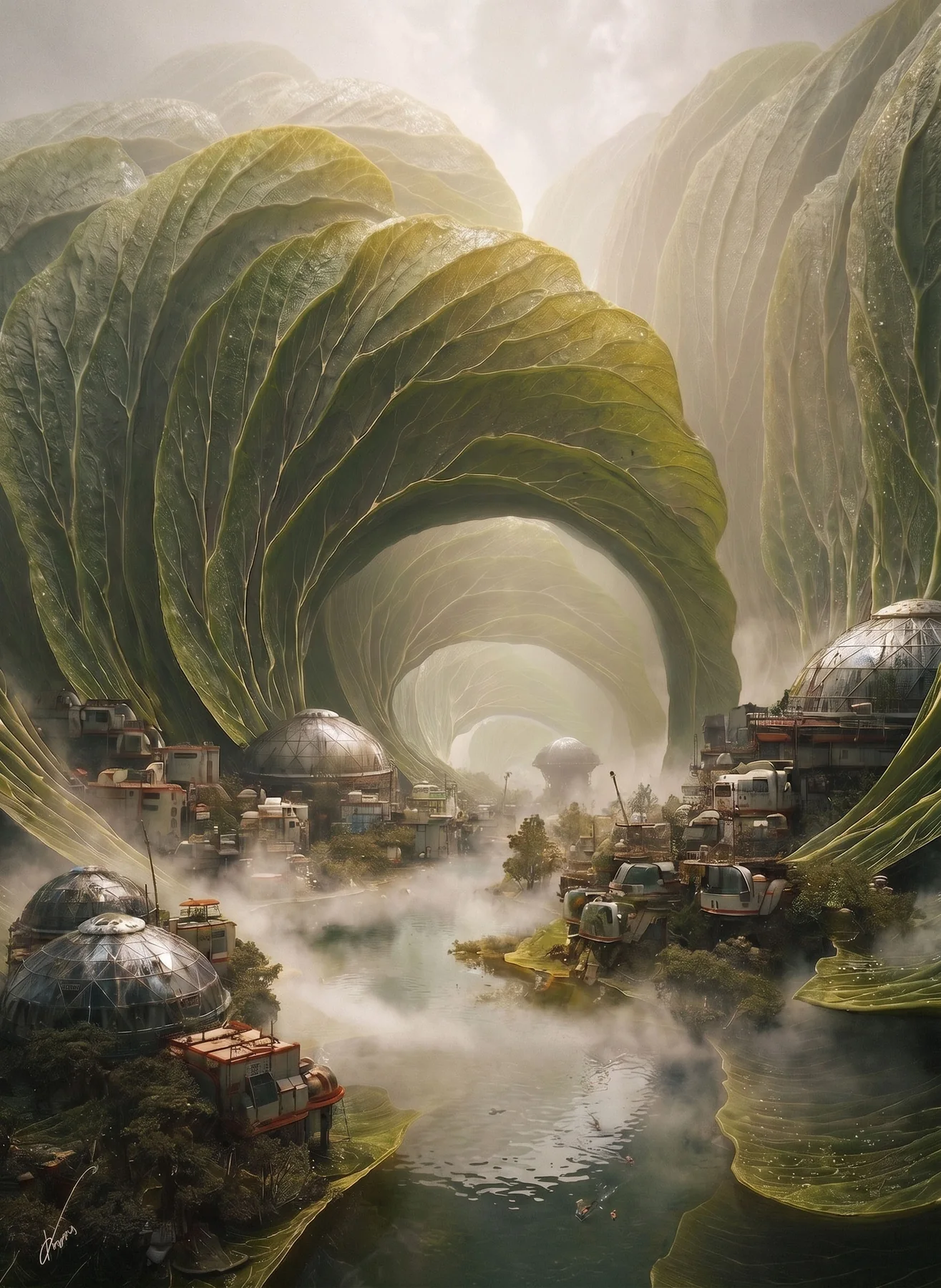
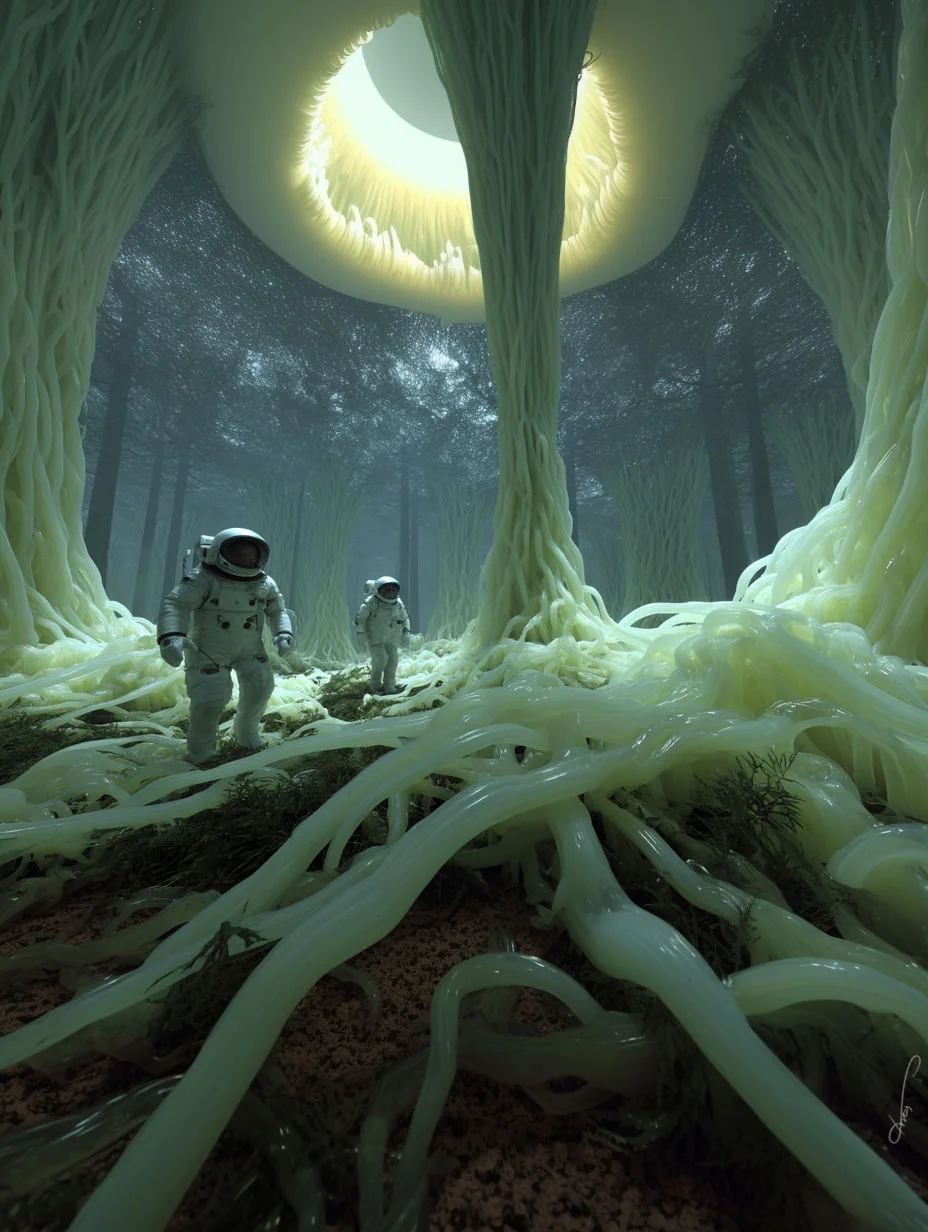
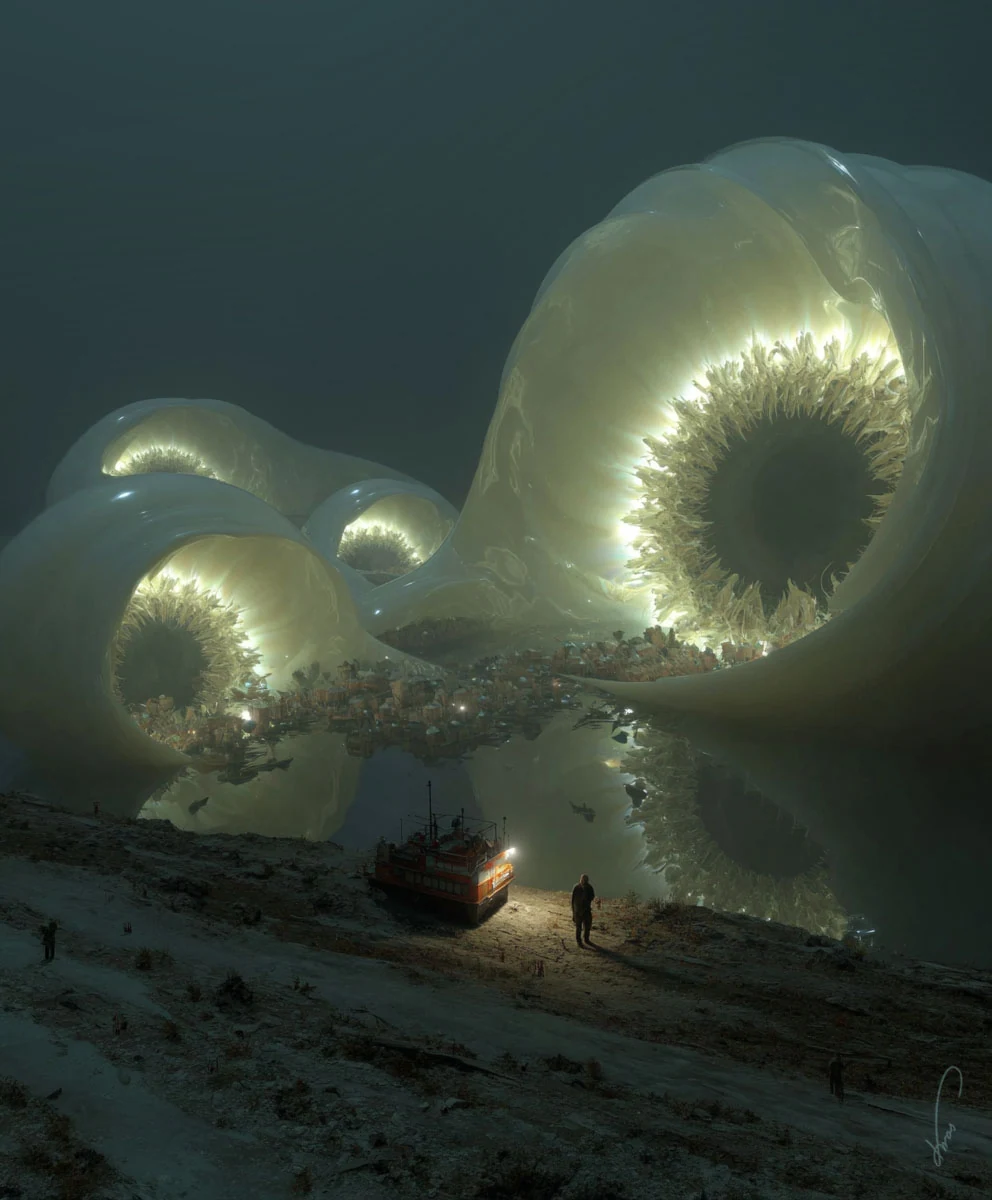
Othelia is a planet of wet bio-organic forests. Its forests are not made of wood and leaves, but of soft fibrous structures resembling living threads and semi-transparent tissue.
Roots rise to the surface, braid into tunnels and lift parts of the landscape into natural passages and organic chambers. Cold mist, diffused light, jellyfish-like canopies and luminous roots give the planet a silent monumental presence.
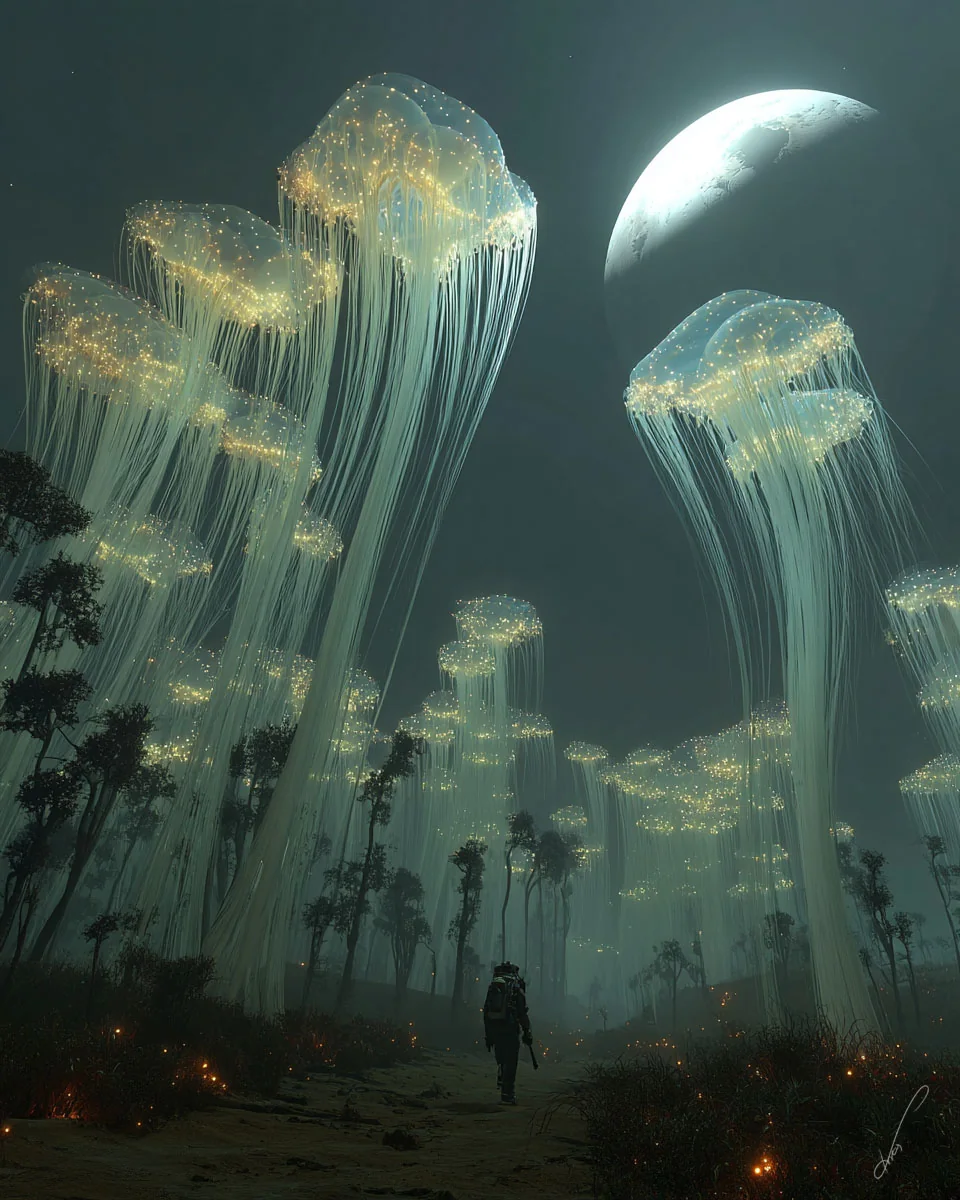
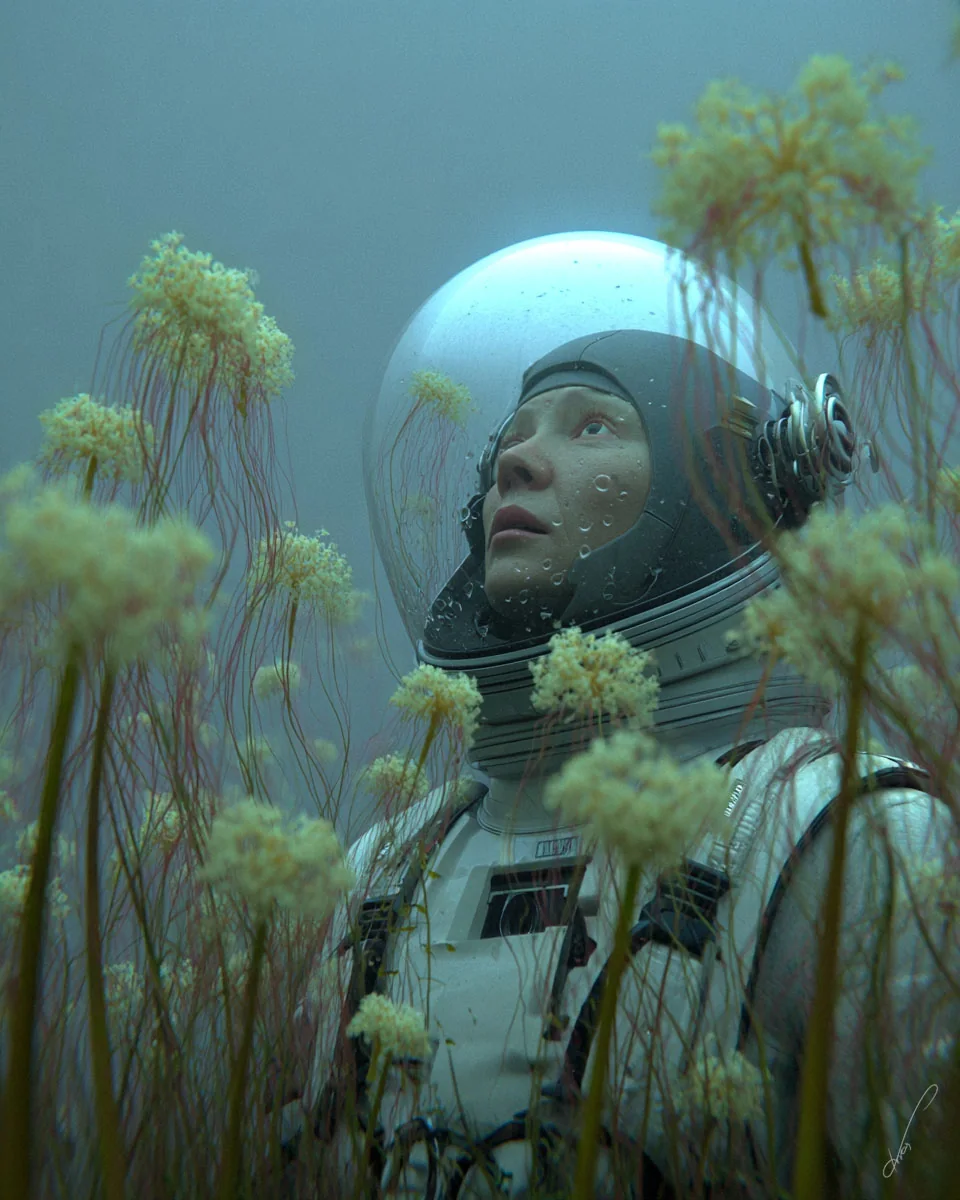
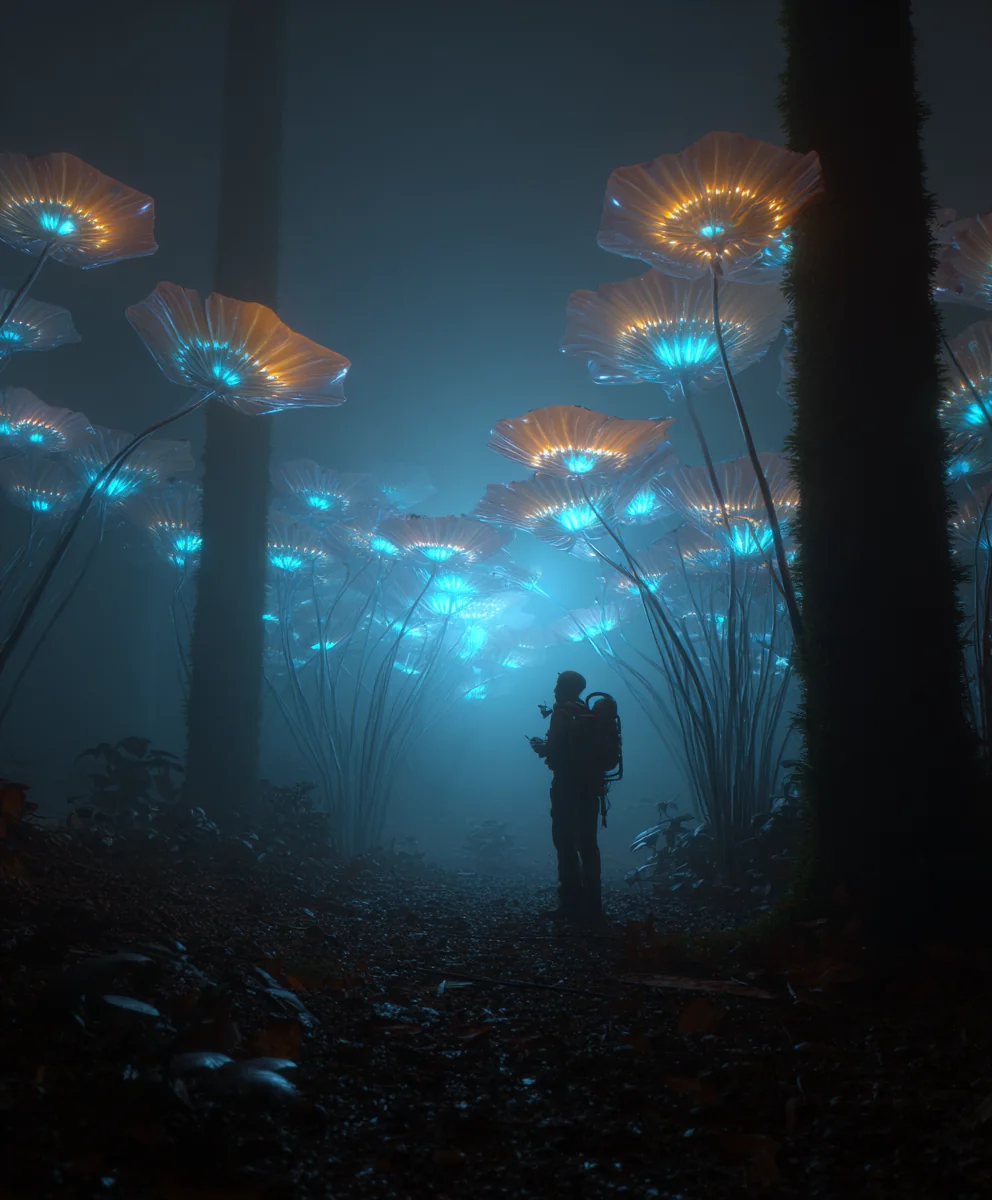
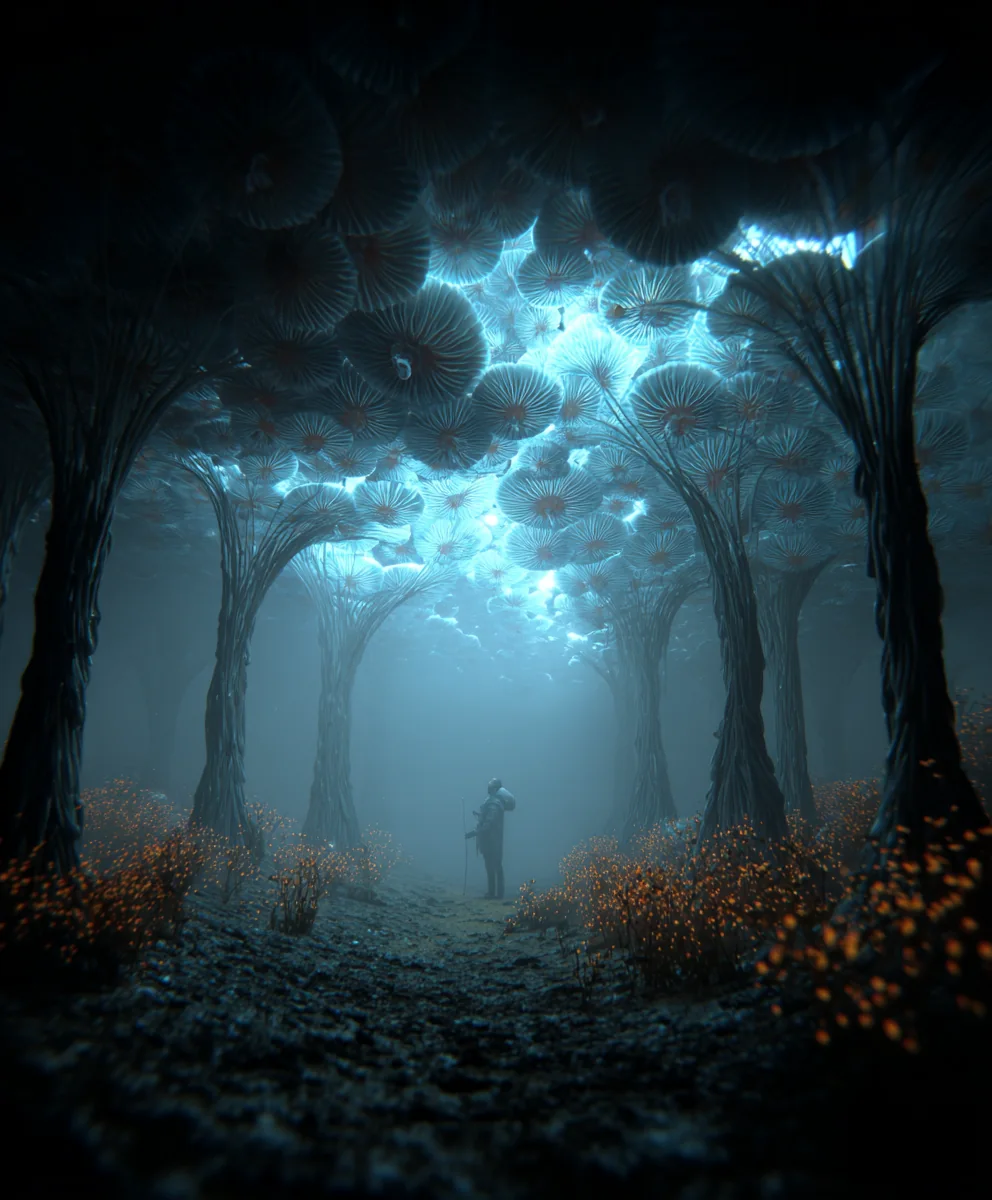
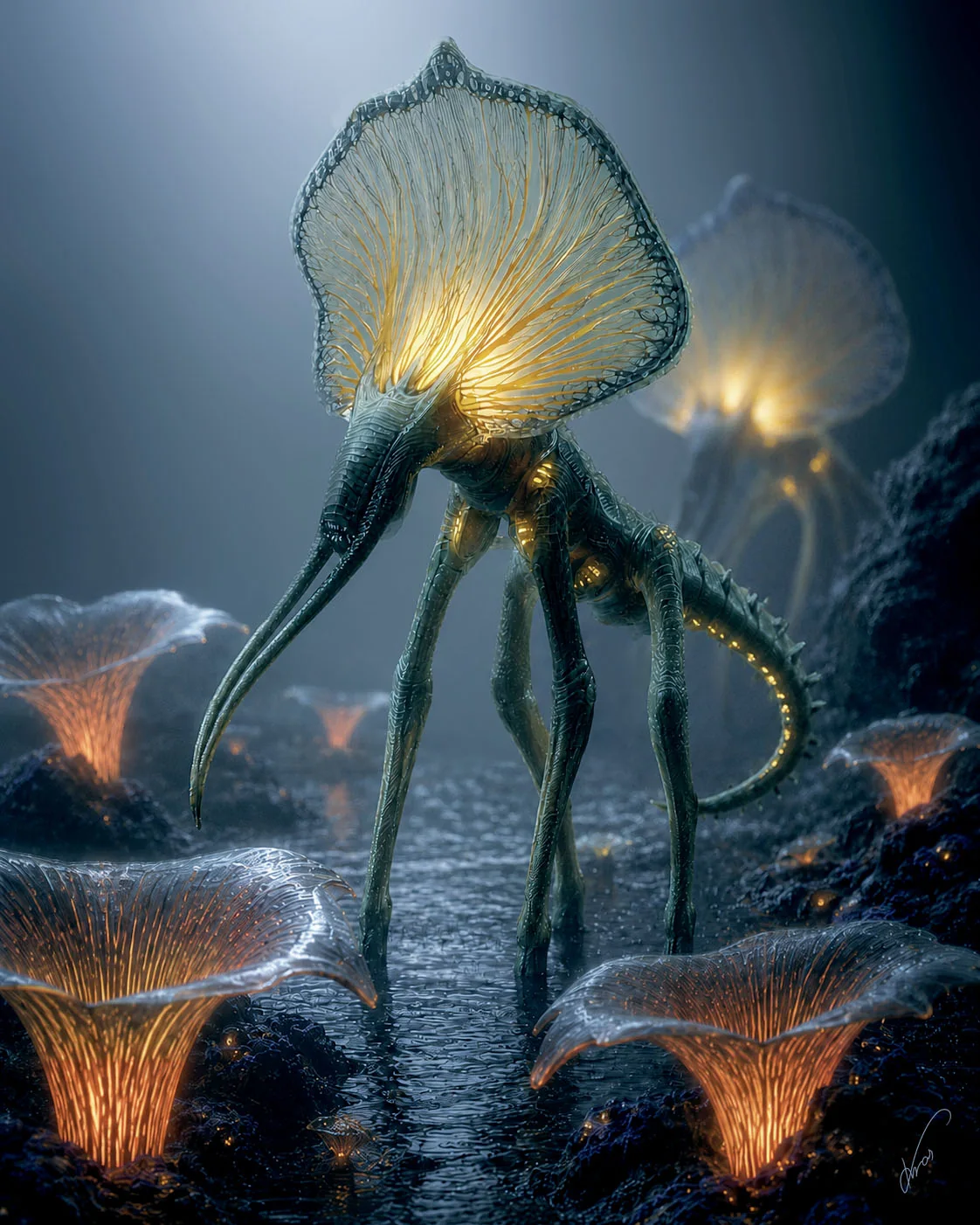
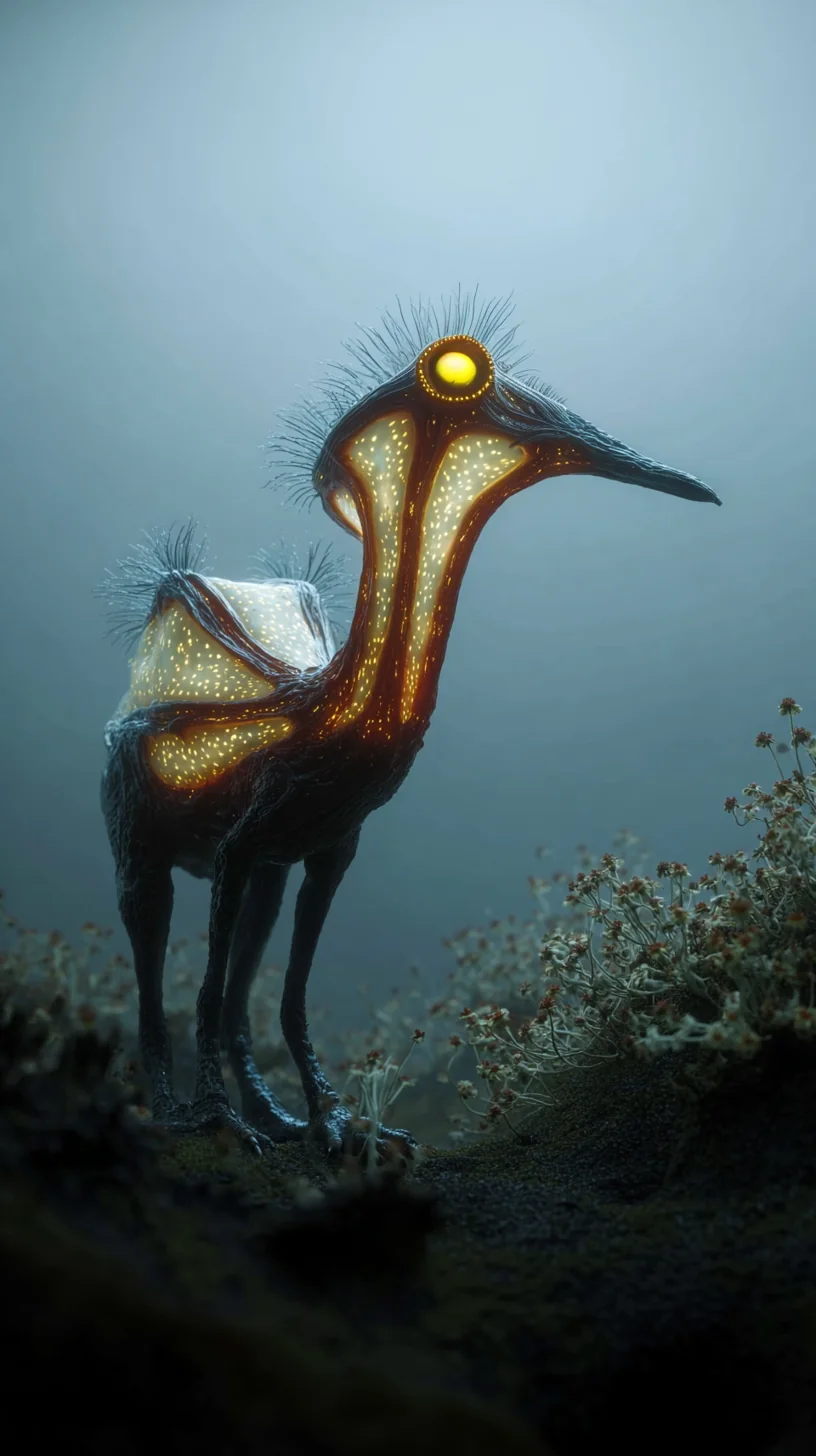
Lumenavis is a dark, mist-bound planet where most life has adapted to weak daylight. Its landscape is formed by black wet valleys, sponge-like ground and wide forests of bioluminescent plants glowing like deep-sea organisms brought to the surface.
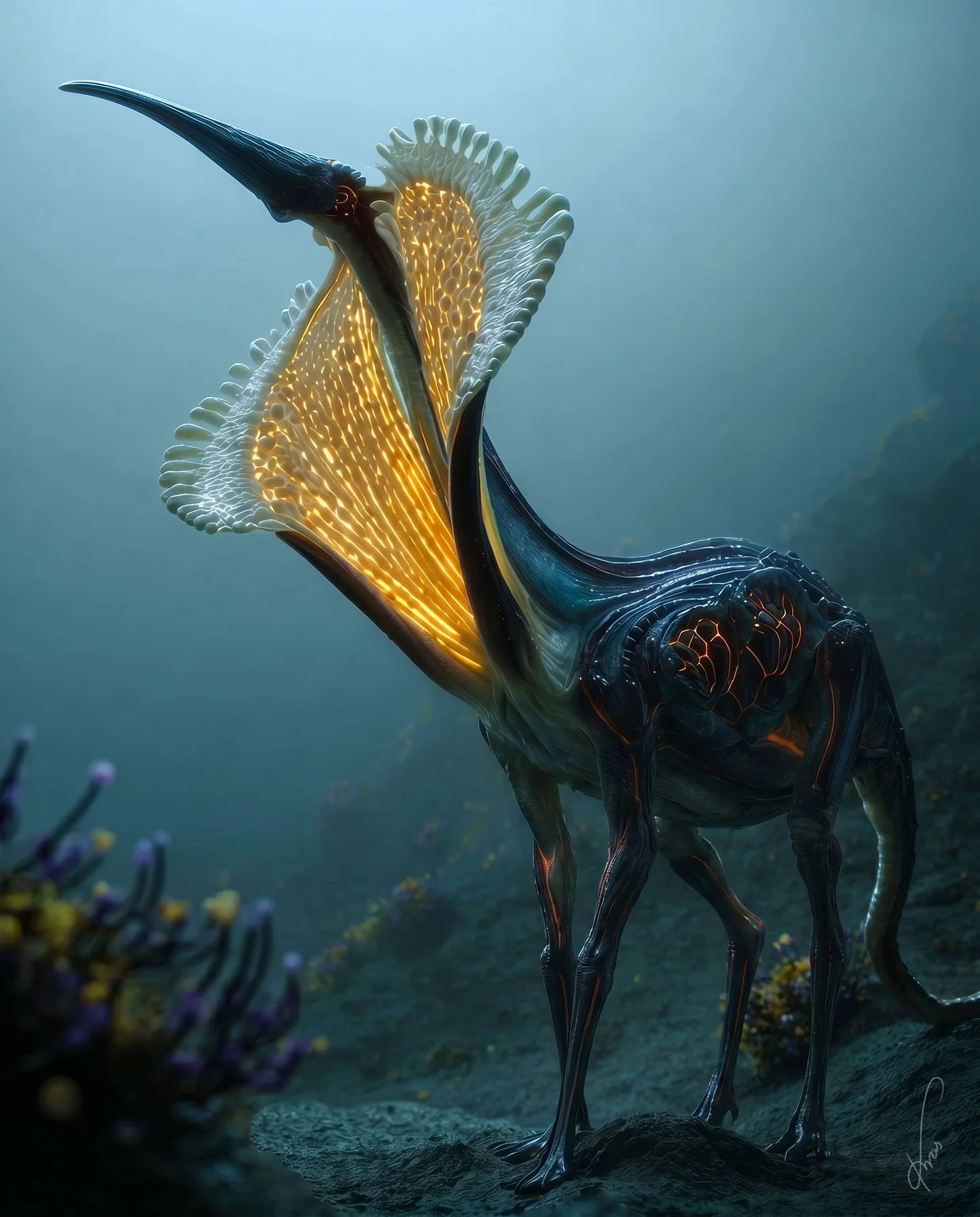
The dominant lifeforms resemble hybrids of birds, flowers and insects. Their thin skeletal bodies emit gold or blue light; whether this is signal, lure, warning or mating ritual remains unknown.
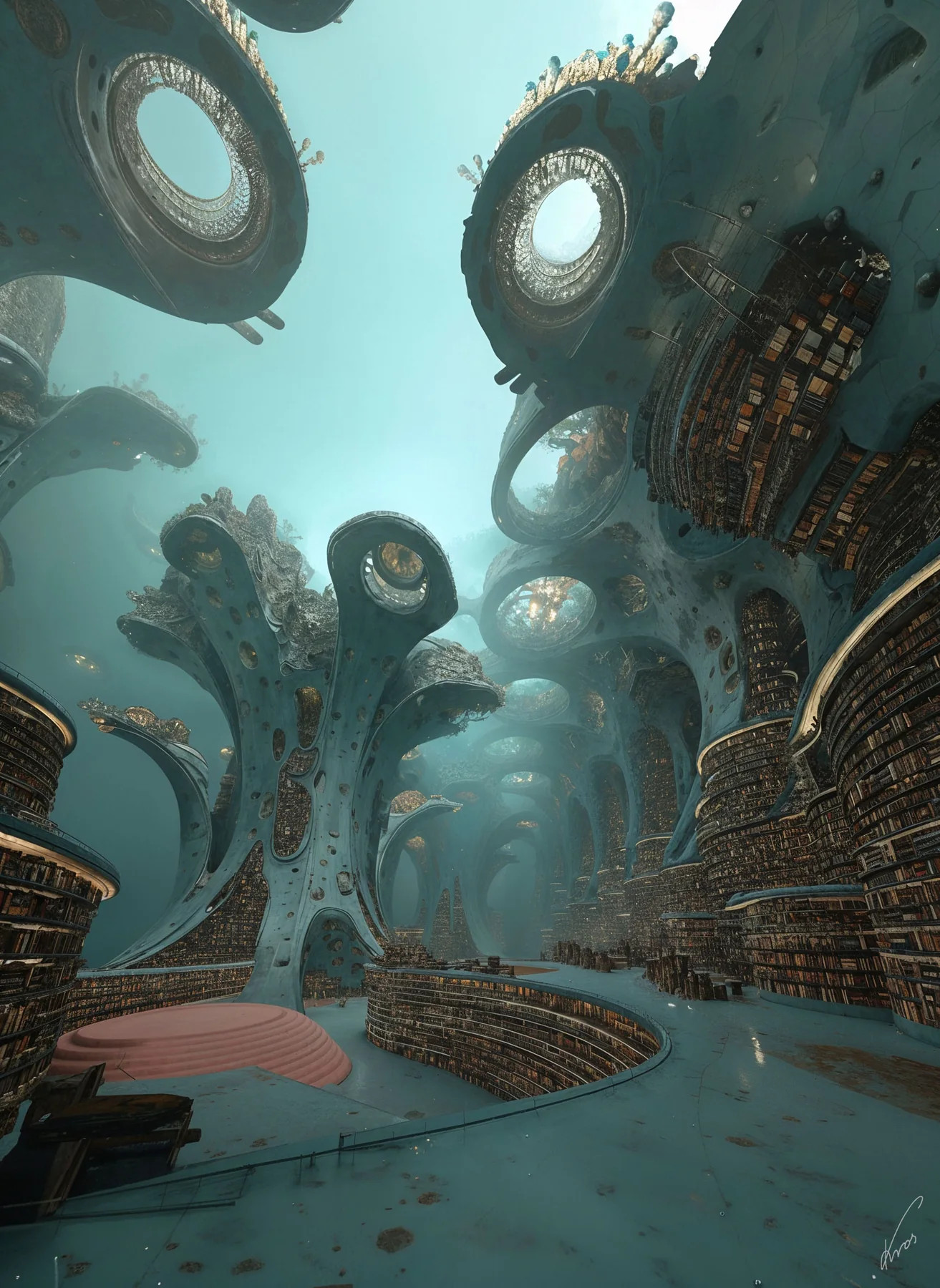
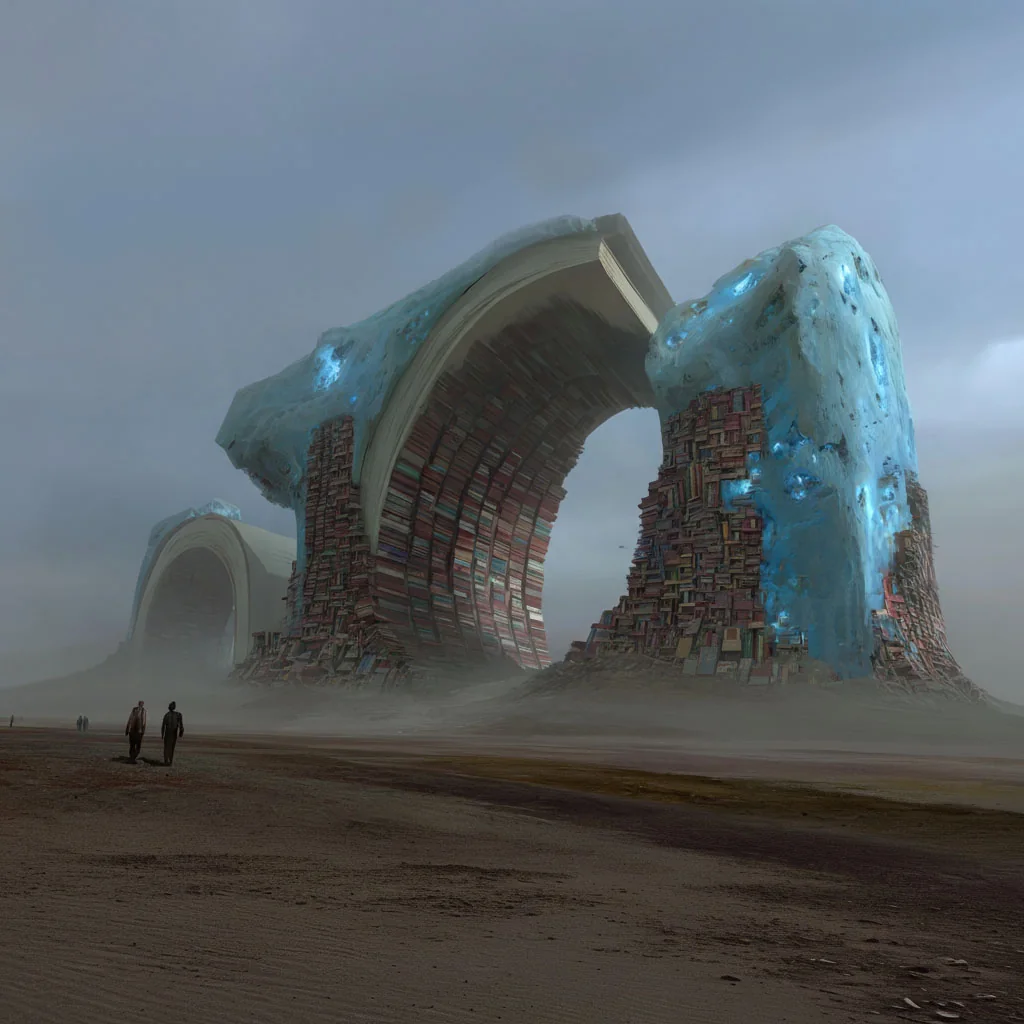
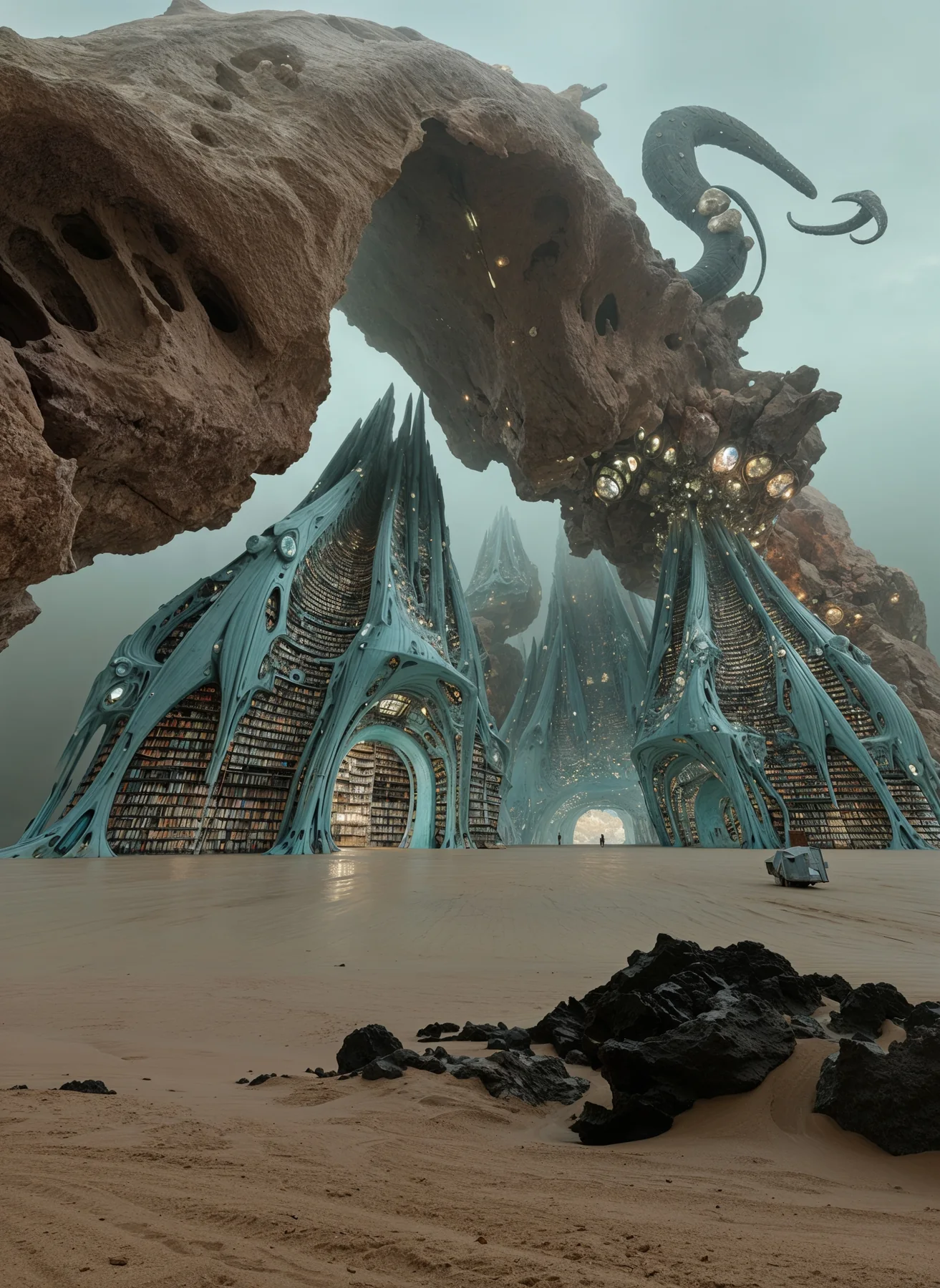
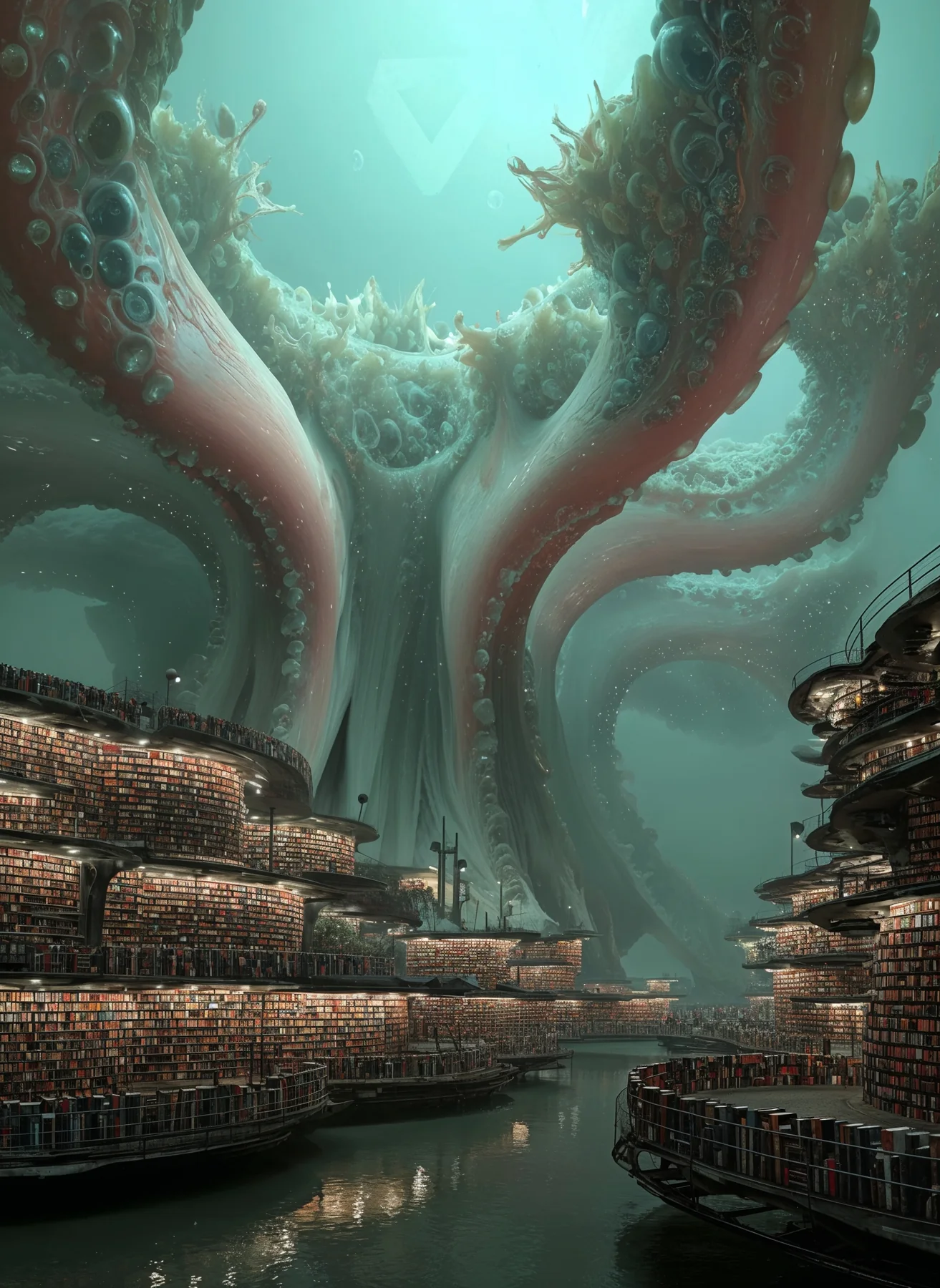
This is not a conventional library, but the last sanctuary of galactic knowledge: a place where archives from countless worlds were preserved before wars, civilizational collapse and cosmic disasters erased their origins.
Its organic halls, cathedral domes and endless shelves seem to grow from a single intelligent organism. Access is not granted by status or technology, but by intention; the Library opens only to those who seek understanding, not possession.
The Species archive records intelligent, semi-intelligent and ambiguous lifeforms through anatomy, behavior and environmental adaptation. Each visible form is treated as evidence: a body, a language and a survival system.
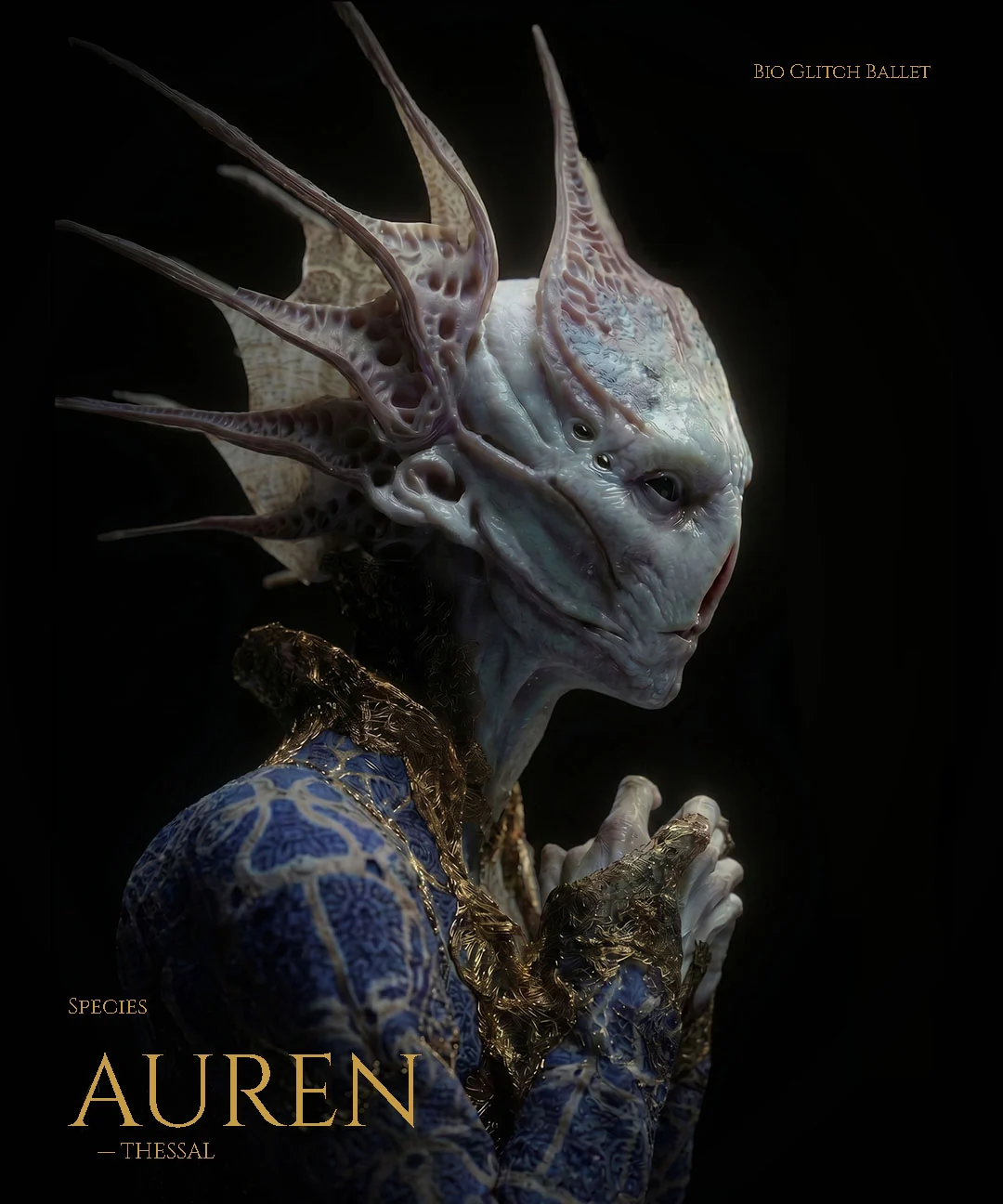
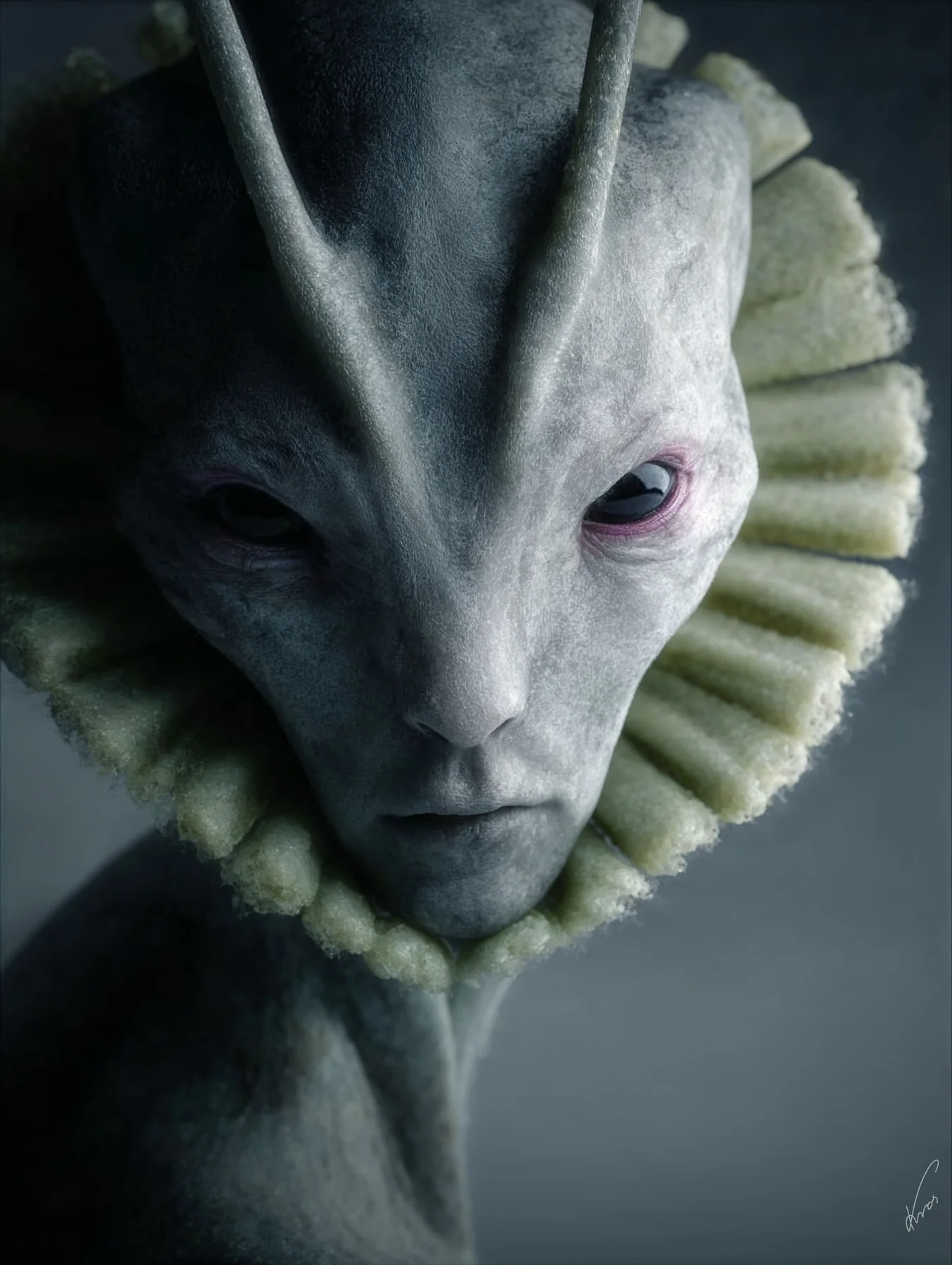
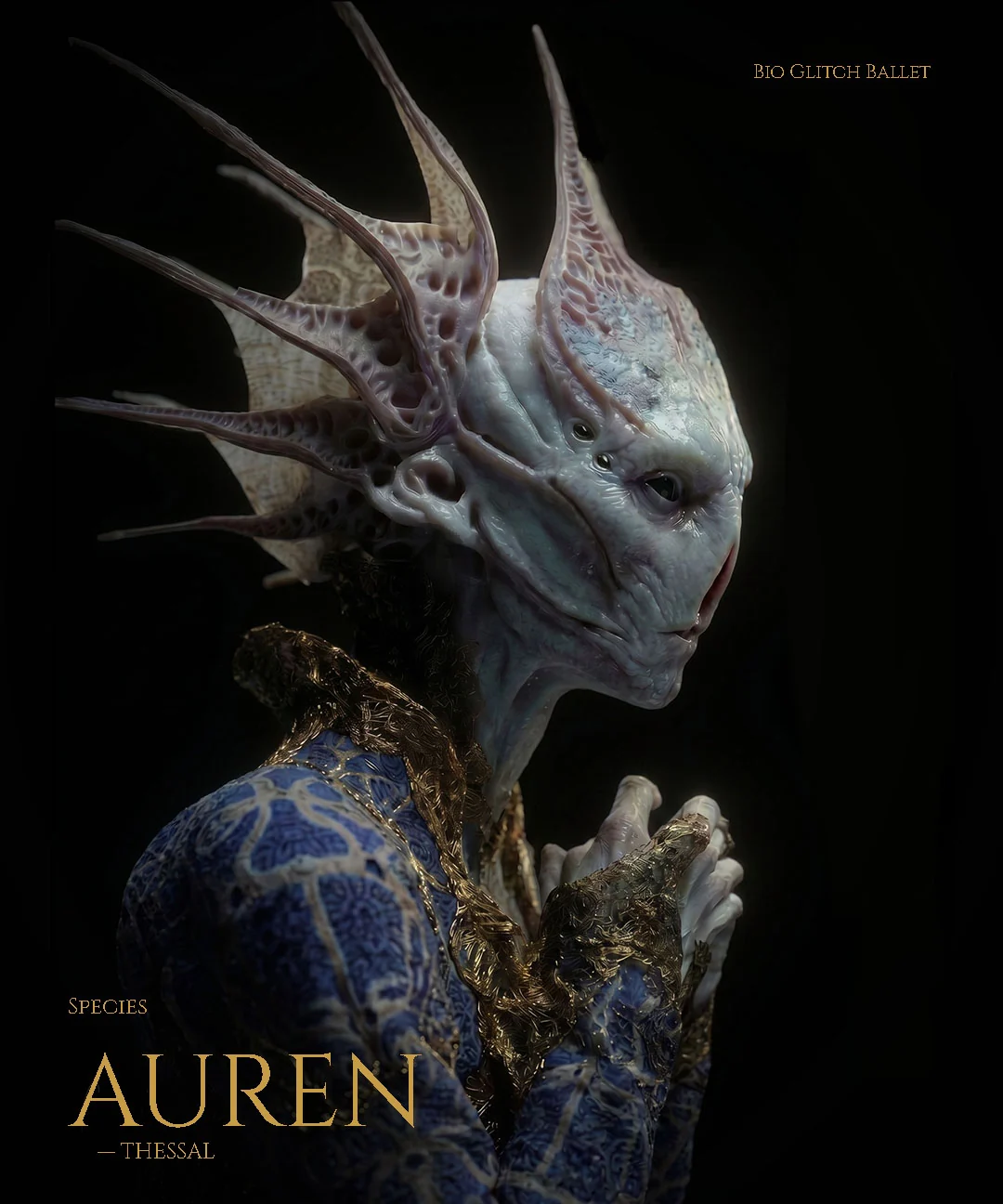
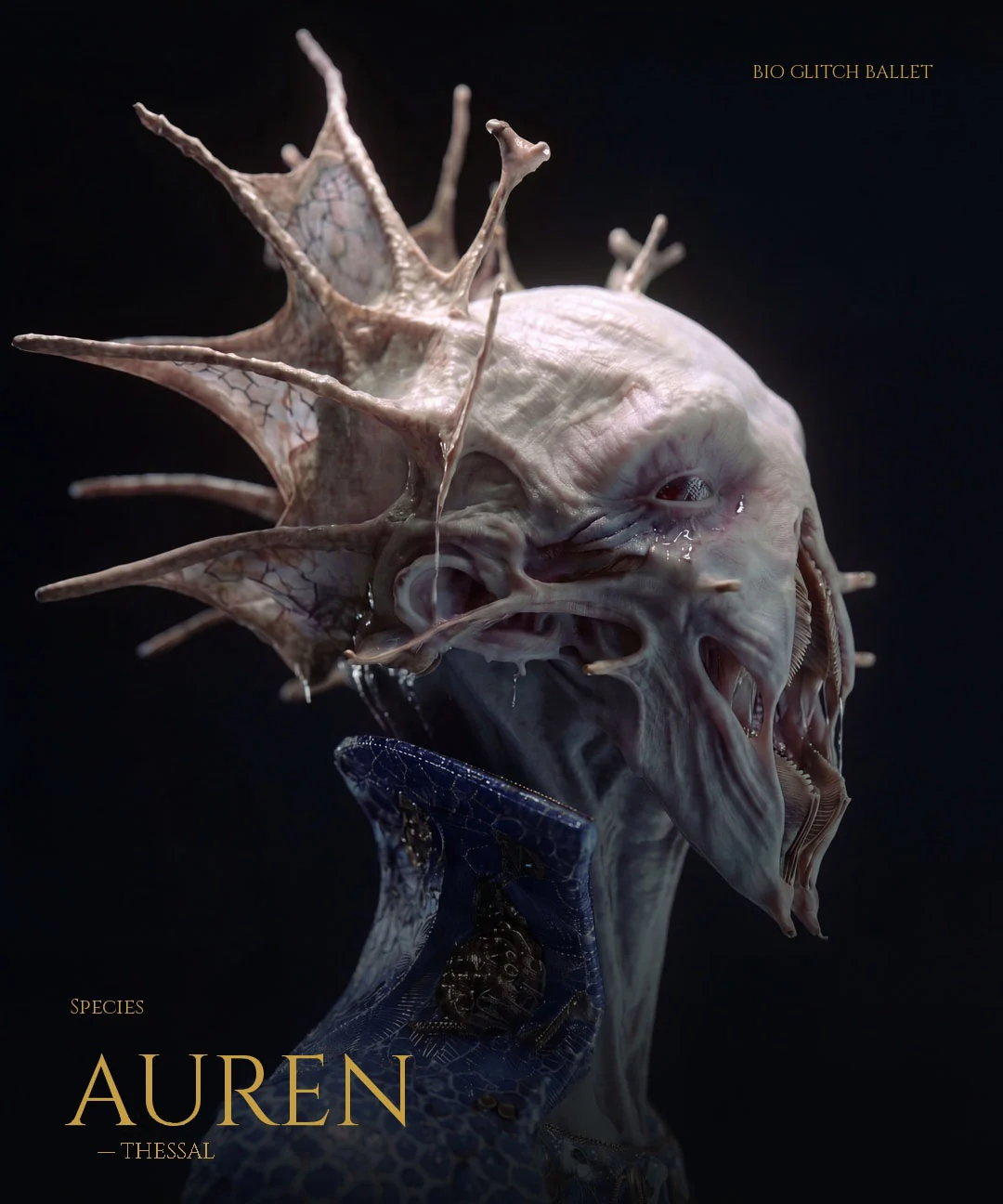
A hierarchical species whose cranial frills, membranes and fan-like structures function as a visible language of rank, mood and lineage.
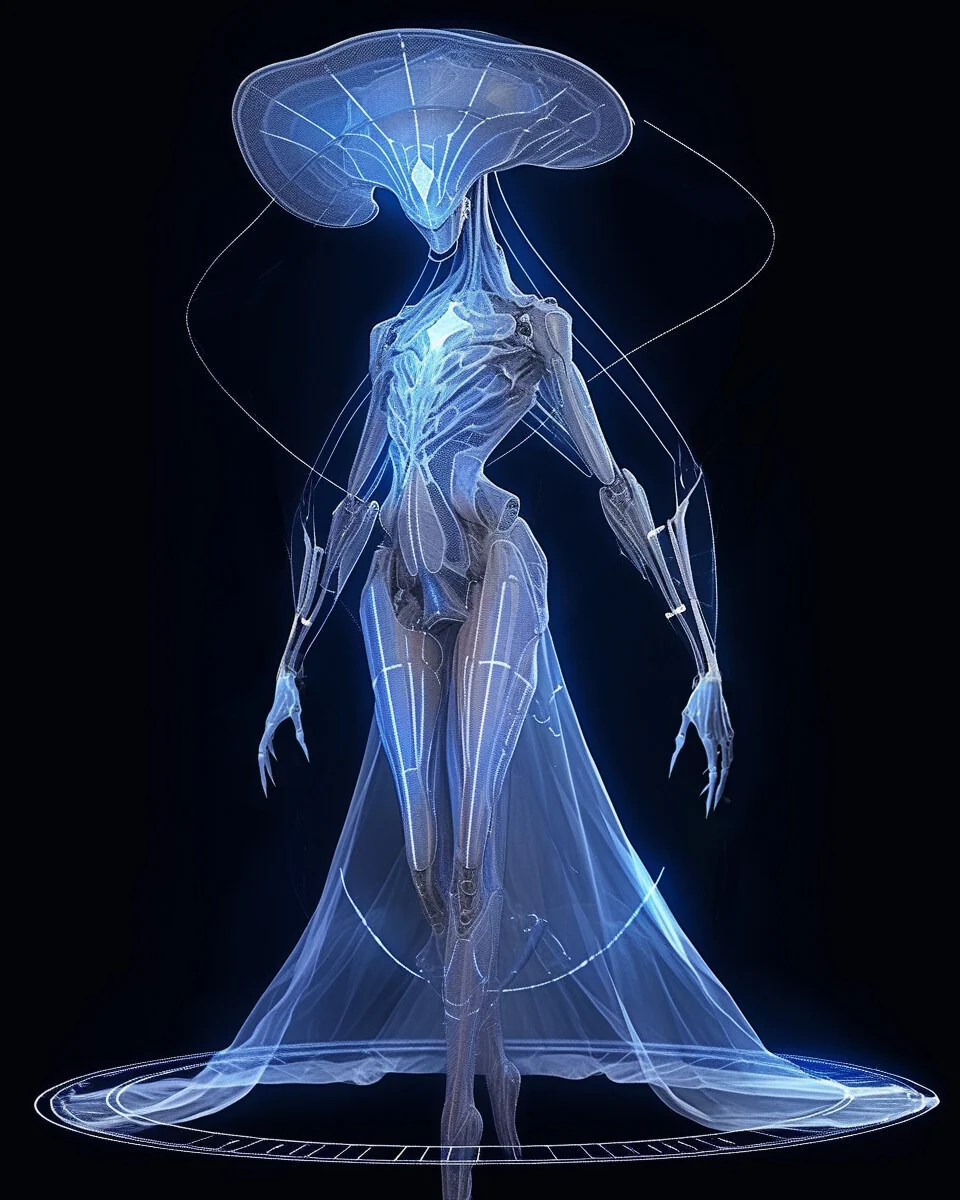
Beings without biological bodies, sustained by concentrated energy, luminous field layers and stable frequency patterns.
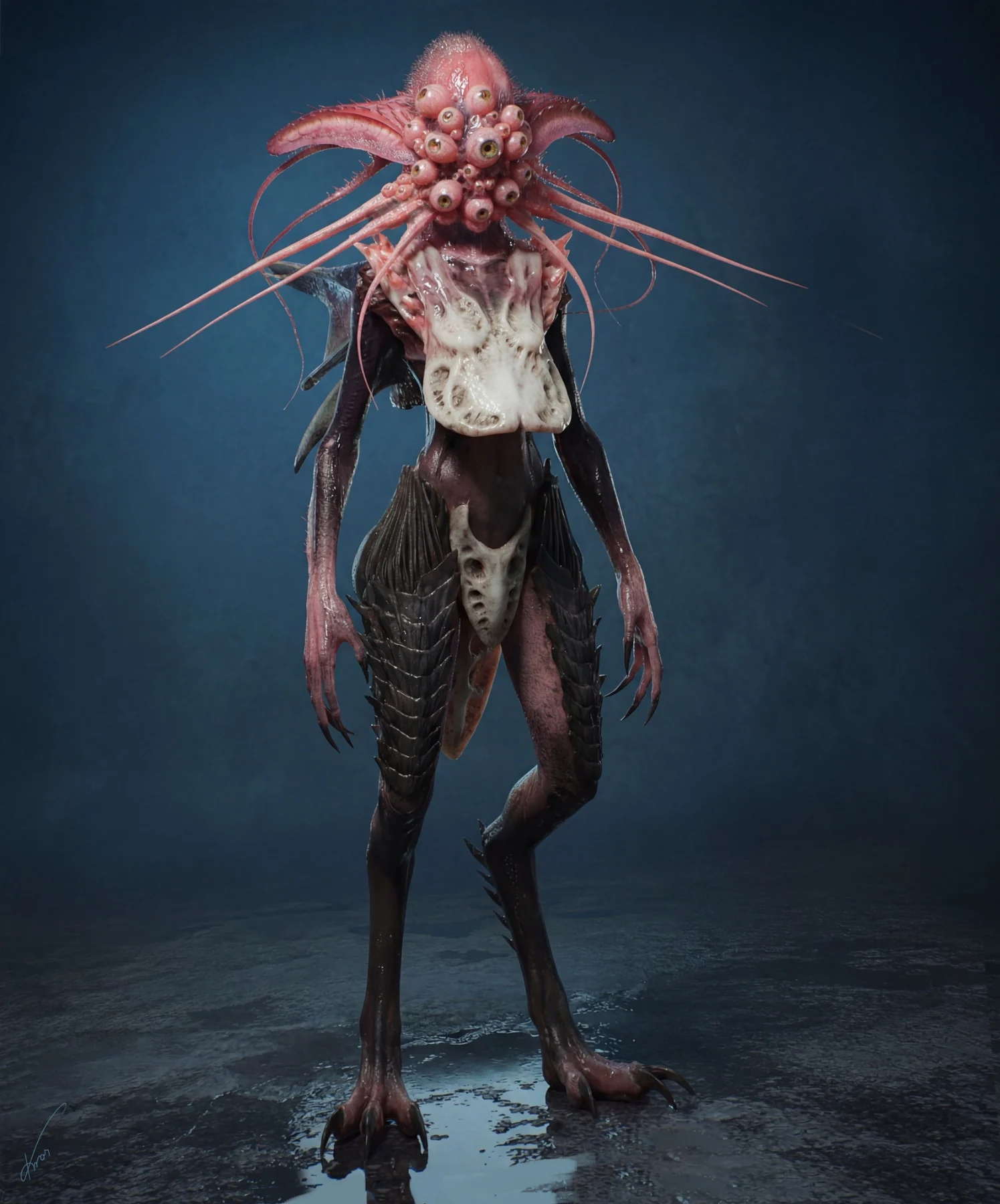
Humanoid predators evolved for dense, humid, gas-rich atmosphere through extreme sensory specialization.
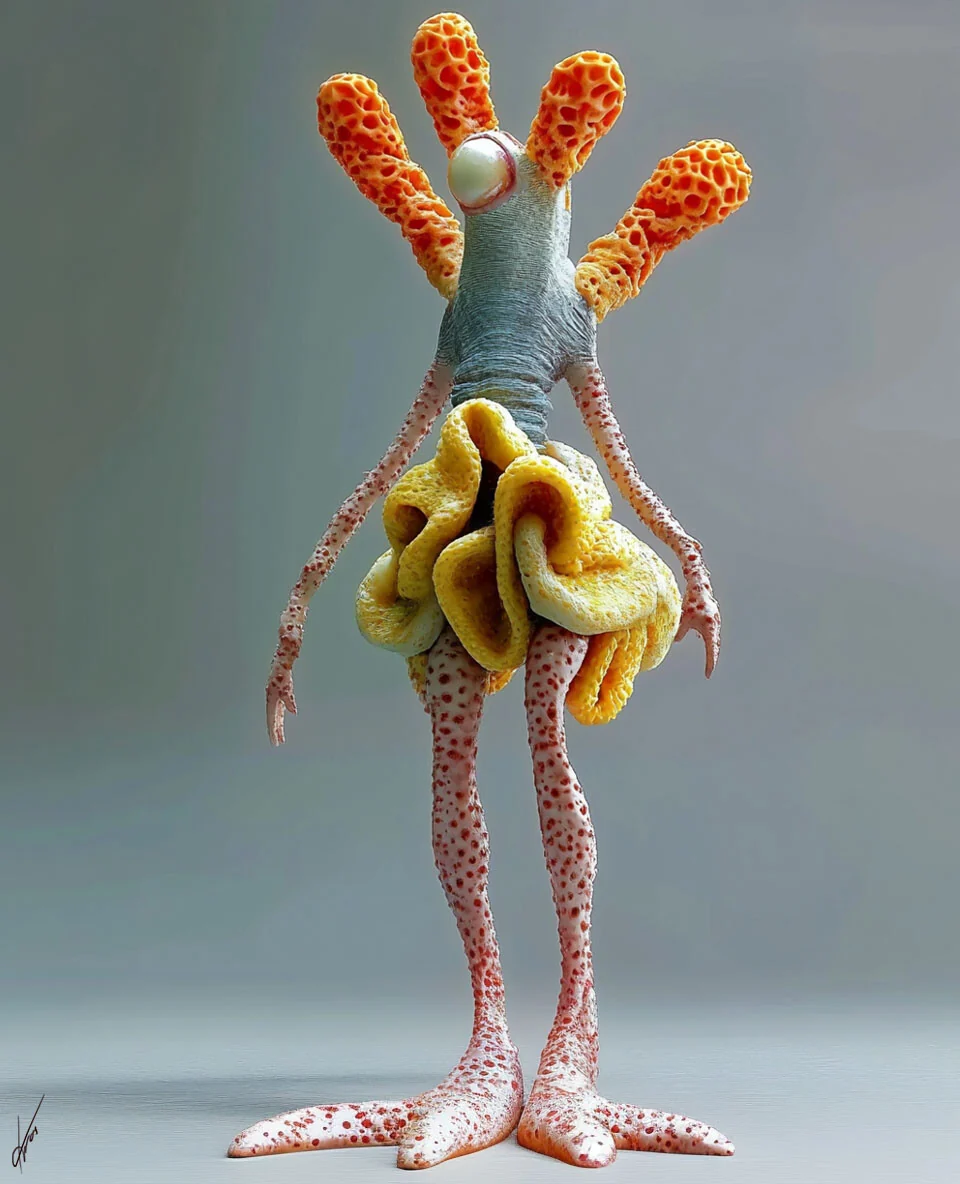
Porous, sponge-like humanoids whose intelligence, social complexity and biological status remain unresolved.
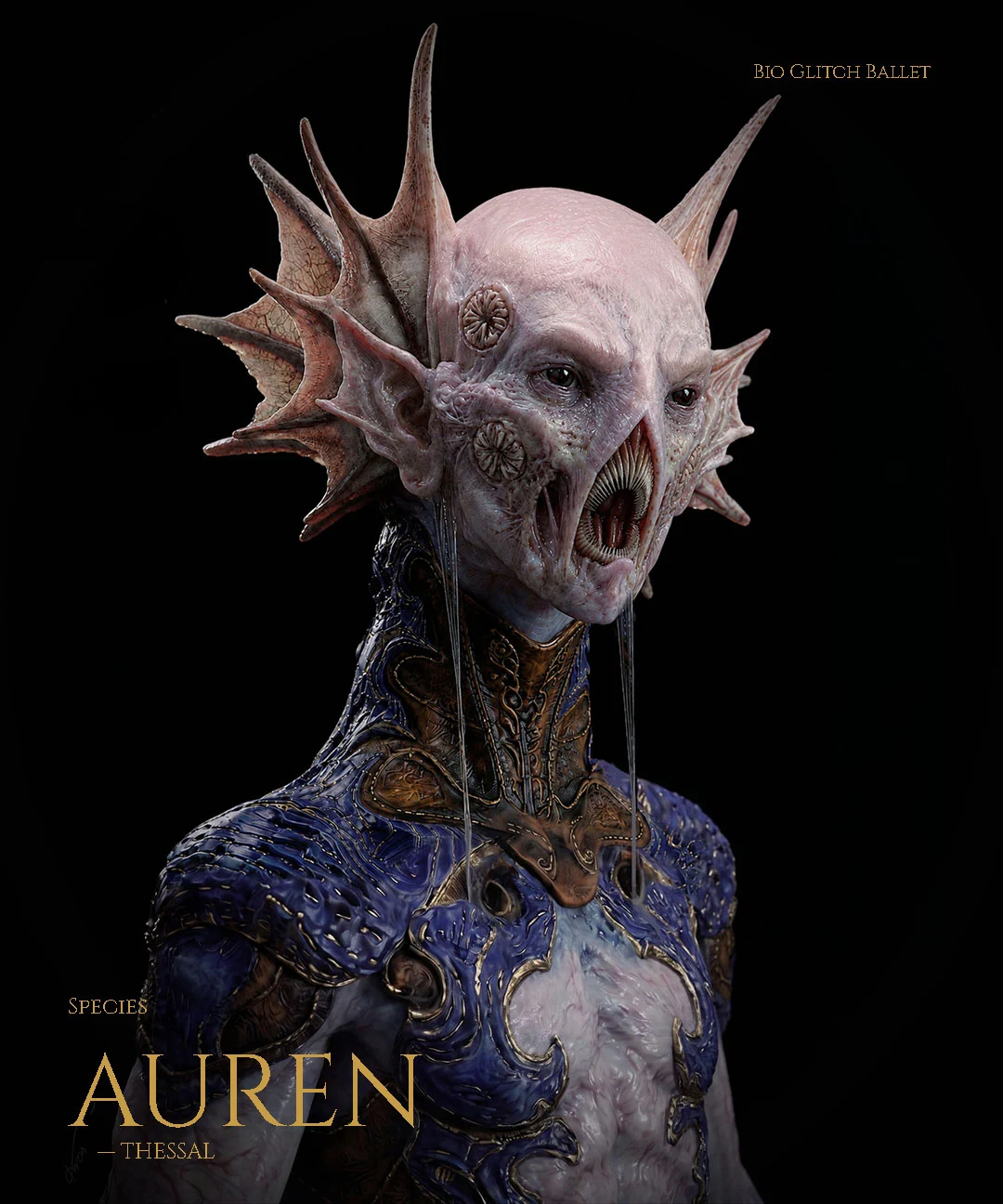
On Thessal, rank is not spoken. It is worn on the body. Auren anatomy operates as a living system of social signals, where cranial frills, membranes and fan-like structures reveal position before a word is exchanged.
During conversation, ritual, conflict and ceremony, these structures shift color and posture, communicating status, mood, lineage and social intent. To outsiders, the Auren may appear aristocratic or sacred; to the Auren, the body is simply the language of power.
Their clothing does not conceal anatomy. It frames it, turning the body into a declaration of rank — and rank into performance.
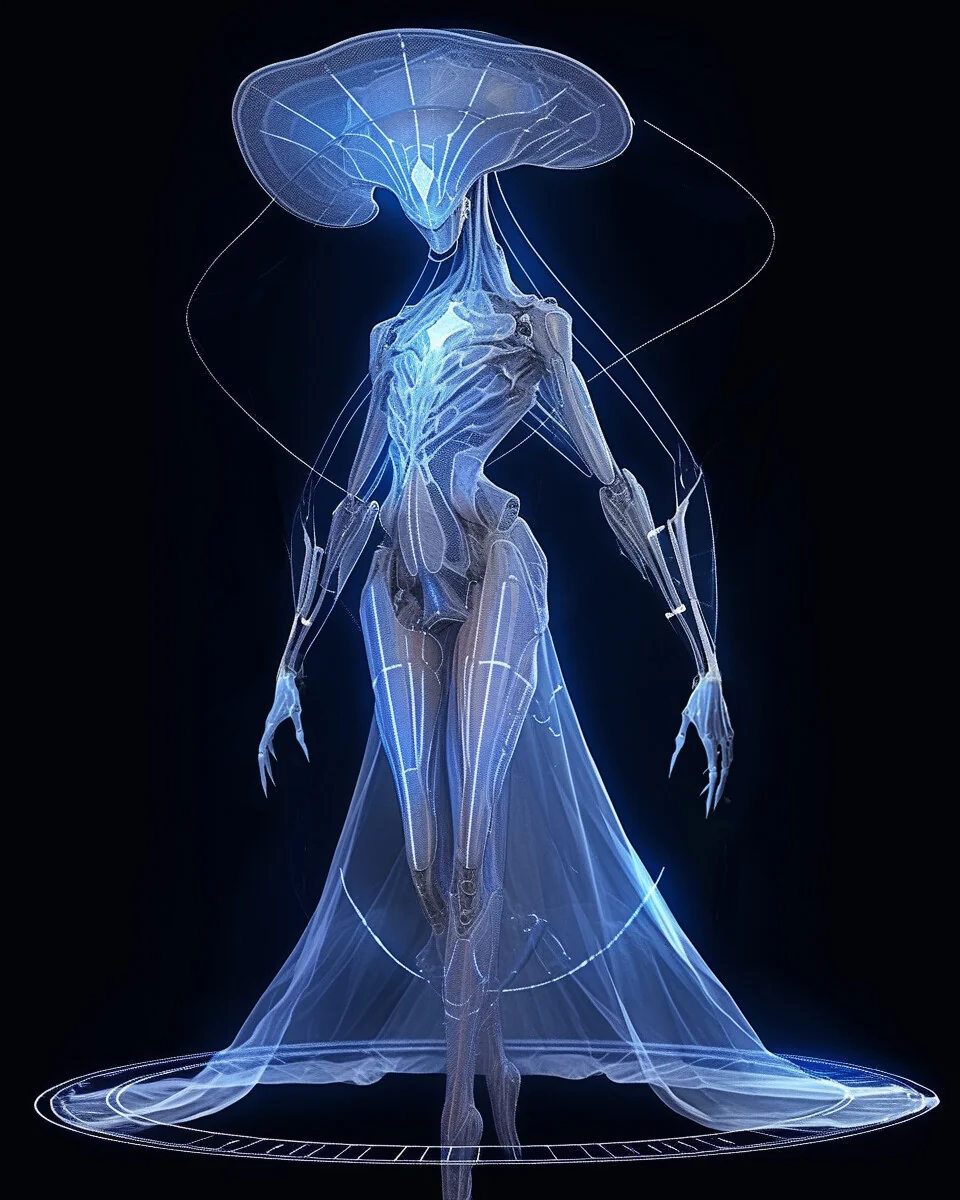
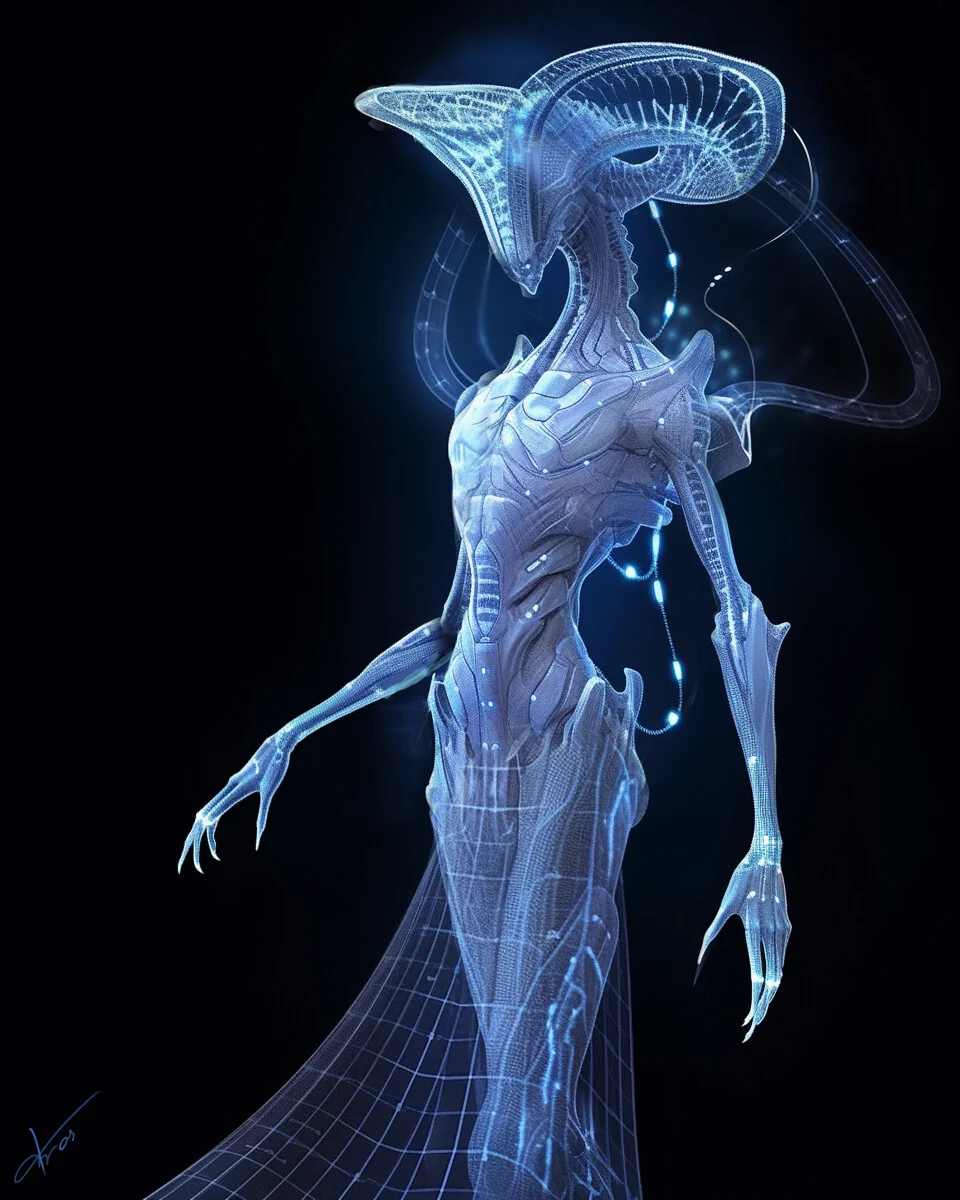
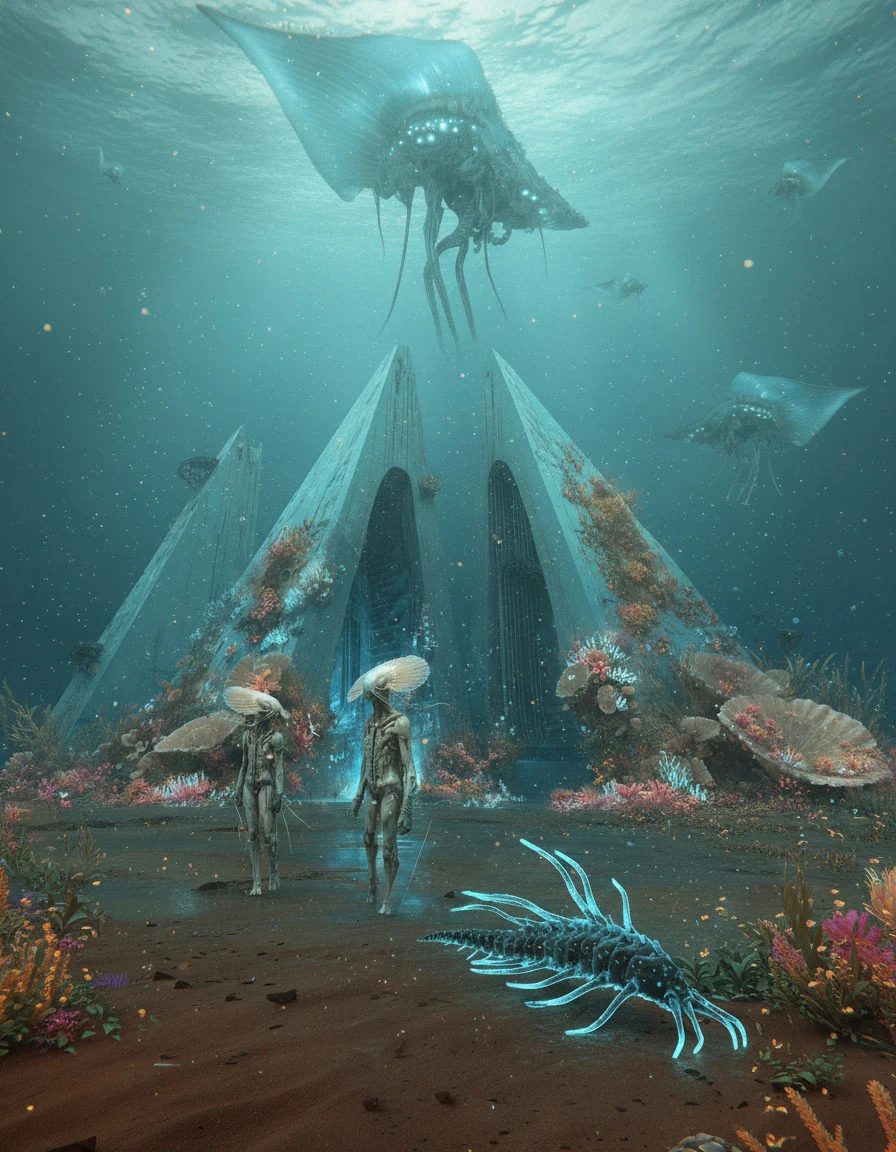
The Elyr do not possess bodies in the biological sense. Their form is held together by concentrated energy, luminous structure and a delicate network of fields that shape them into slender, almost ceremonial silhouettes.
What appears to be skin, bone or fabric is only the visible manifestation of ordered energy. Cold blue light passes through them from within, while translucent layers around the figure stabilize the form like a living field cage.
They are neither mechanical nor organic. The Elyr exist between lifeform and phenomenon — closer to a conscious wave than a conventional organism, sustained by rhythm, frequency and energetic pattern.
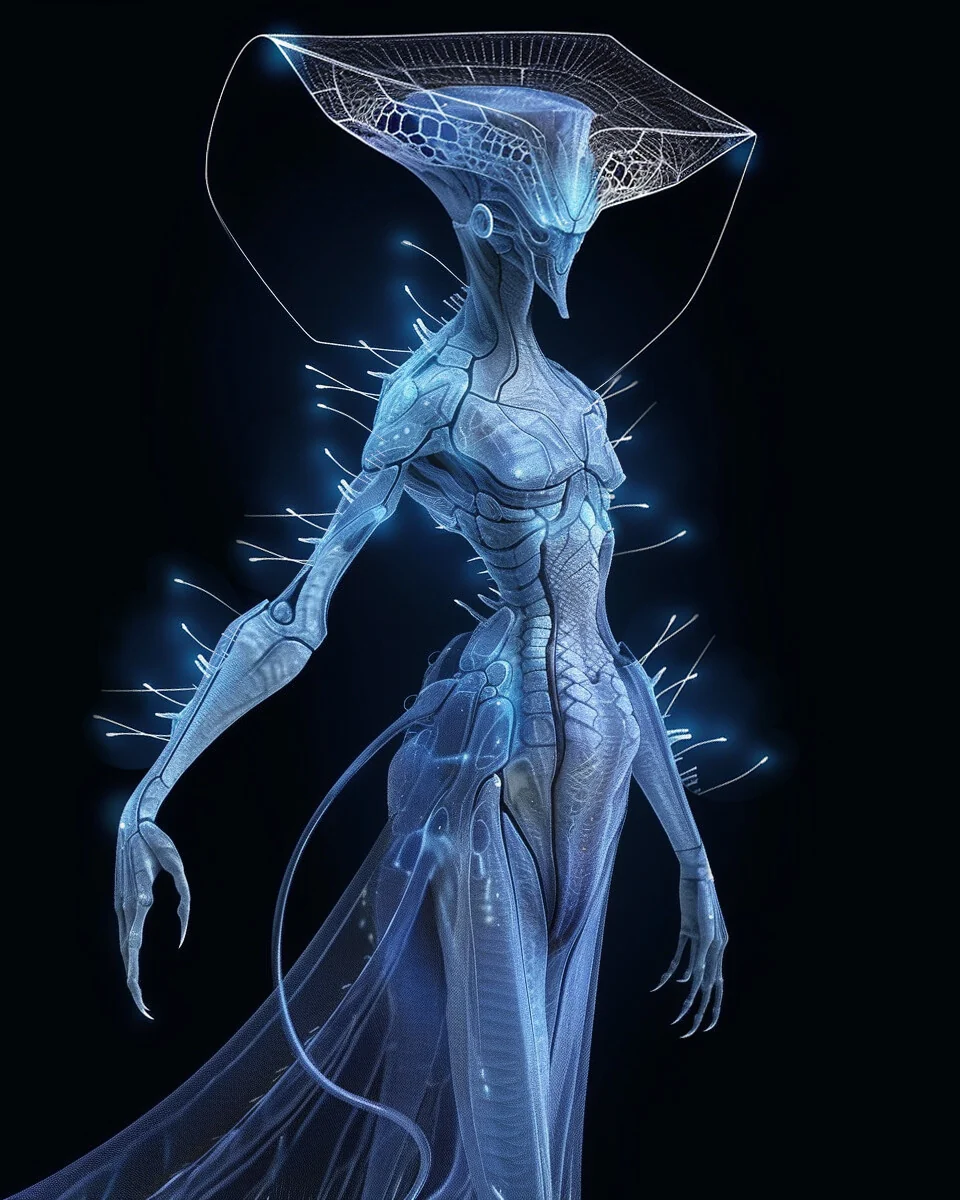
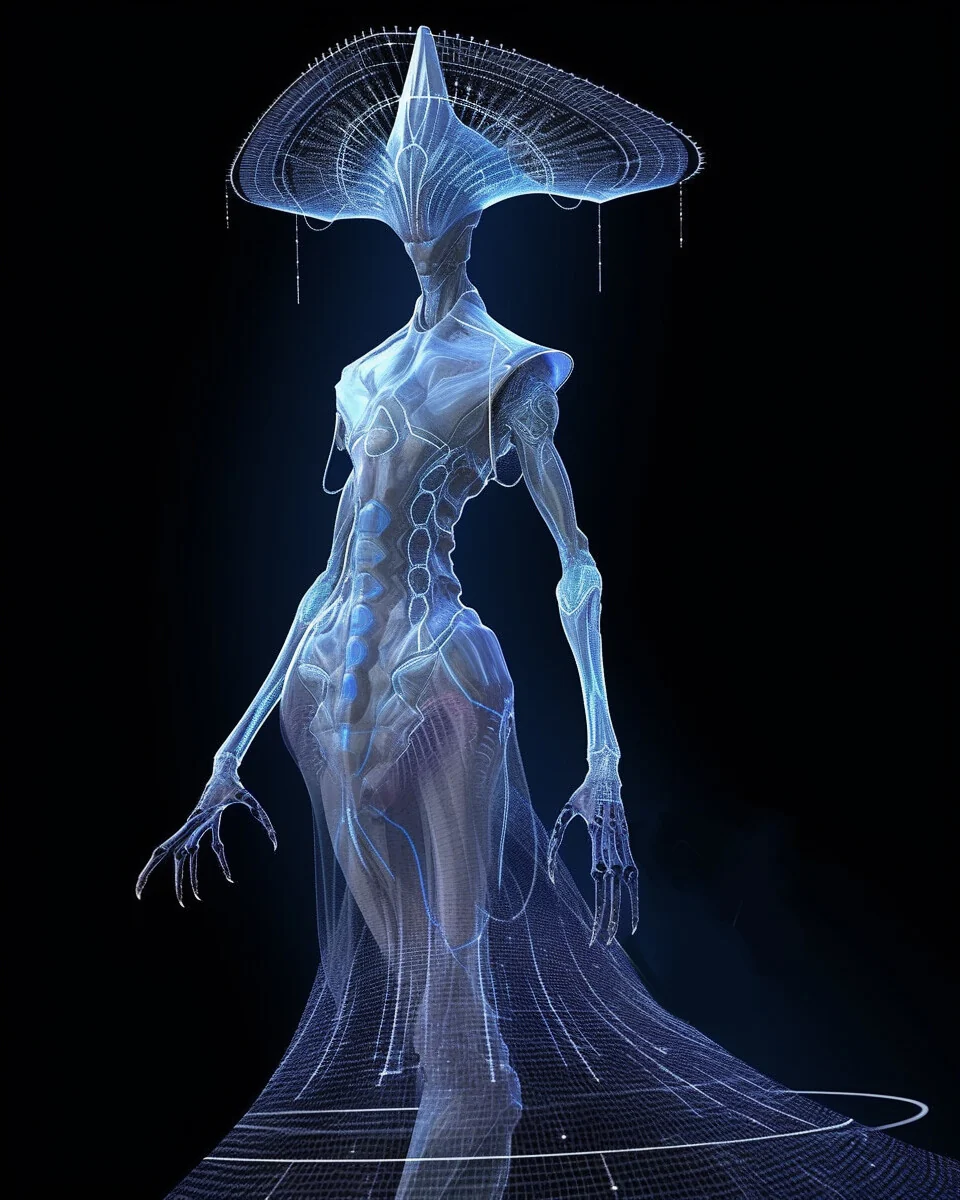
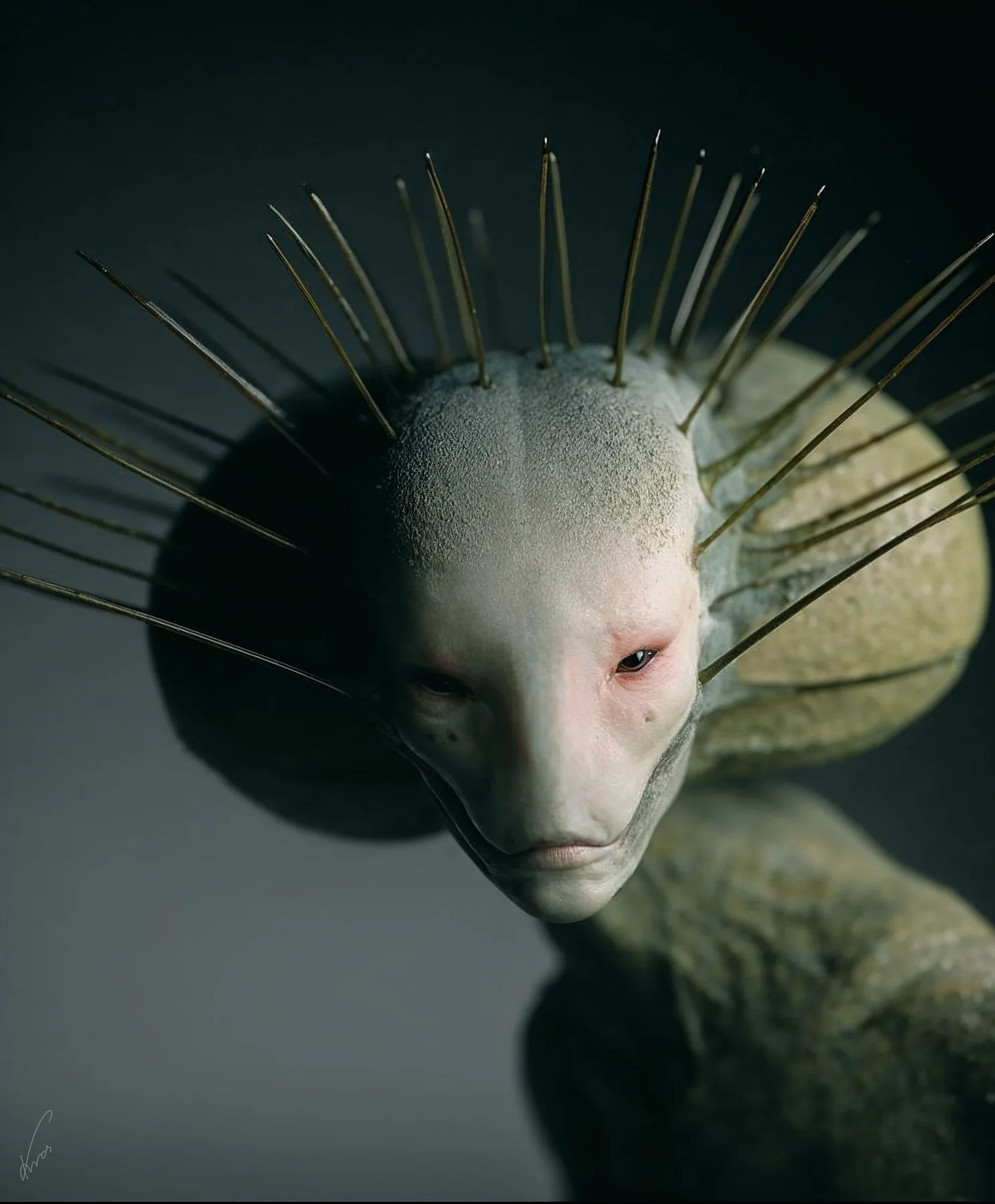
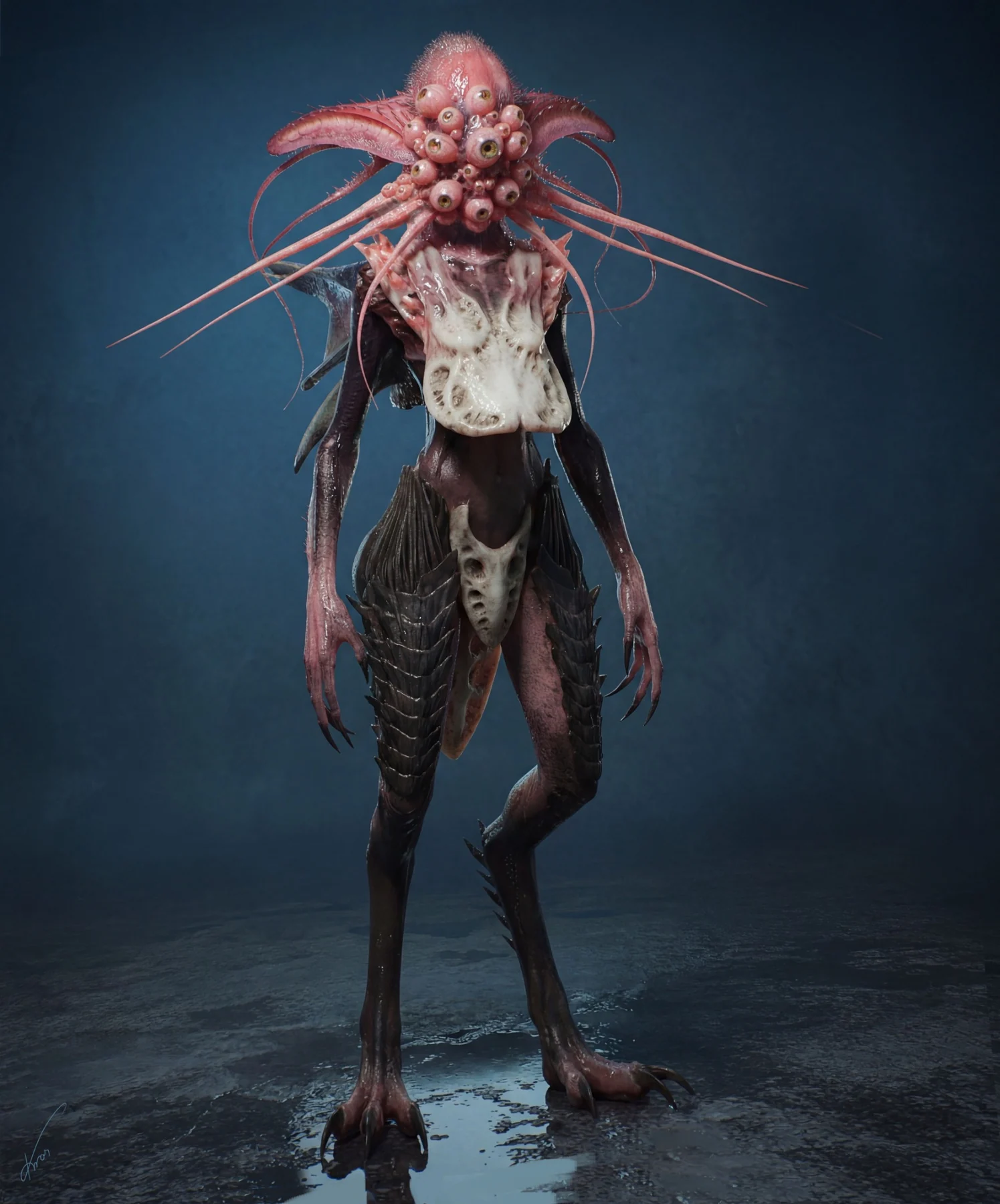
The predators of Vespera evolved within an extremely humid, gas-rich atmosphere. Their bodies show intense sensory development and sponge-like soft tissues, allowing them to detect subtle changes in pressure, scent, moisture and air movement.
Their expanded receptors, porous cranial structures and flexible membranous anatomy are not decorative features. They are survival tools in an environment where visibility is limited and danger often arrives faster than it can be seen.
On Vespera, a predator does not need to look at you. It can feel that you are close.
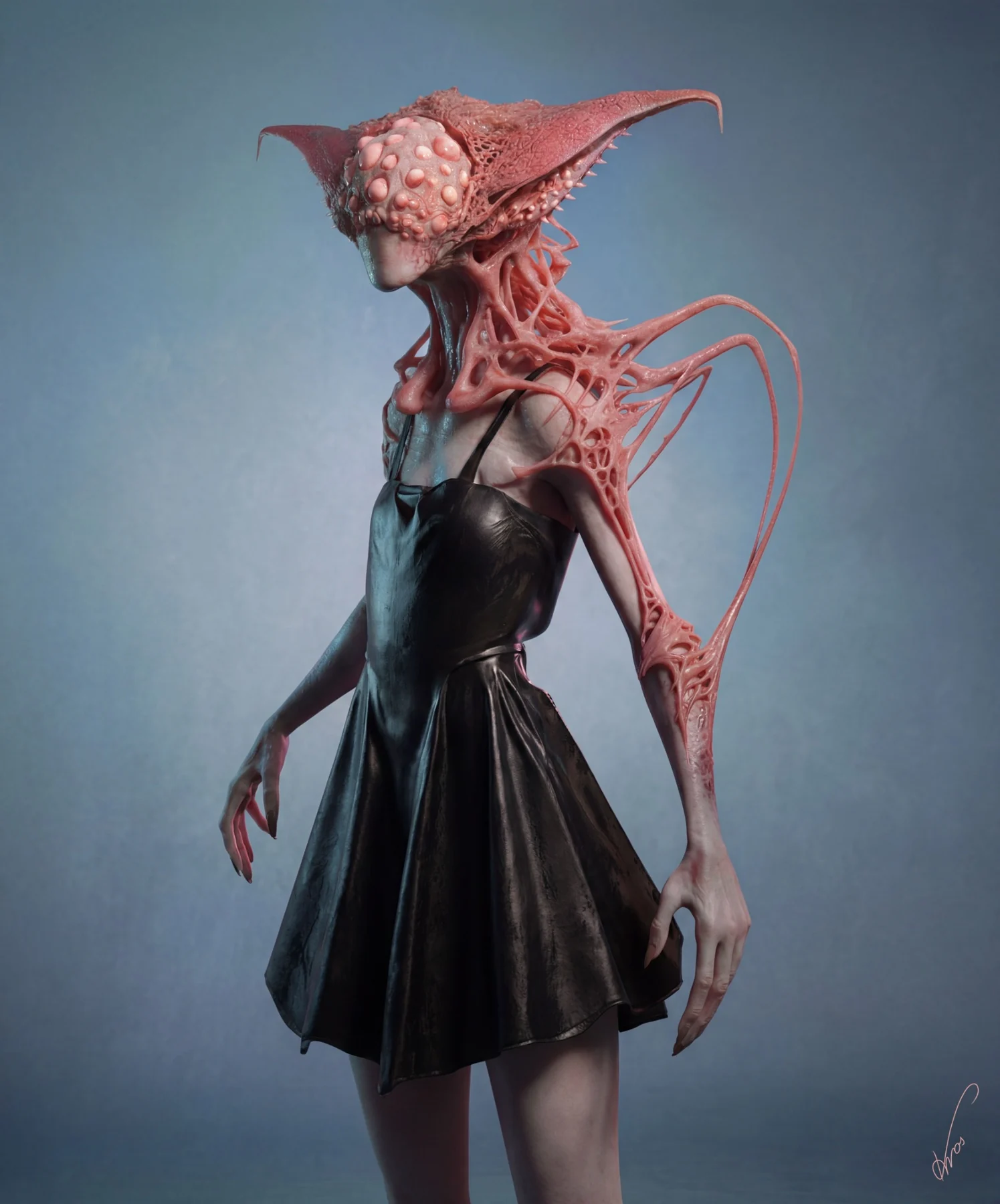
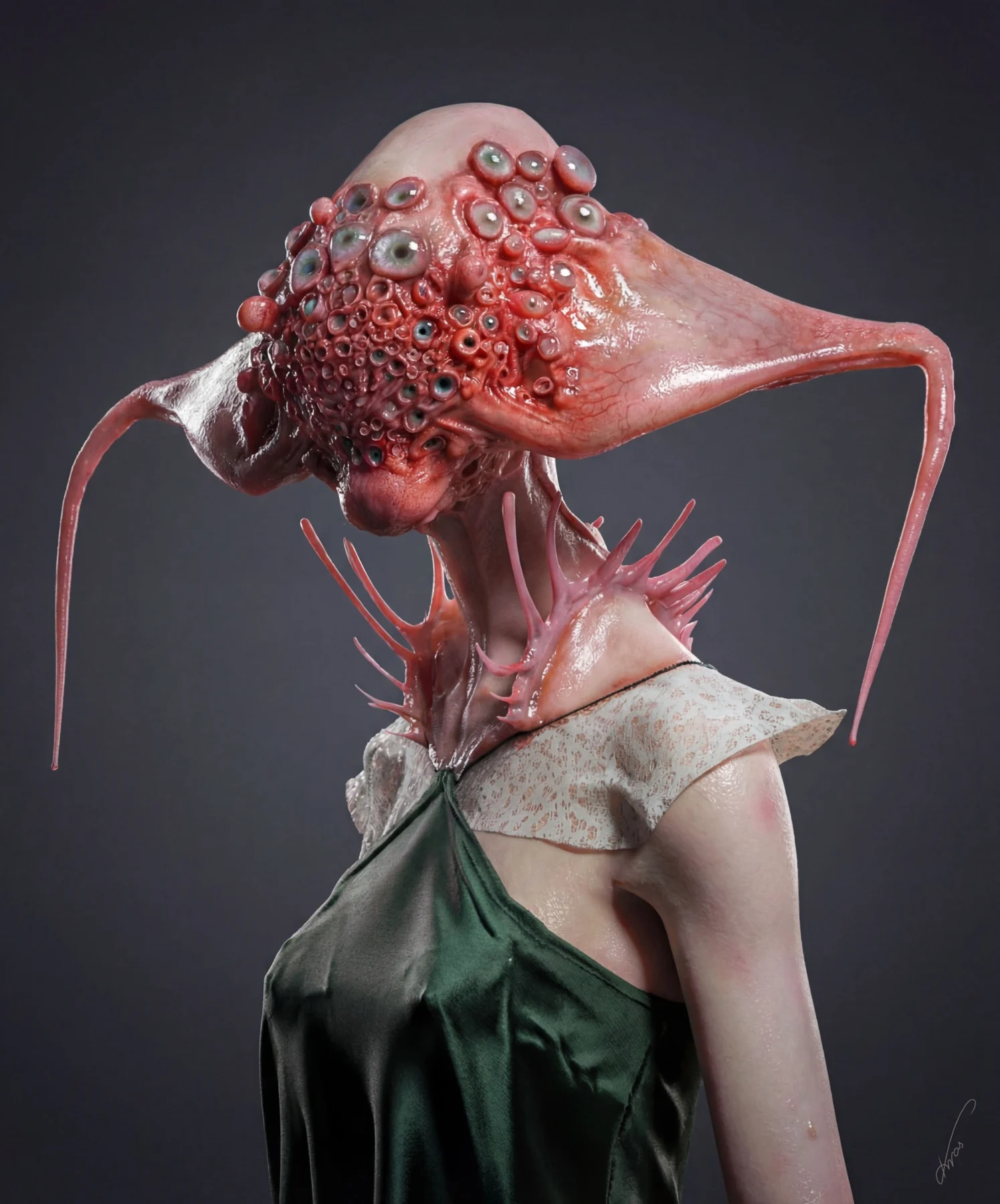
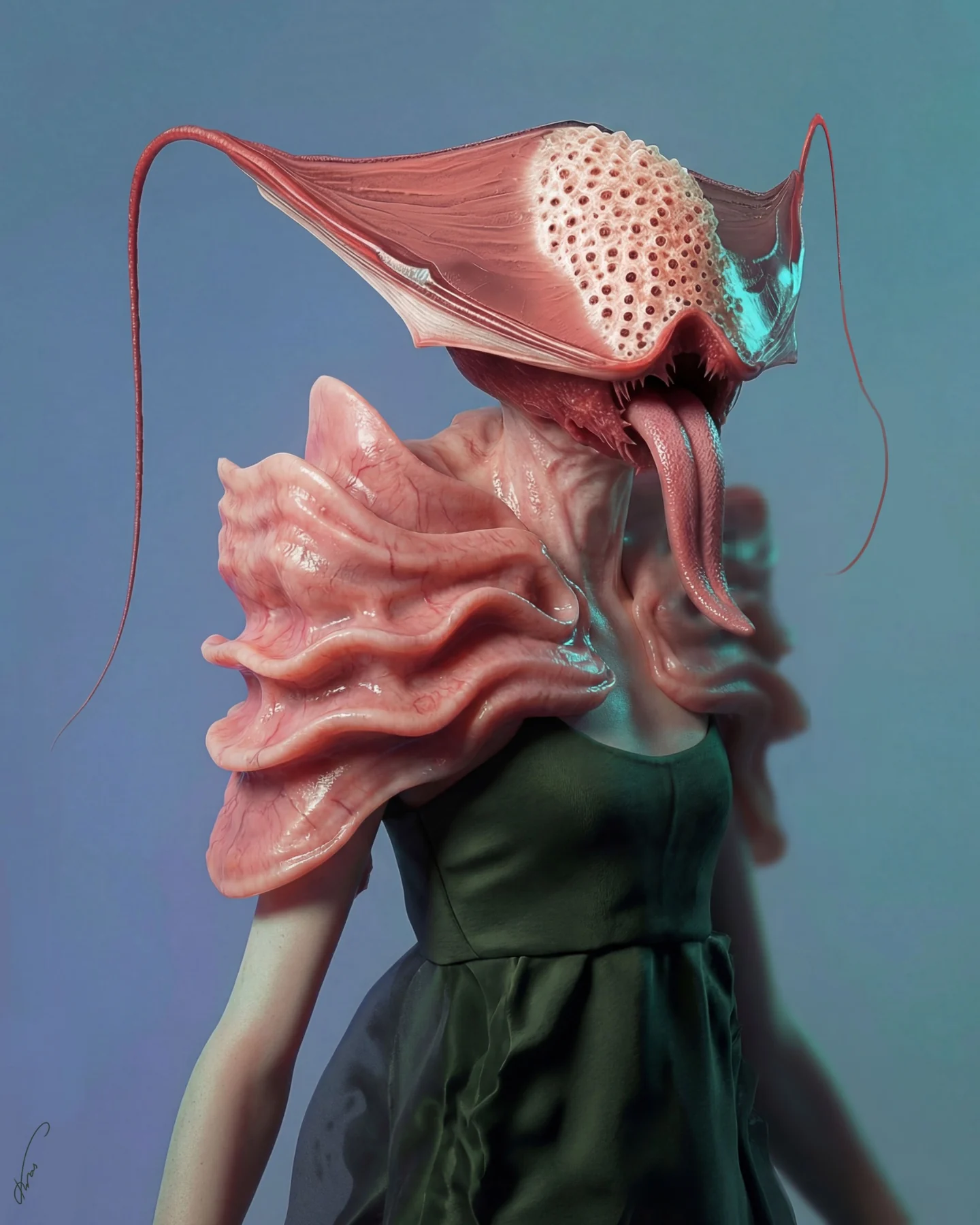
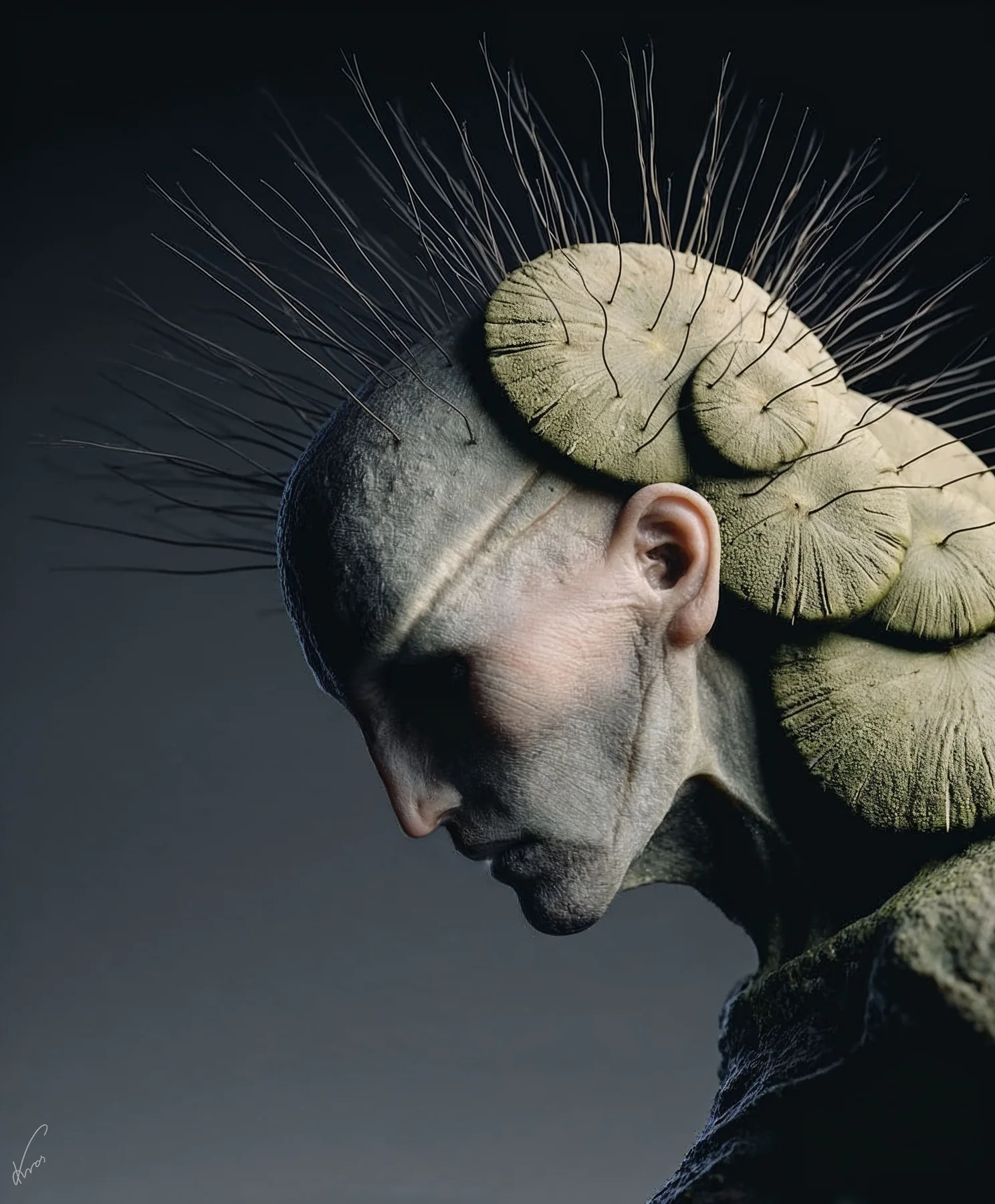
The porous inhabitants of Arynon resemble living organic sponges shaped into humanoid proportions. Their anatomy is soft, strange and full of cavities, folds and openings.
It remains difficult to determine whether they are a developed intelligent species or an unusual local lifeform that only imitates social structure. Their bodies appear lightweight and semi-structured, as if grown rather than built.
On Arynon, appearance alone does not answer the question of intelligence. It only deepens the mystery.
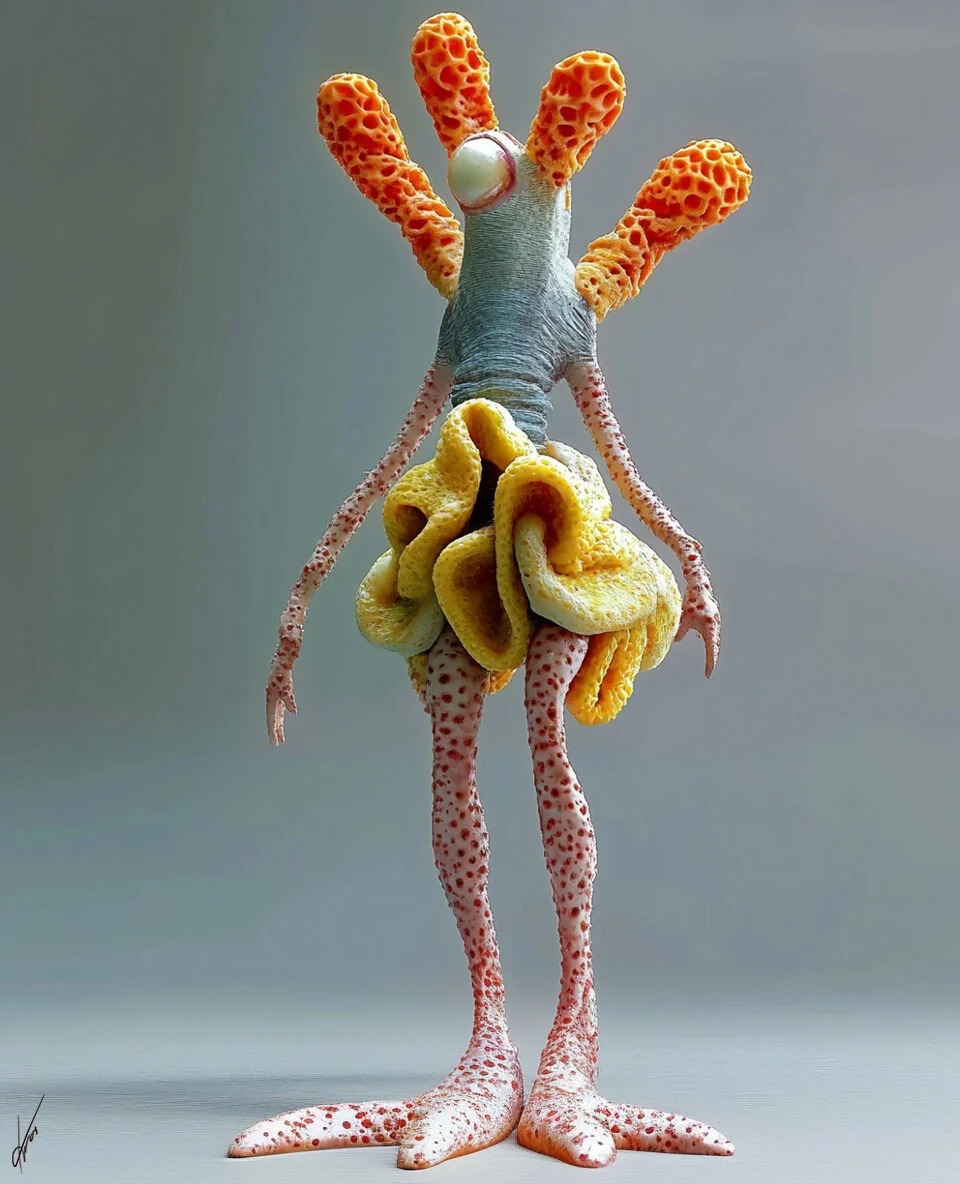
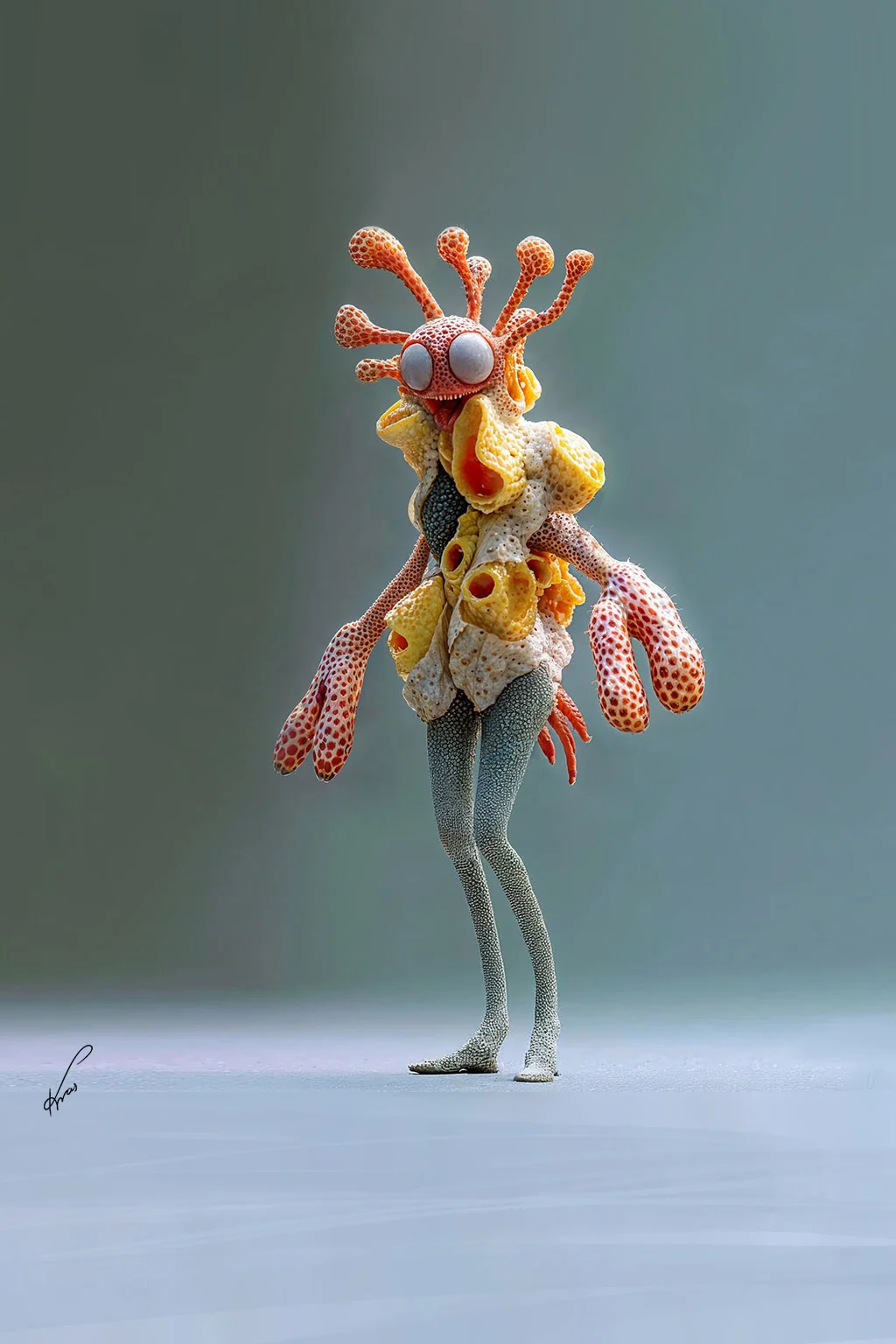
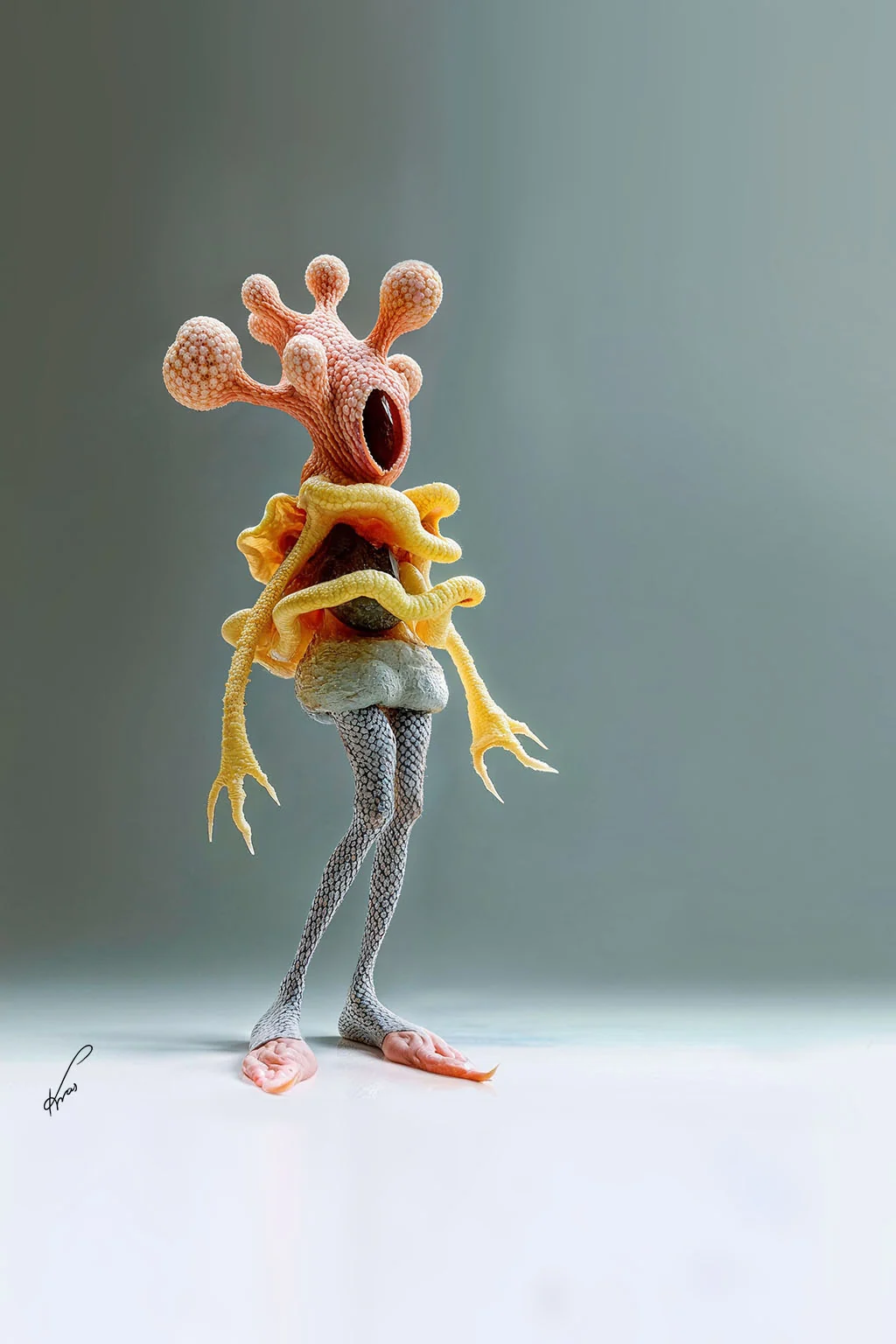
Animal-like organisms, drifting specialists and biospheric intermediaries recorded through anatomy, movement and environmental adaptation.
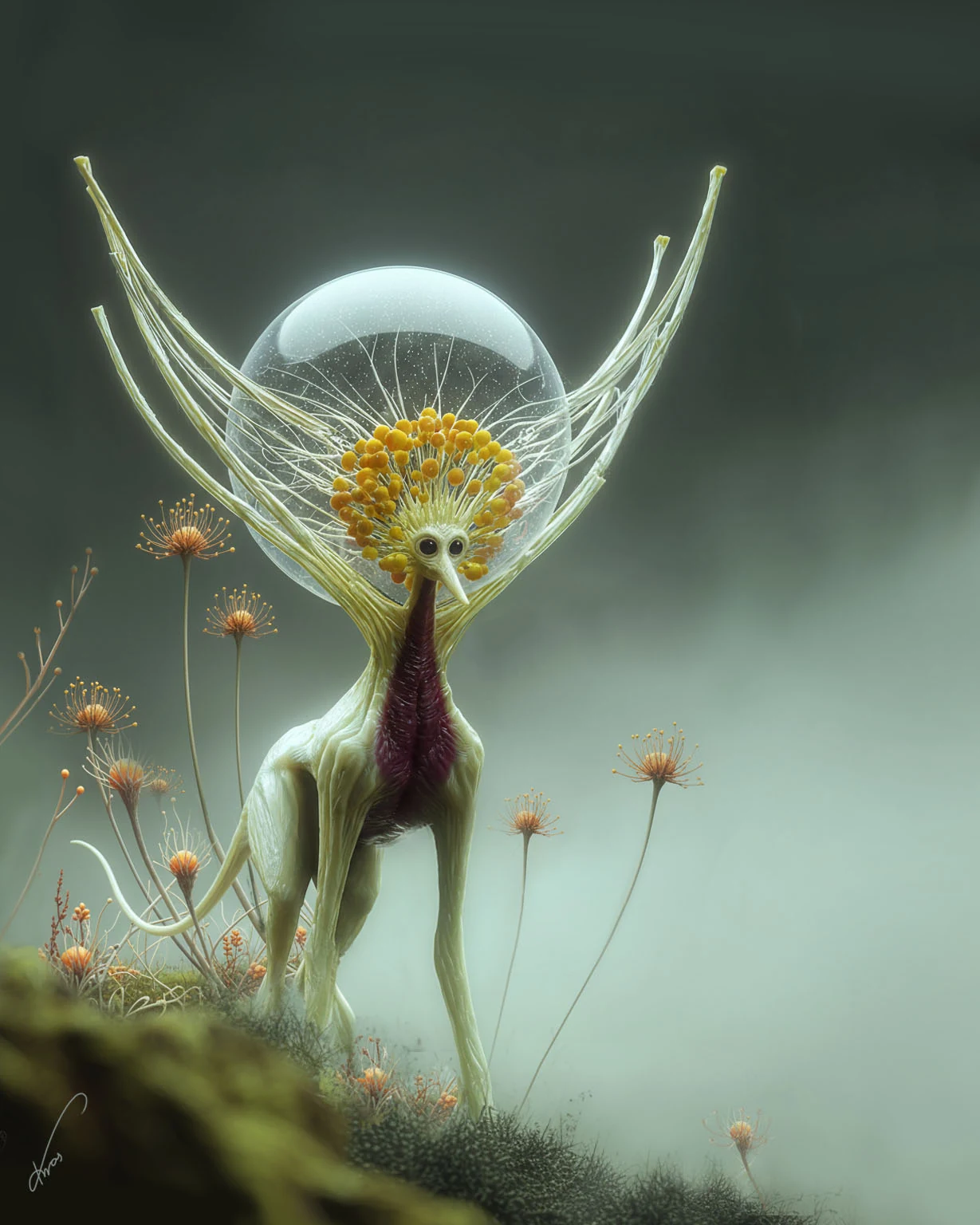
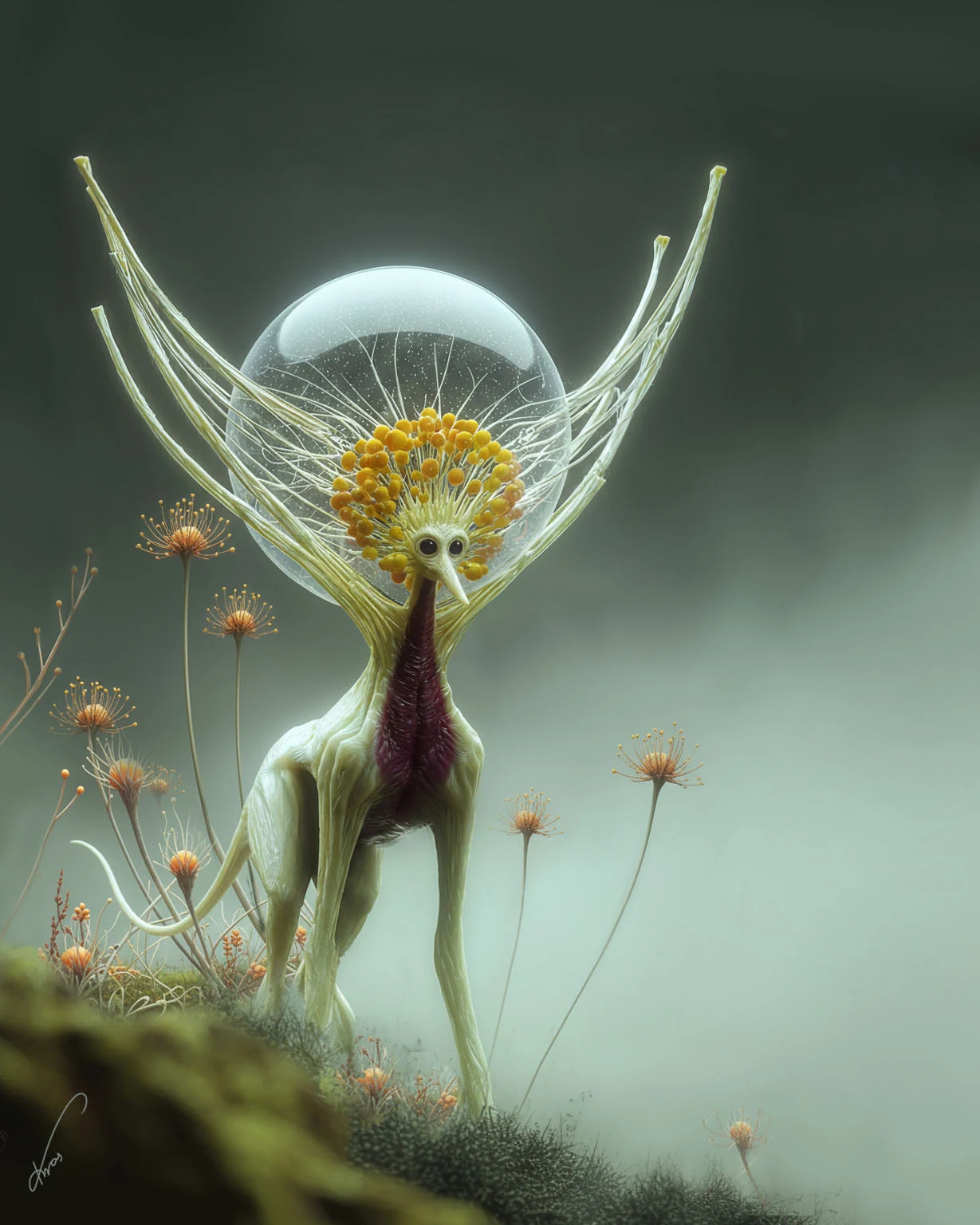
Gas-supported organisms with fragile anatomy, adapted to survive the crushing pull of an exceptionally high-gravity world.
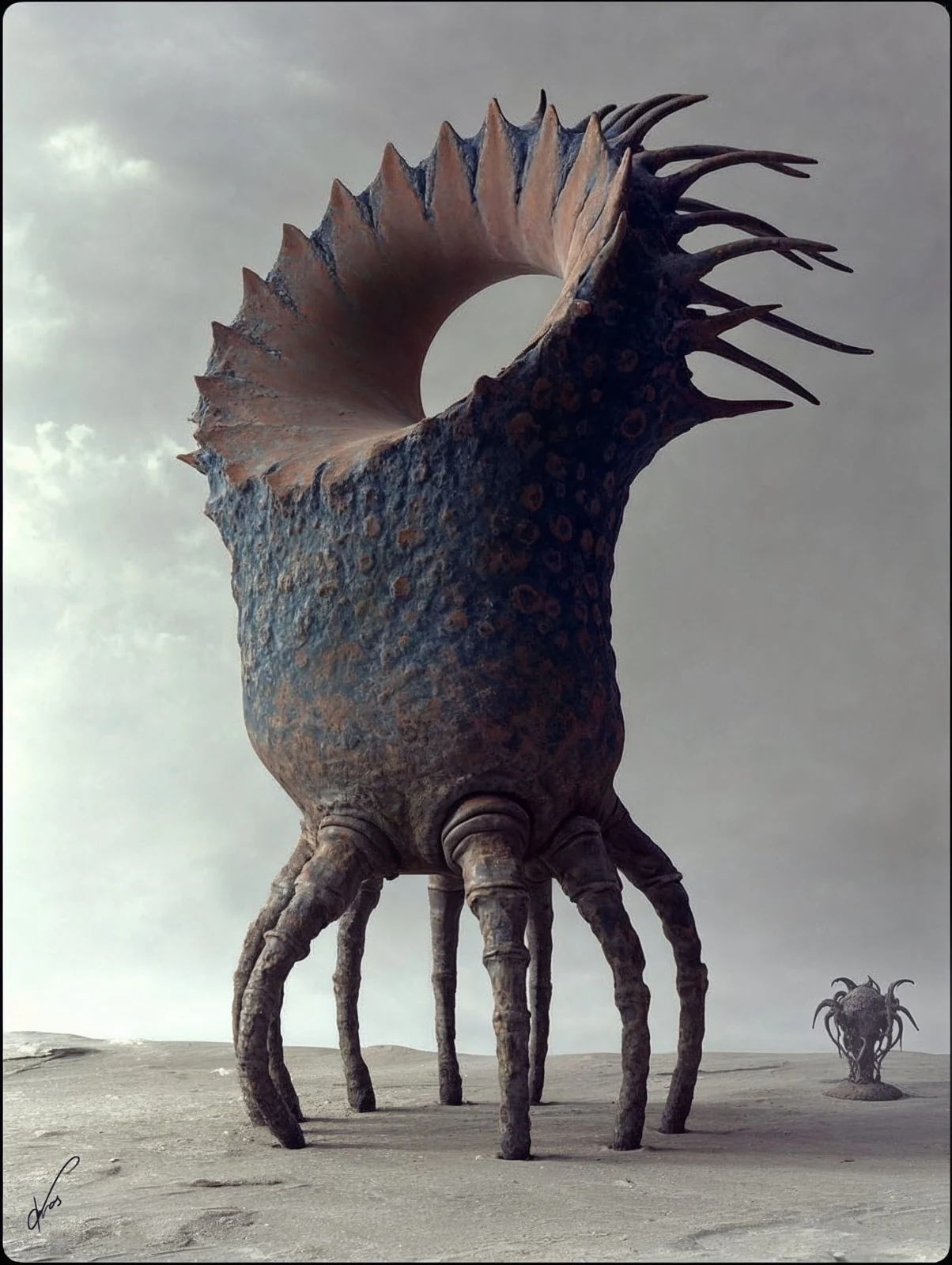
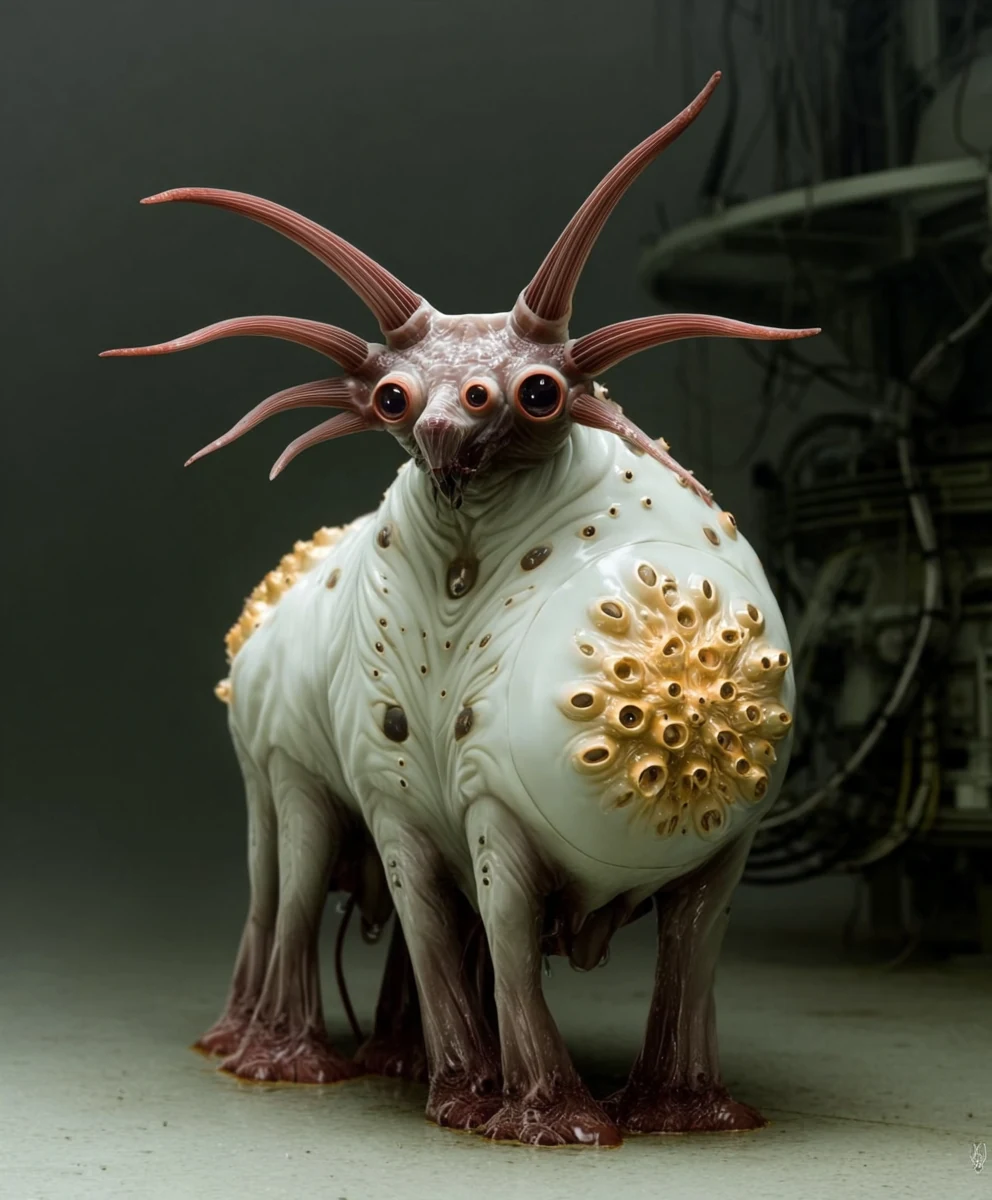
A solitary resonant walker whose hollow crown amplifies distant sound and returning ground vibrations across empty plains.
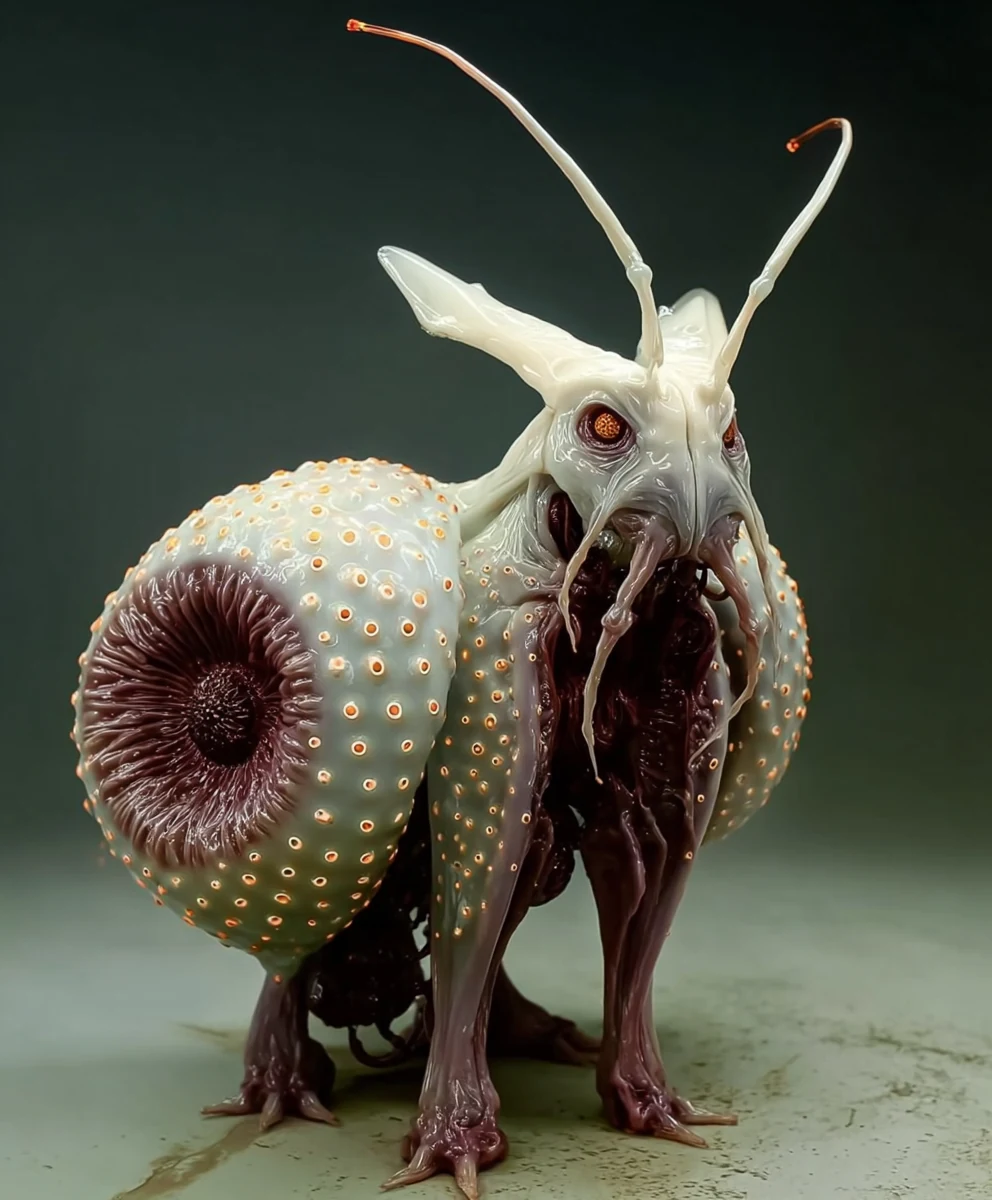
Soft, porous animals whose bodies act as a distributed sensory apparatus for moisture, spores, pressure and biological signals.
Leviorae evolved on a planet where gravity makes body mass dangerous. Their anatomy is extremely light, supported by semi-transparent chambers filled with light gases.
These gas-filled upper structures help the organism partially lift itself from the surface, reducing the pressure of its own weight. Their membranes are not decorative — they are the reason the creature can move at all.
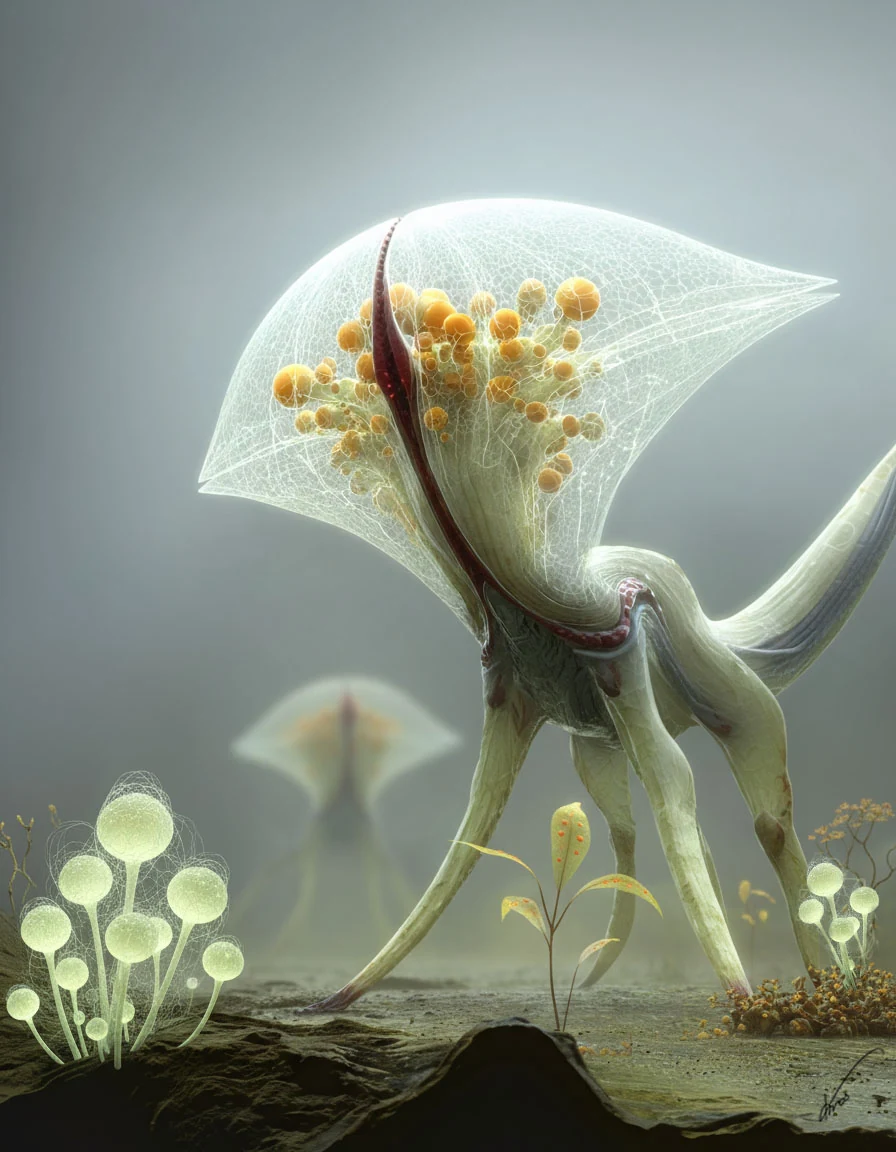
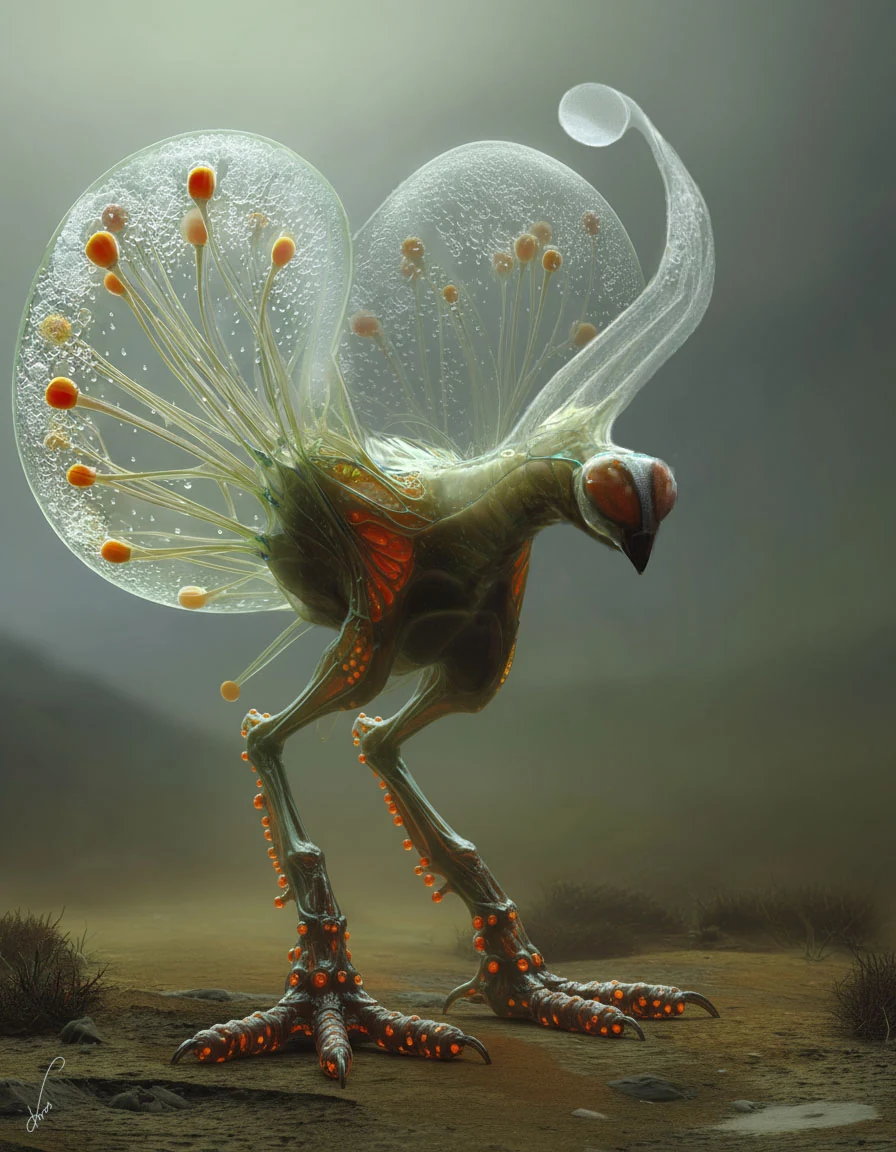
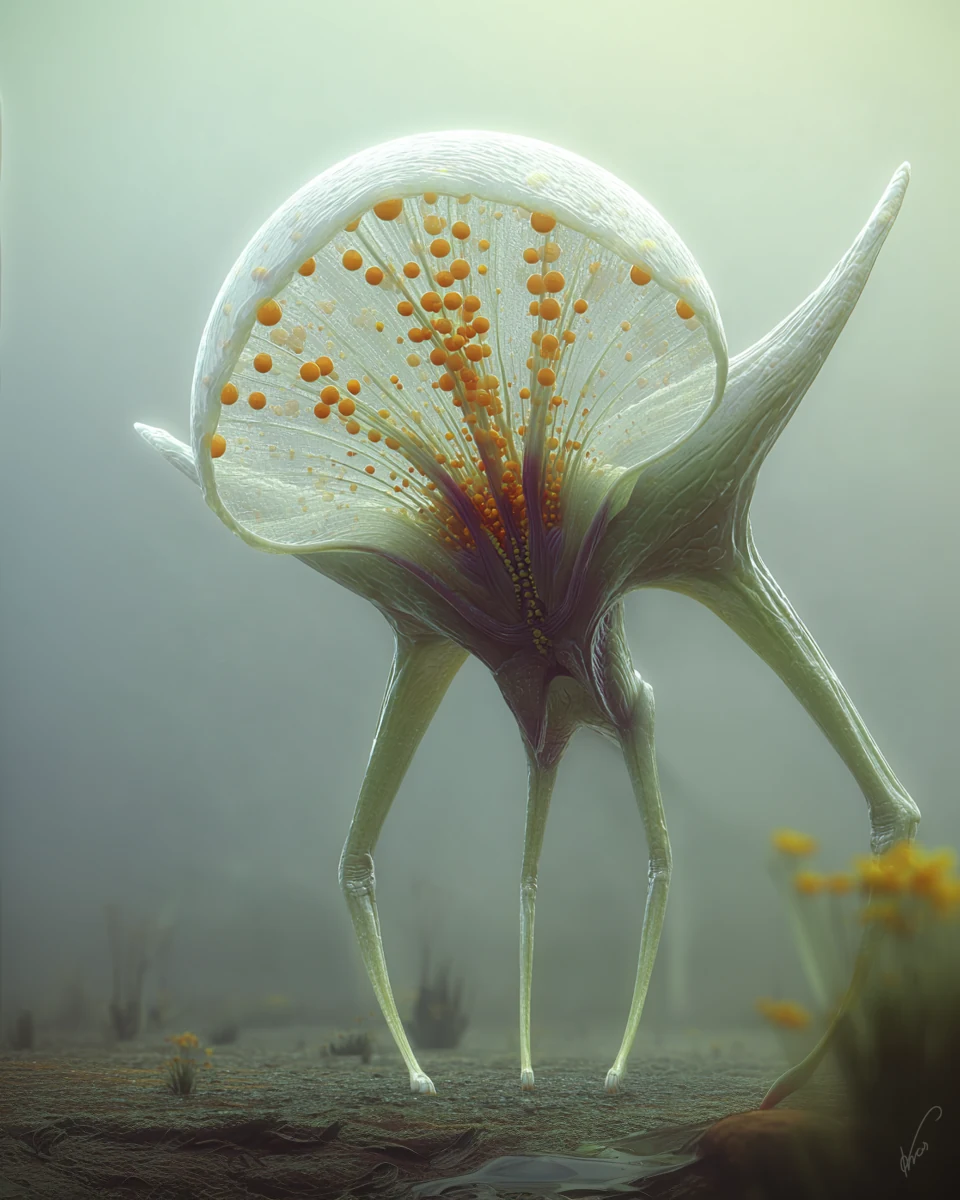
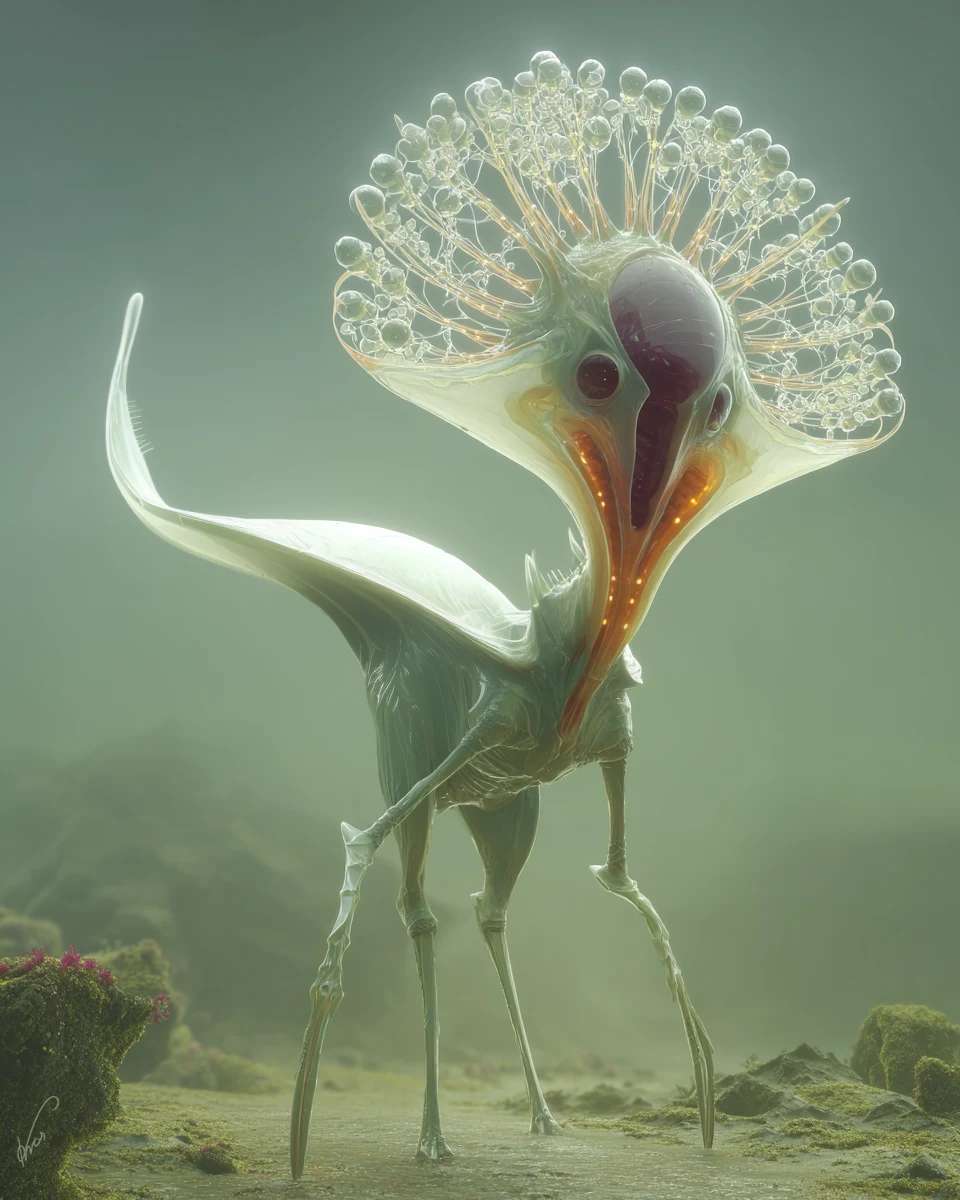
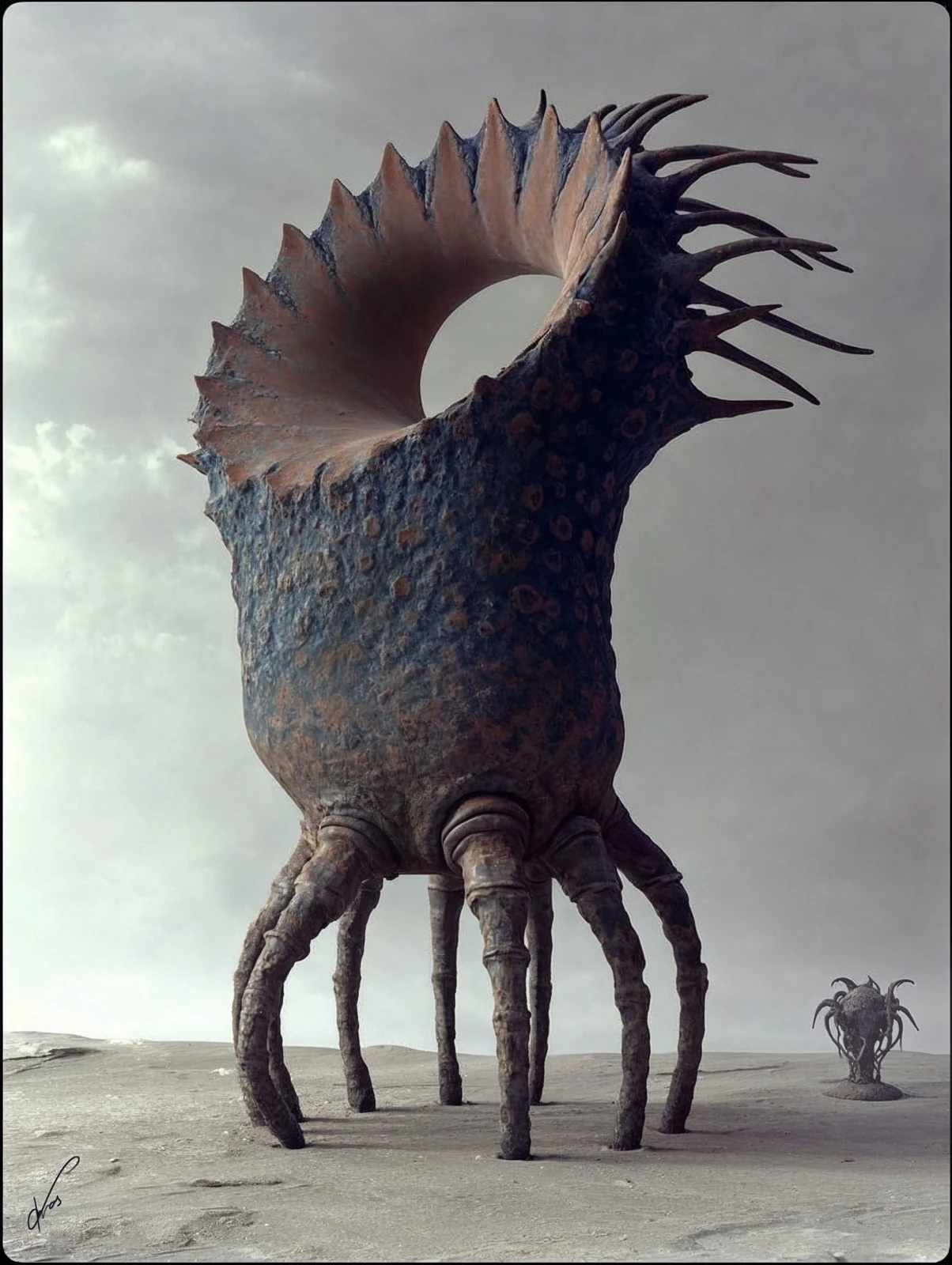
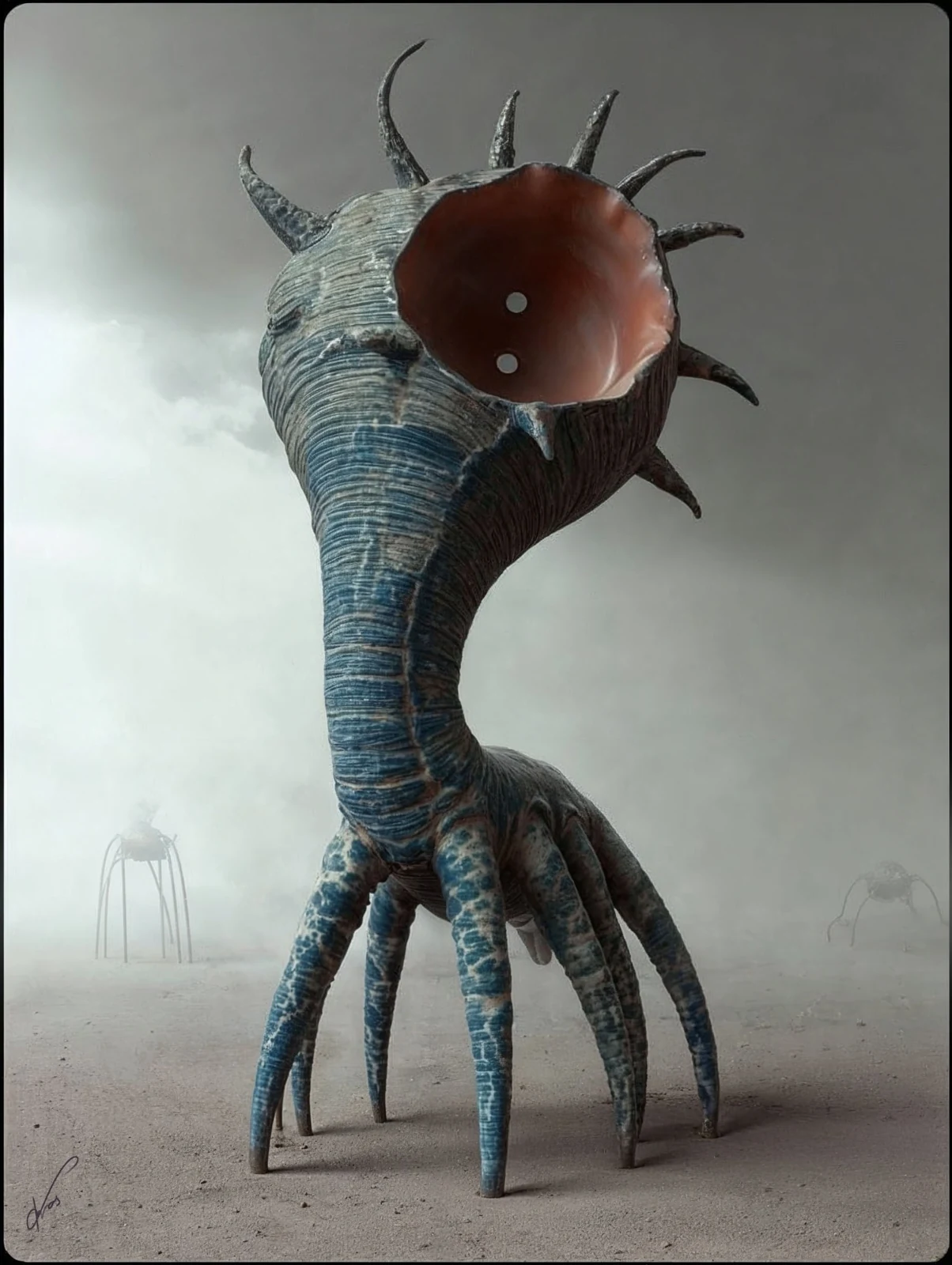
The Hollow Drifter is a solitary plains organism with a vast hollow crown. Inside it, chambers and membranes amplify sound, pressure changes and returning ground vibrations.
It moves slowly through fog, dust and open terrain, reading the landscape through resonance rather than sight. Each step sends a signal into the ground, then waits for the world to answer.
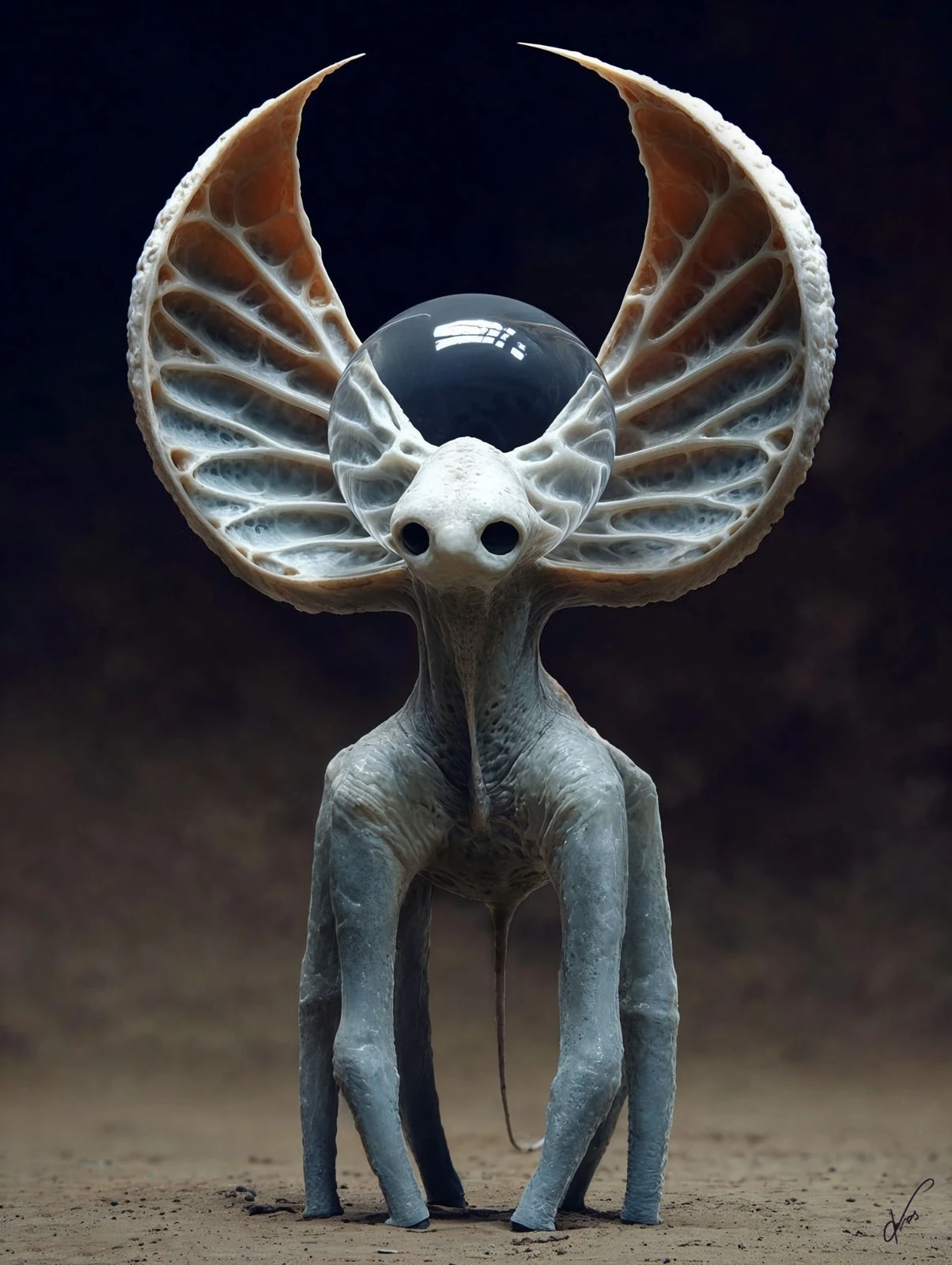
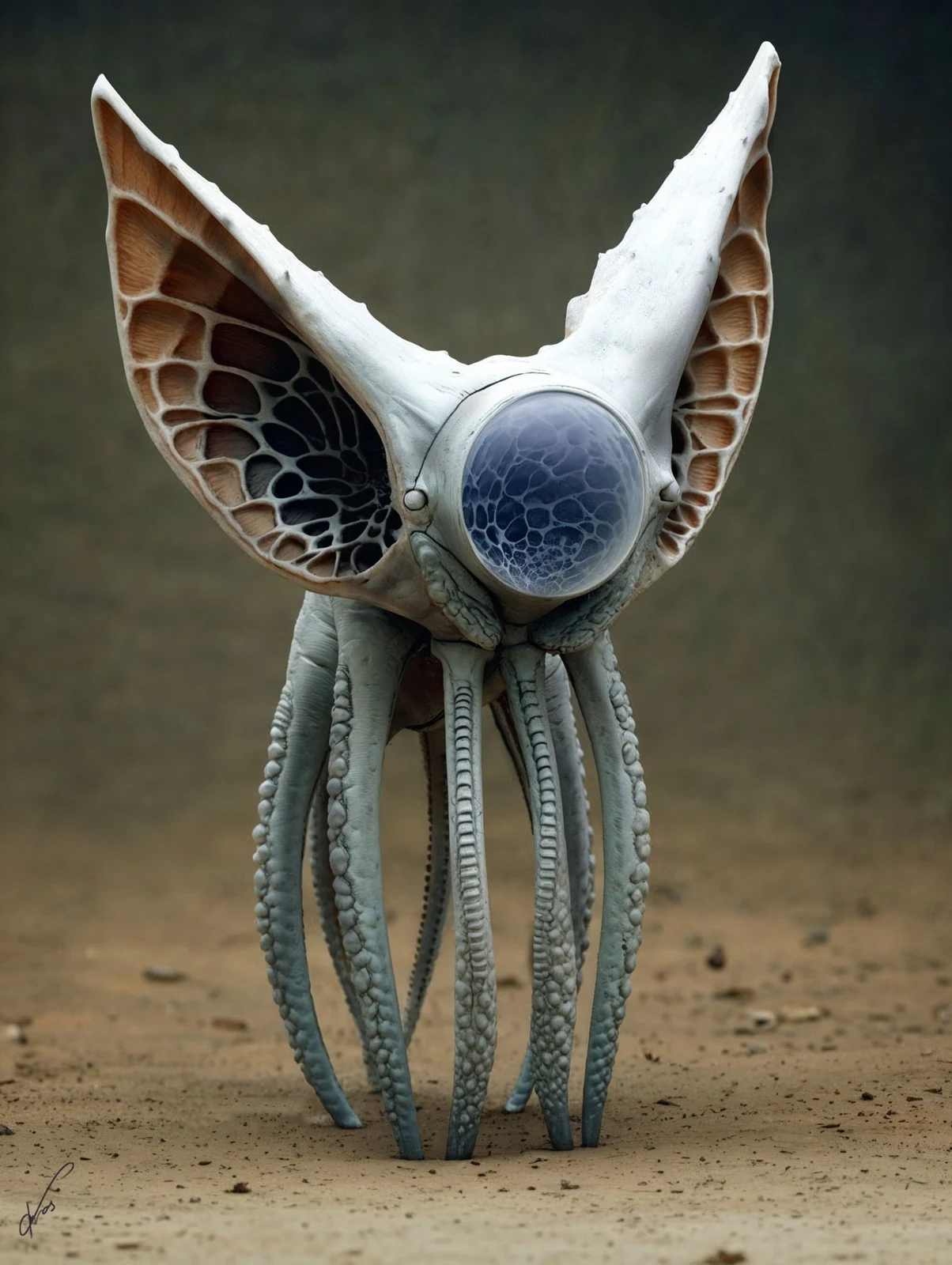
Nidoculi are porous animals from a planet with an intensely active biosphere. The air around them is saturated with moisture, spores, pollen and chemical signals.
Their soft bodies are full of openings, chambers and membrane-like structures that receive information from the environment. Some organs detect light, others react to pressure, scent, humidity or airborne microorganisms.
They are less like simple animals and more like moving fragments of the ecosystem — filtering, sensing and carrying what the planet breathes.
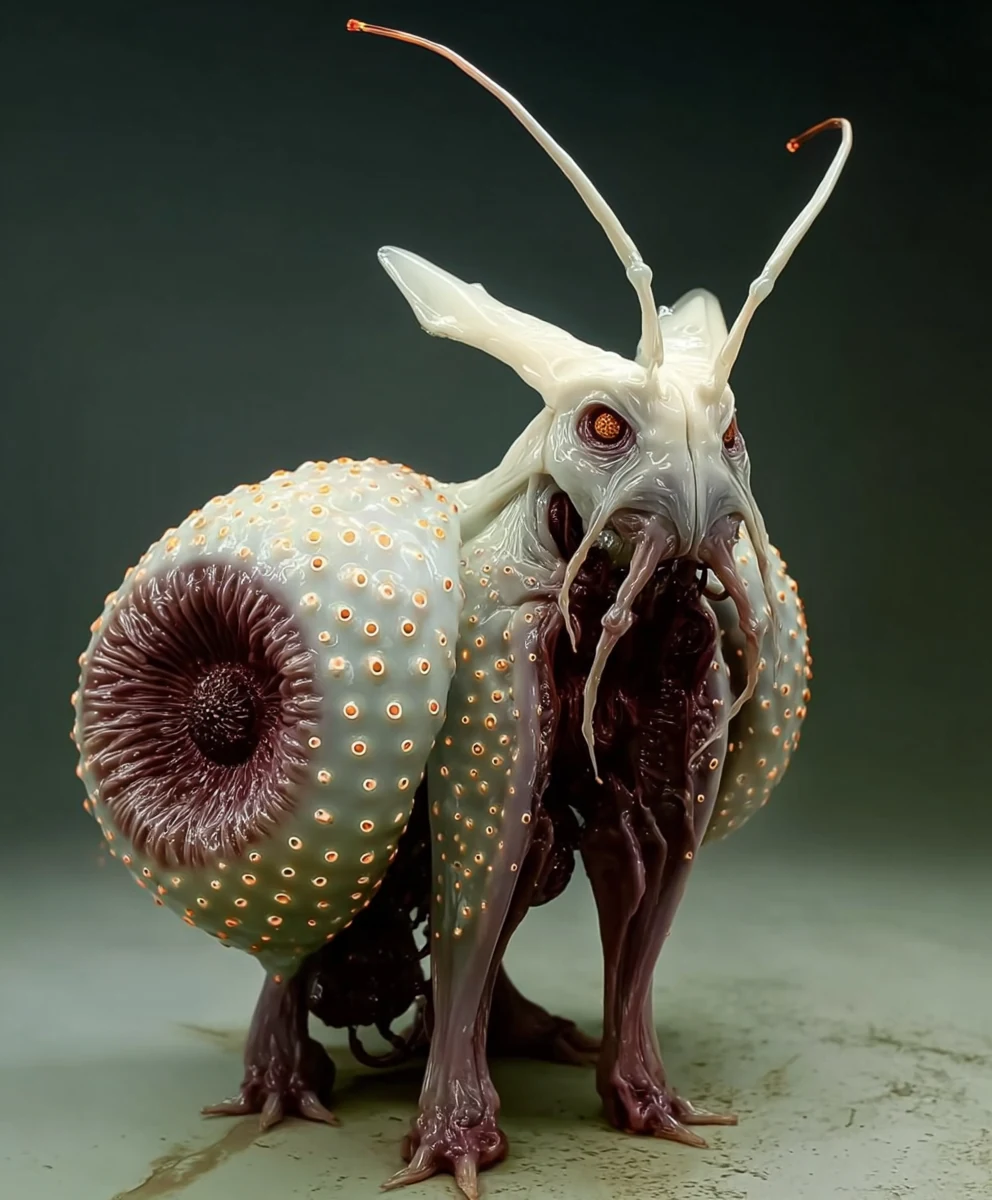
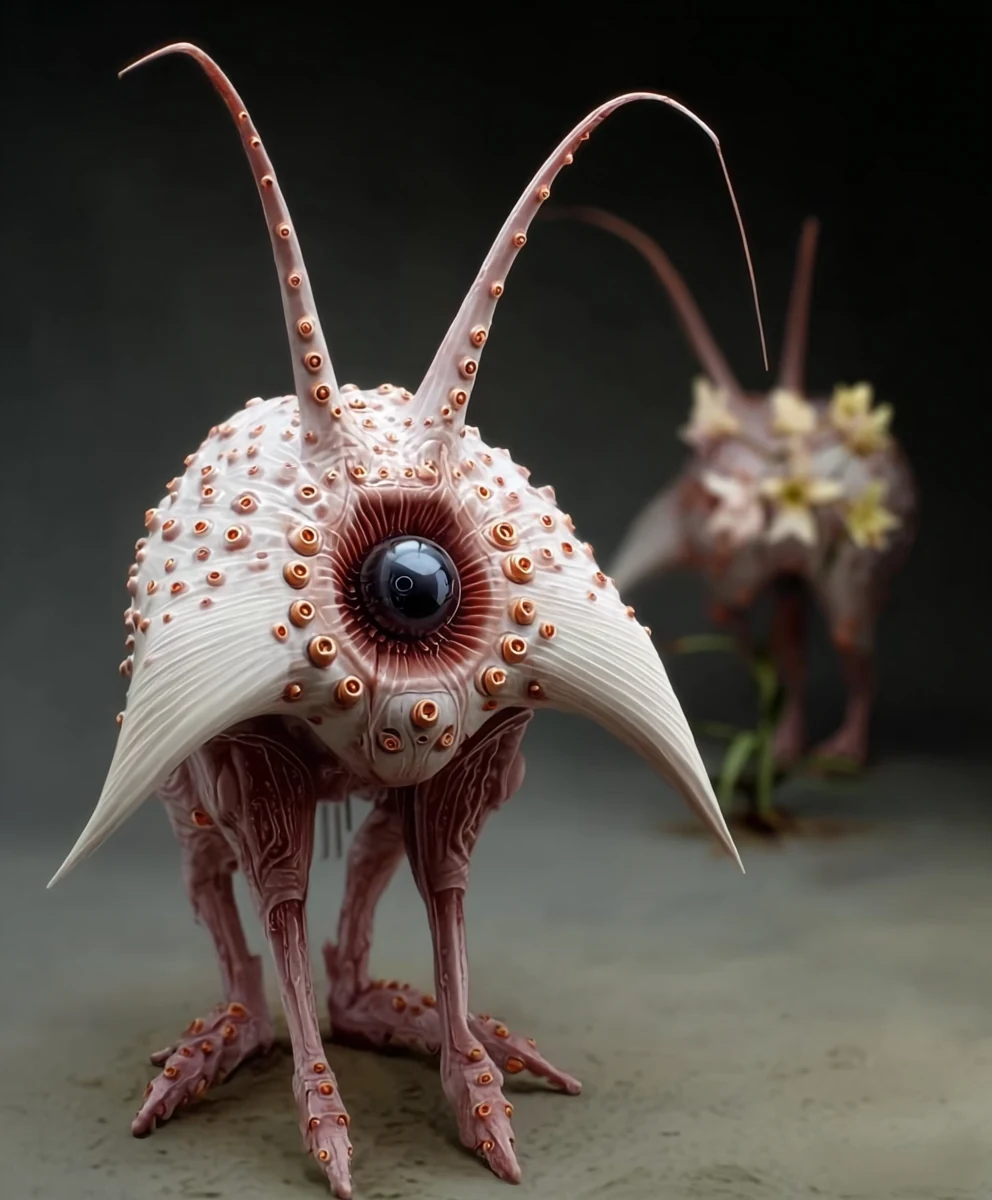
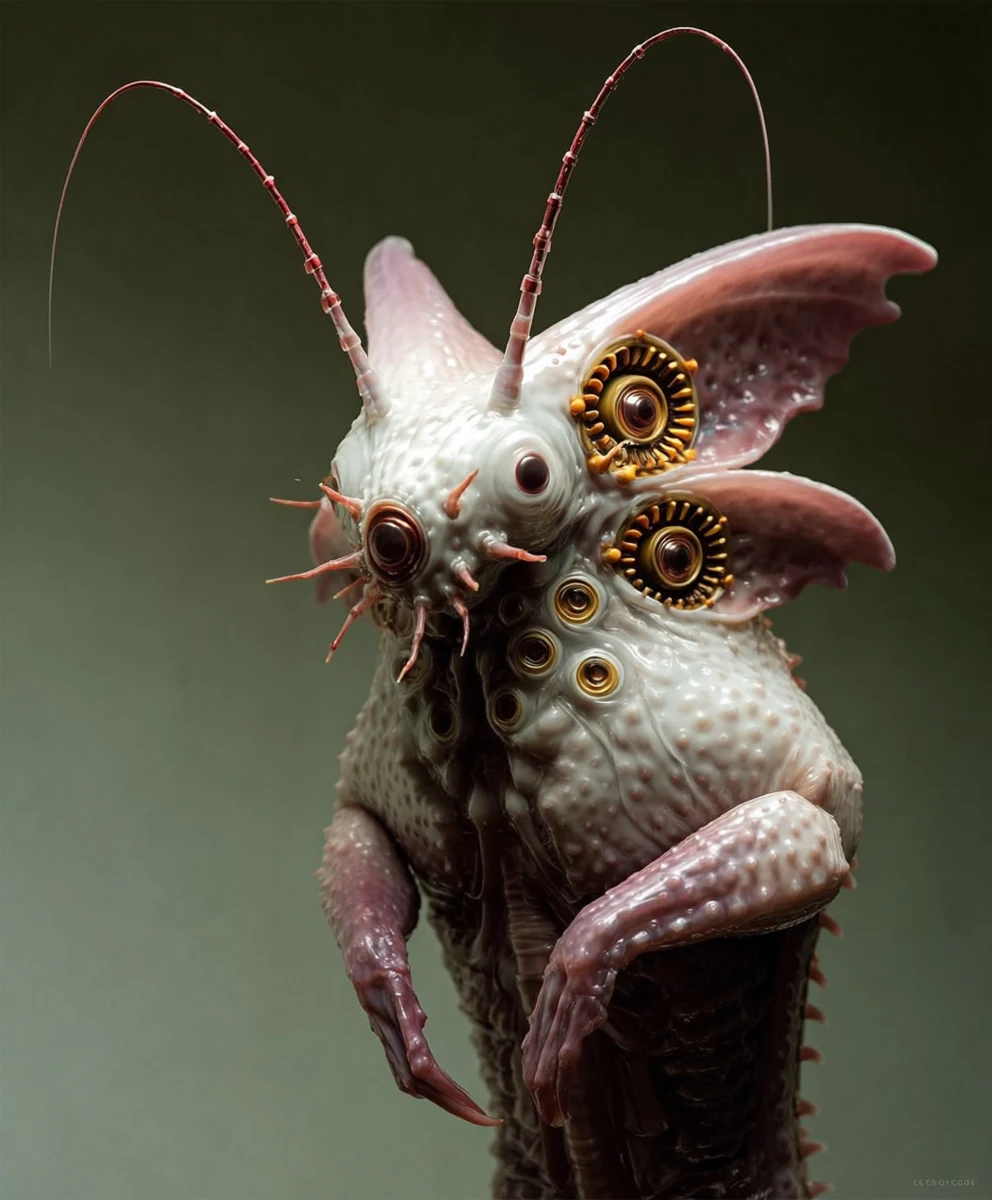
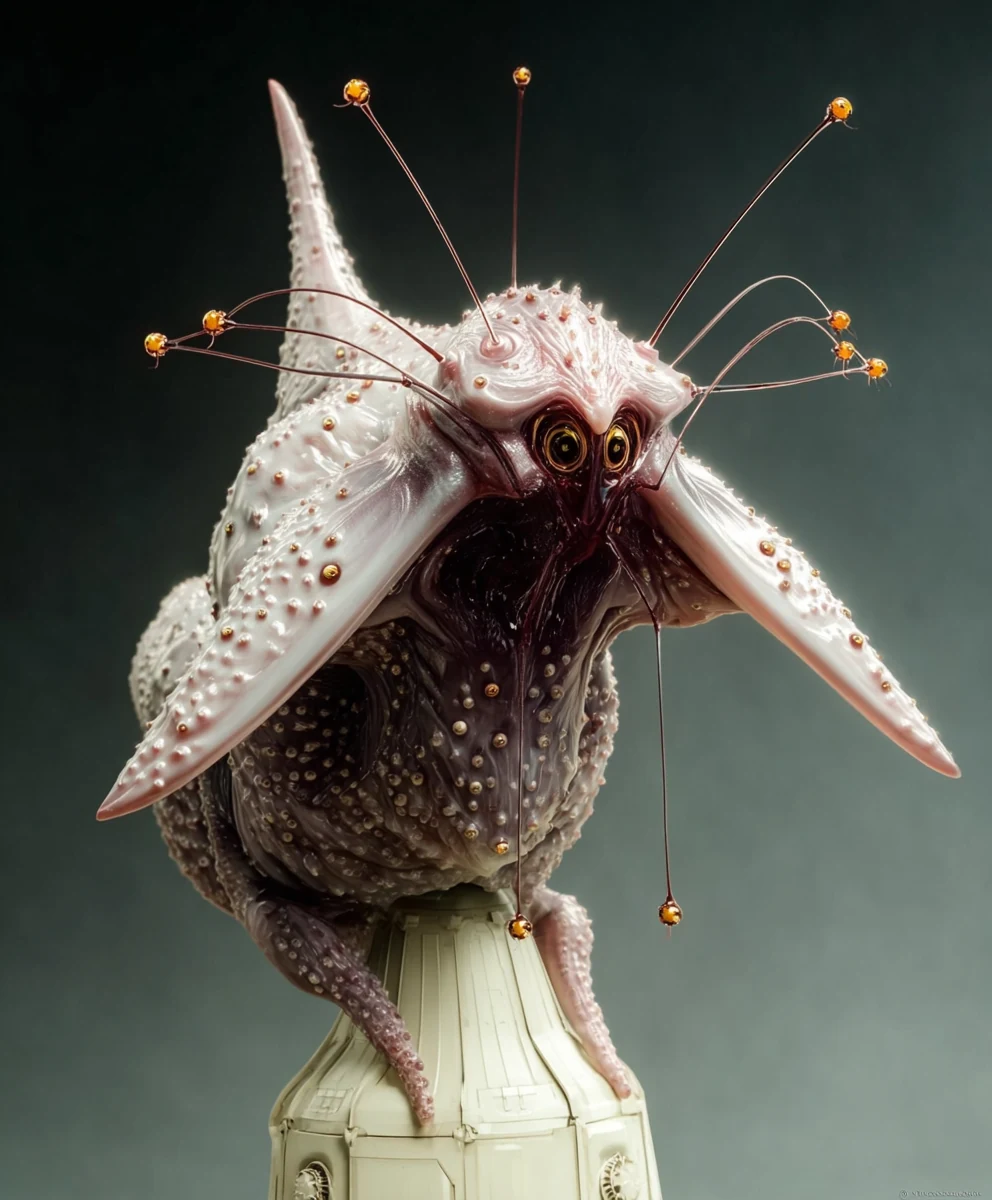
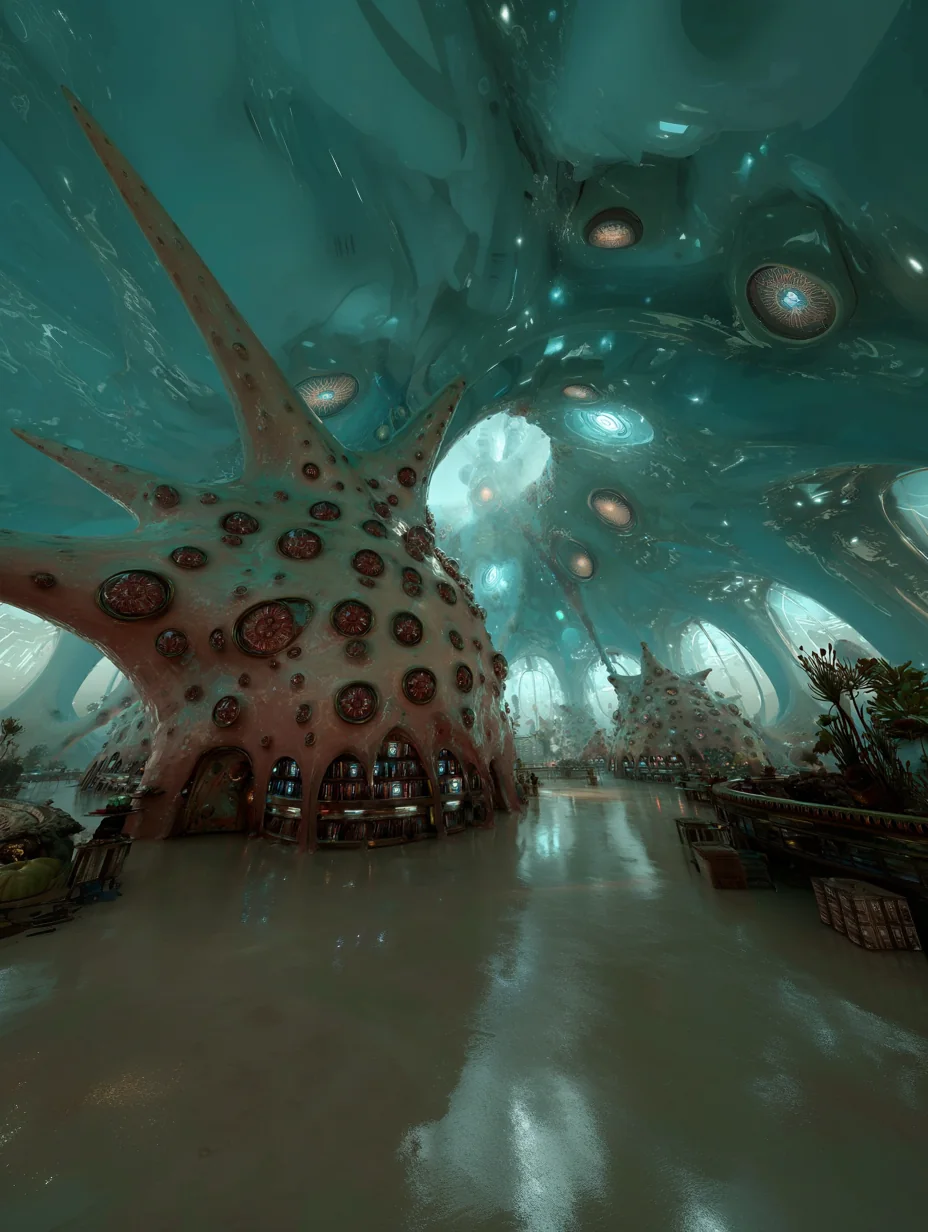
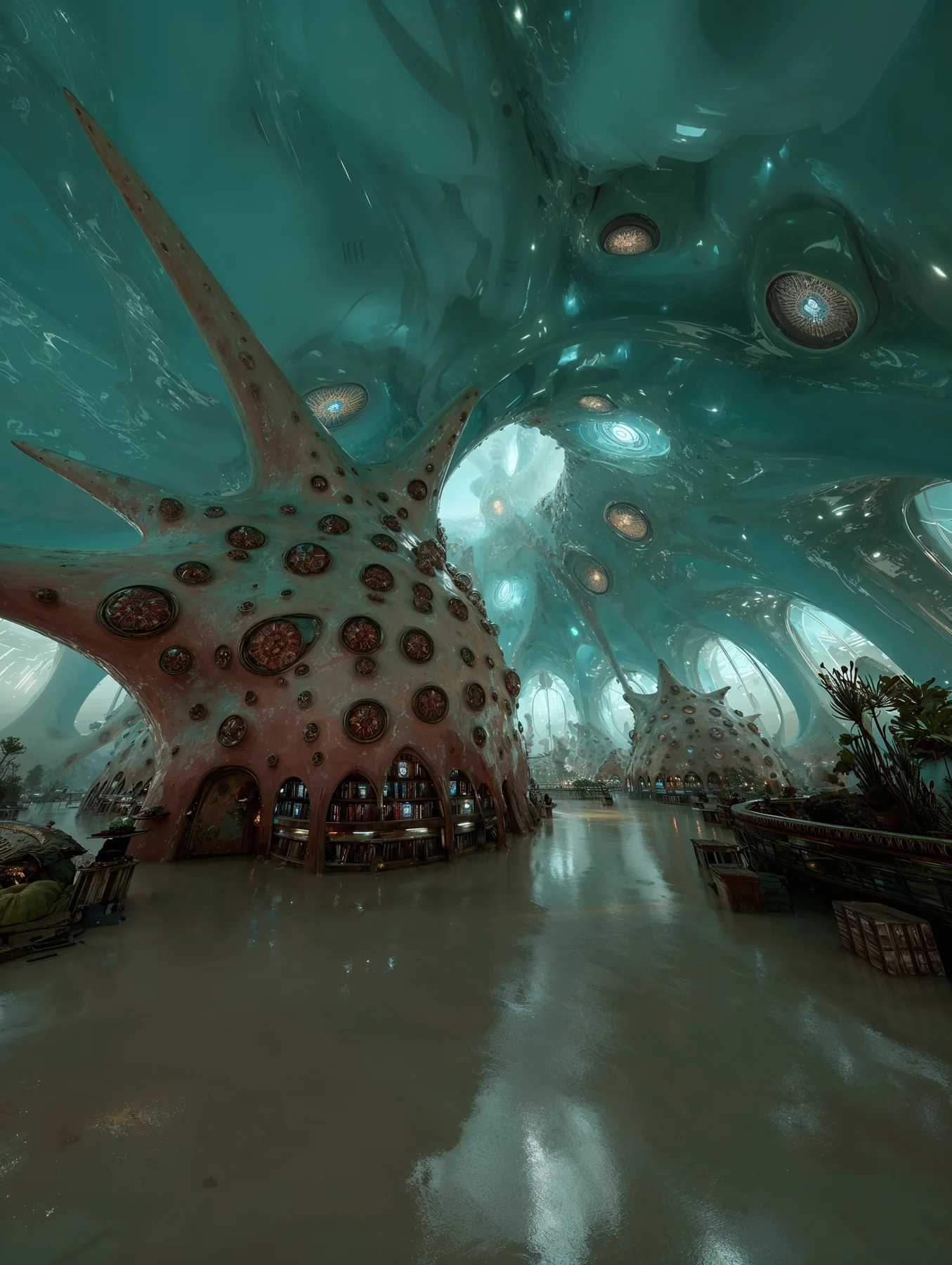
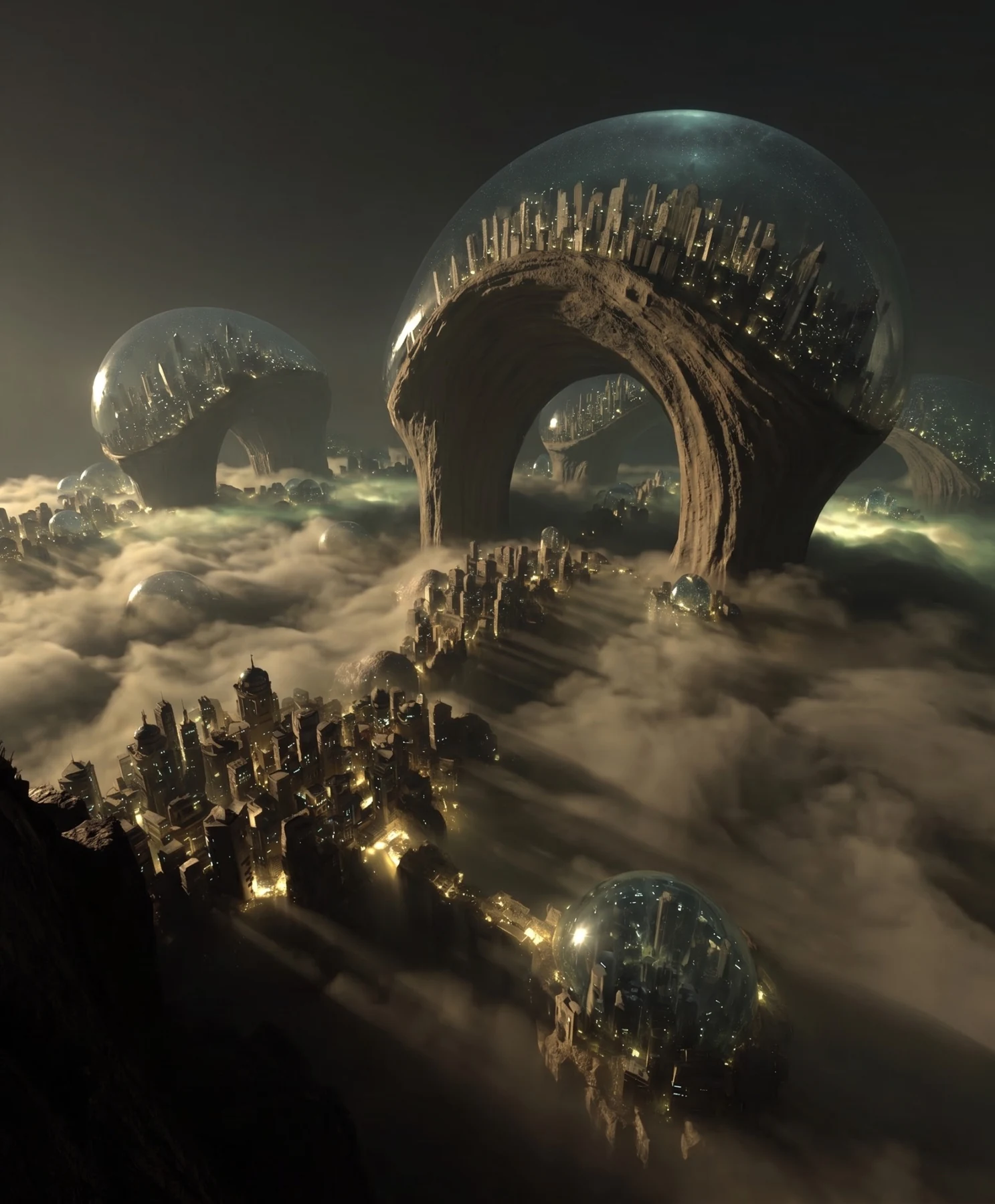
Single environment records: alien habitats, cities, thresholds and living architectural landscapes.
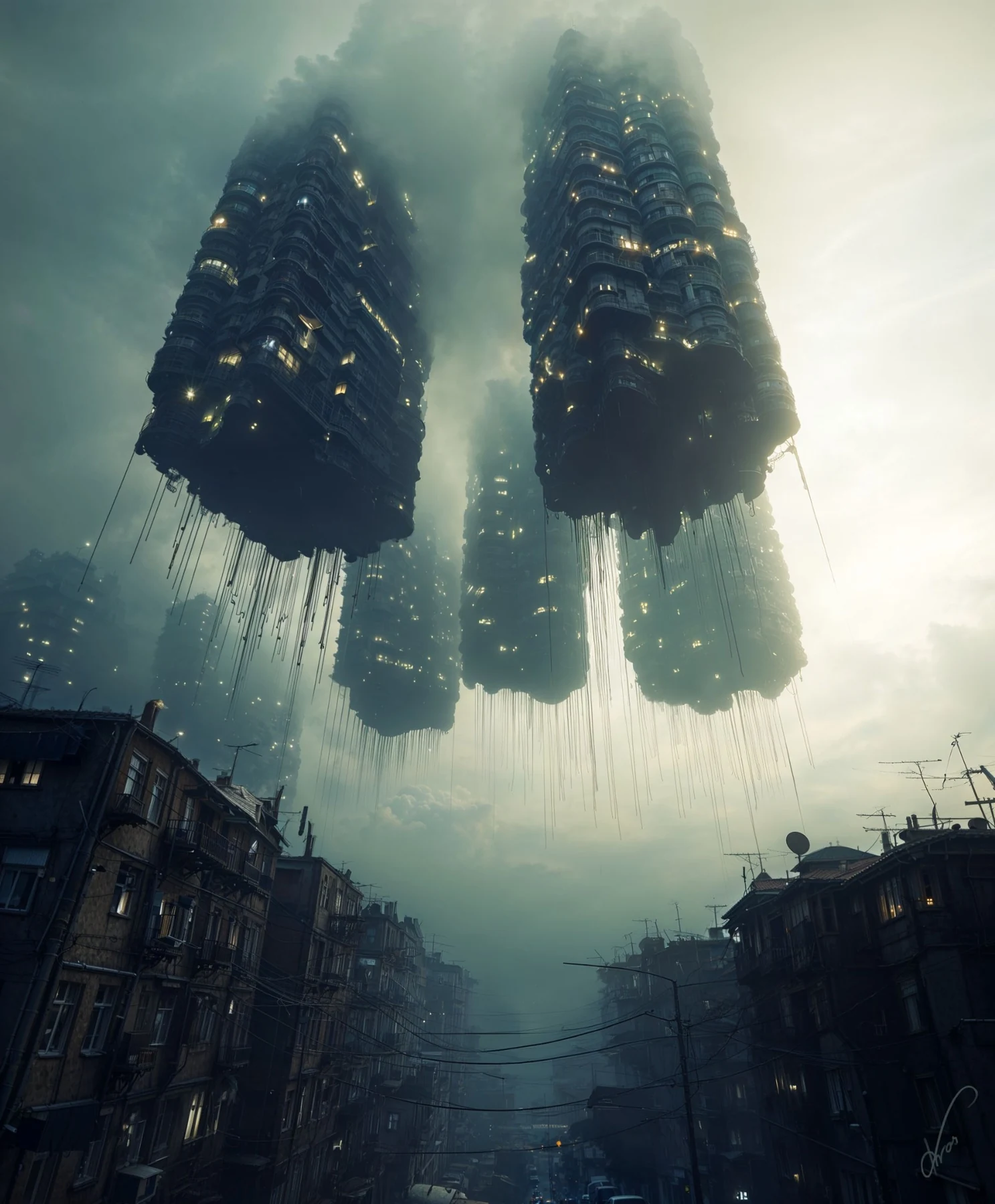
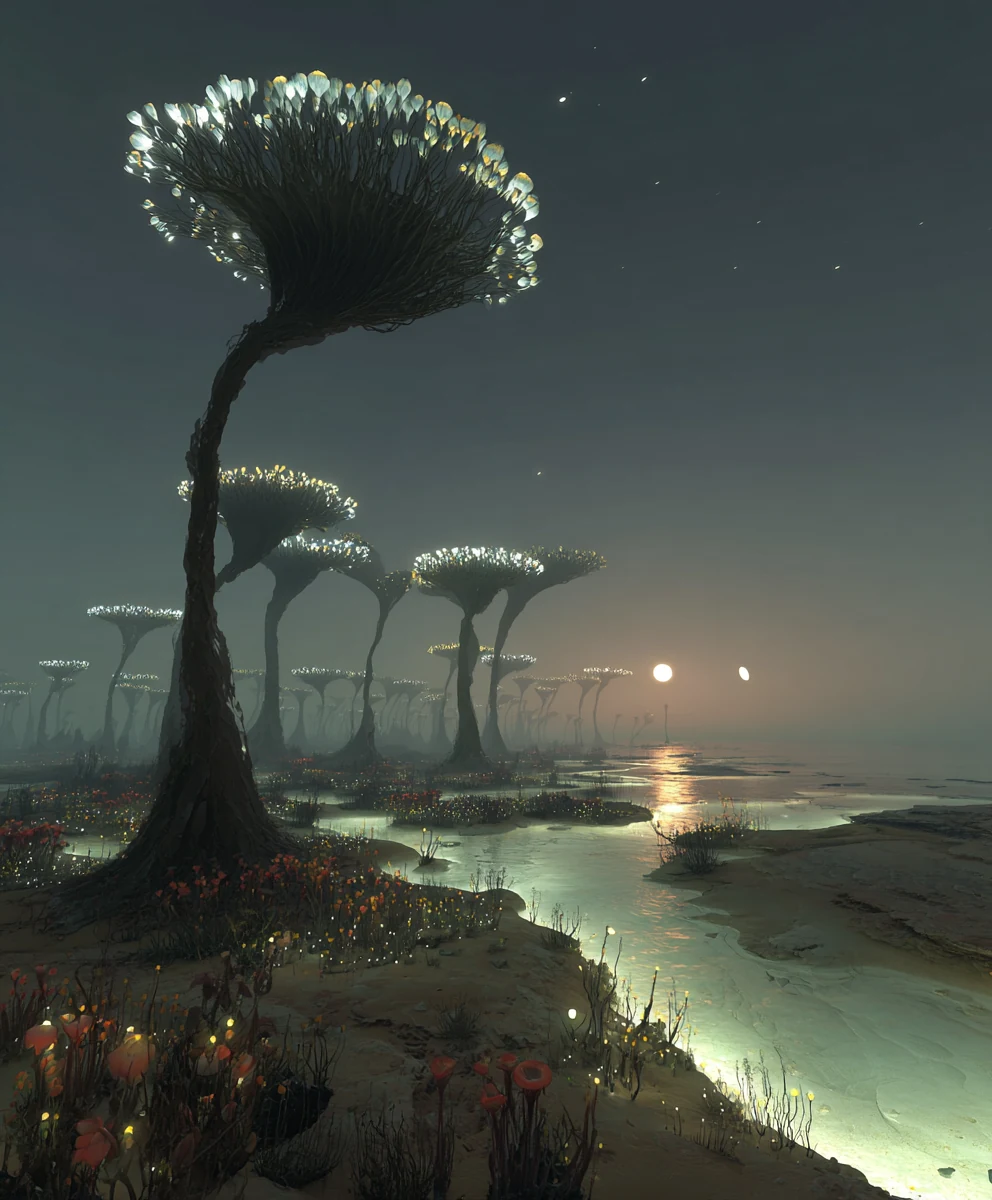
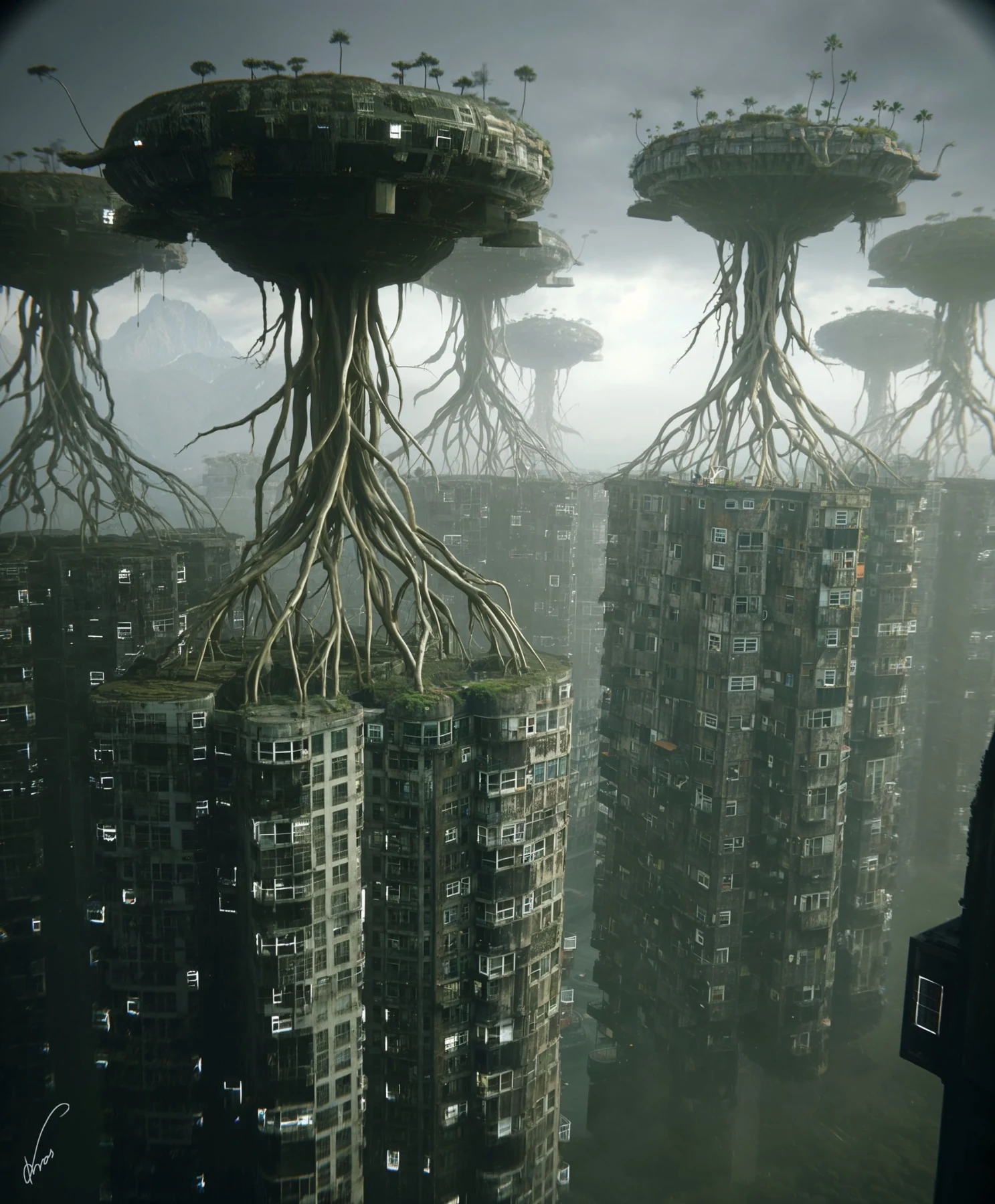
Embedded film fragments, shorts and cinematic motion records. Click a card to open the player inside the archive.
 ▶
▶
 ▶
▶
 ▶
▶
 ▶
▶
Unclassified organisms, artifacts, post-human forms and visual records that do not yet belong to a full world, species or fauna dossier.
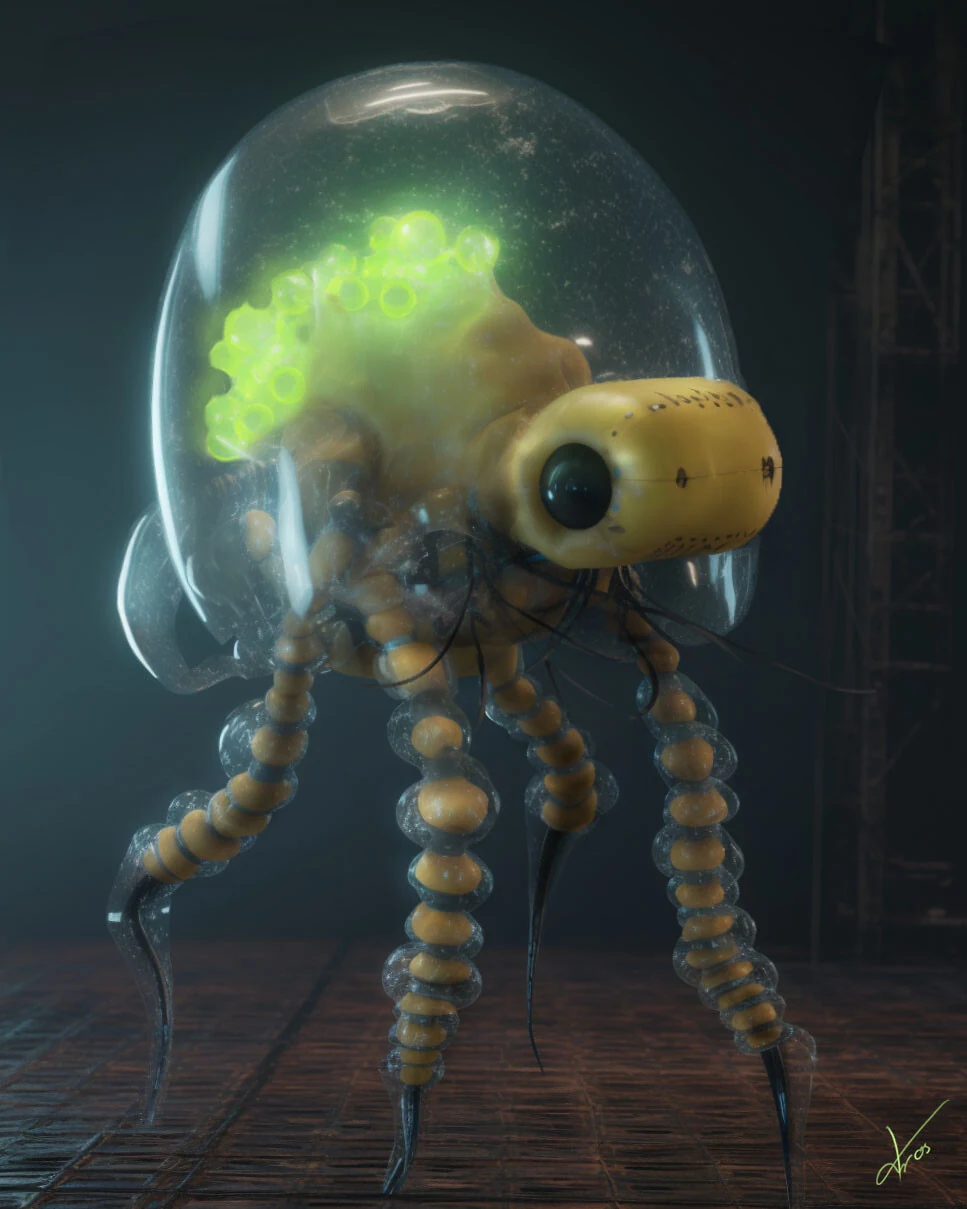
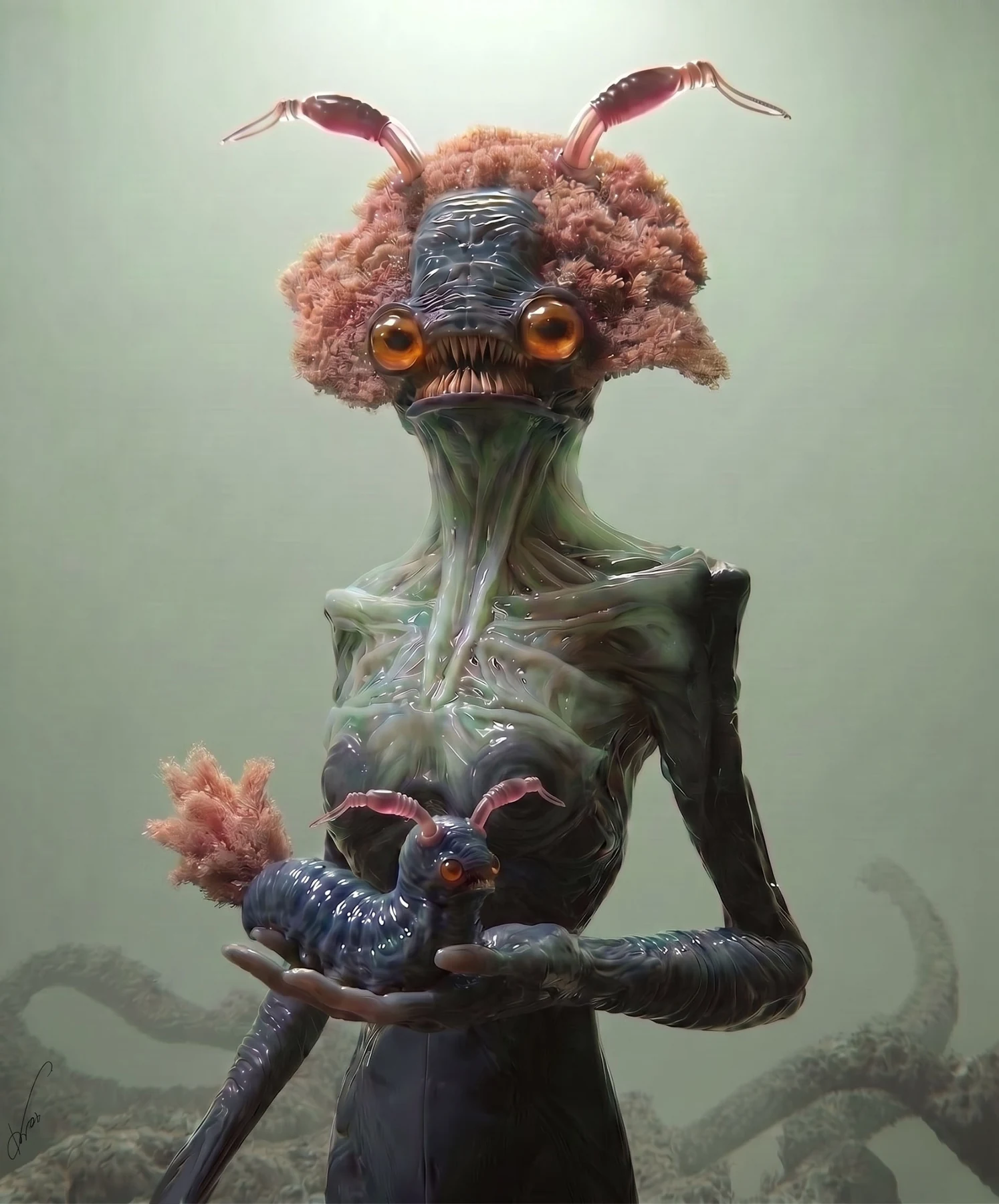
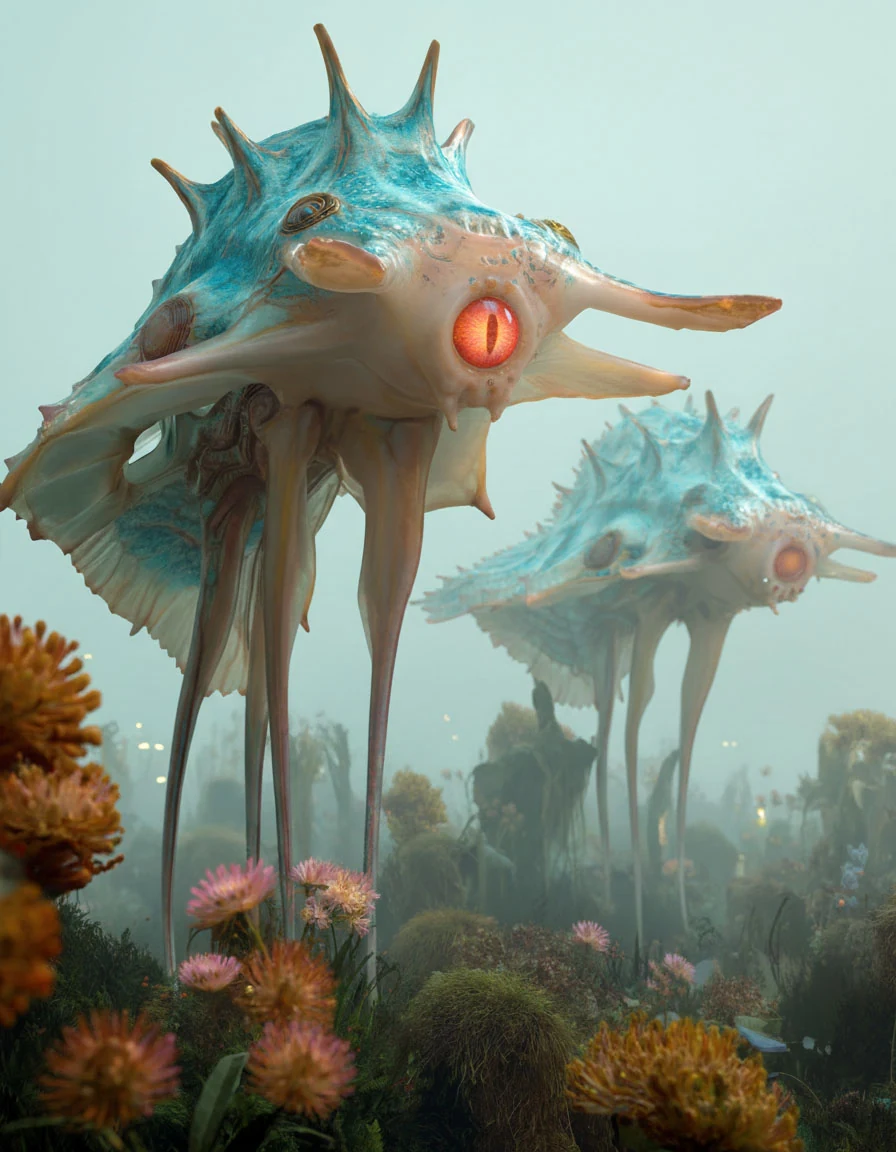
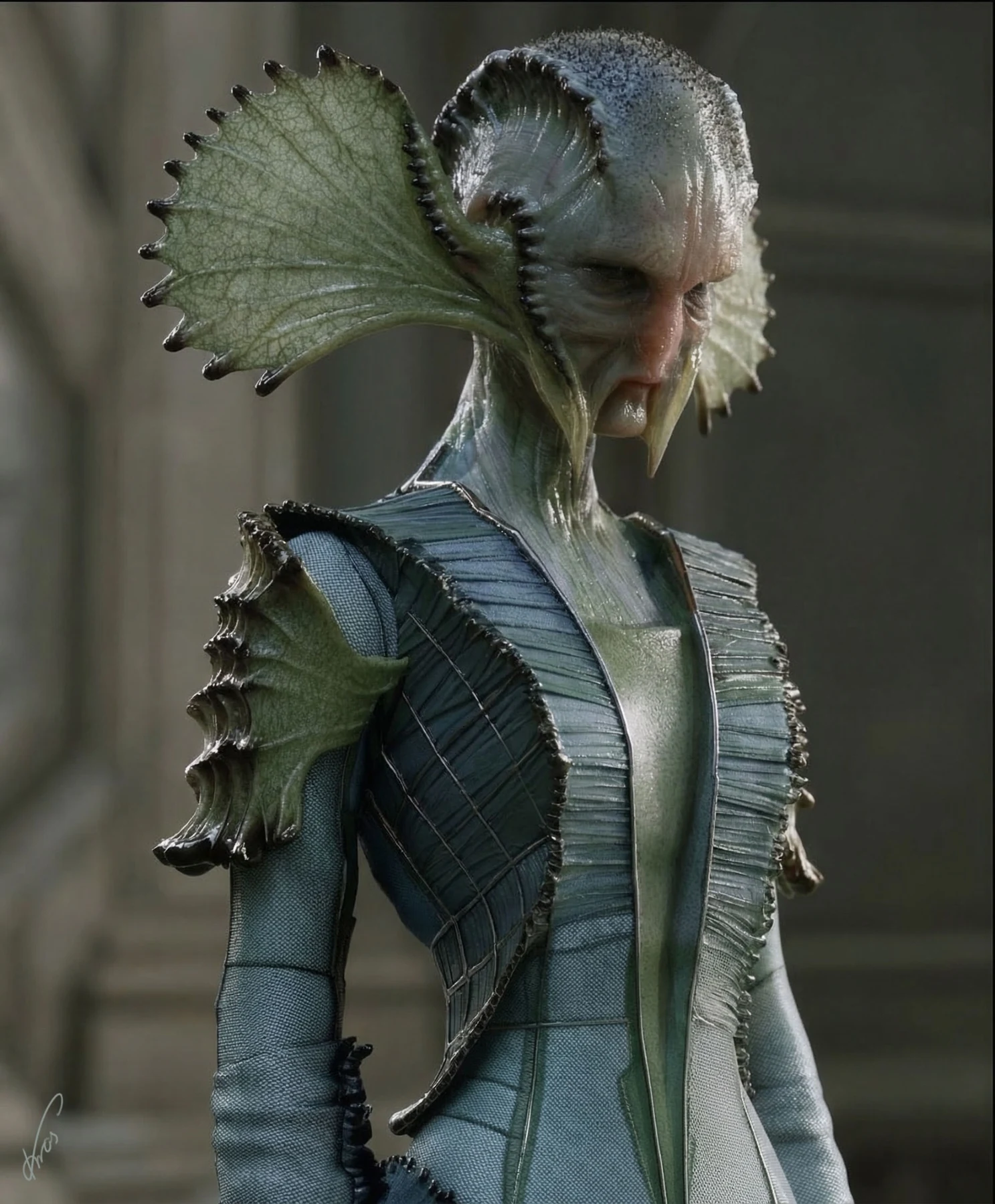
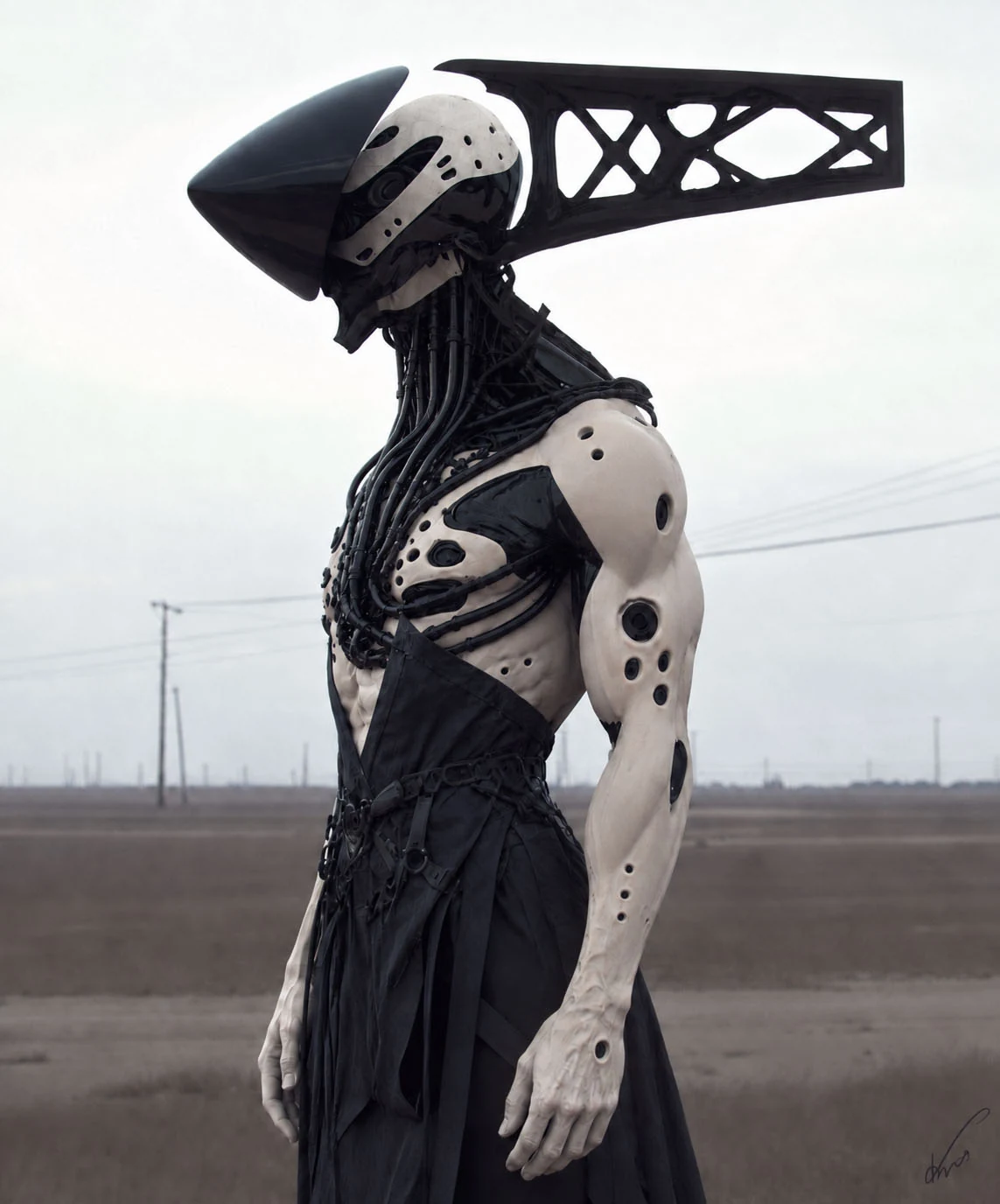
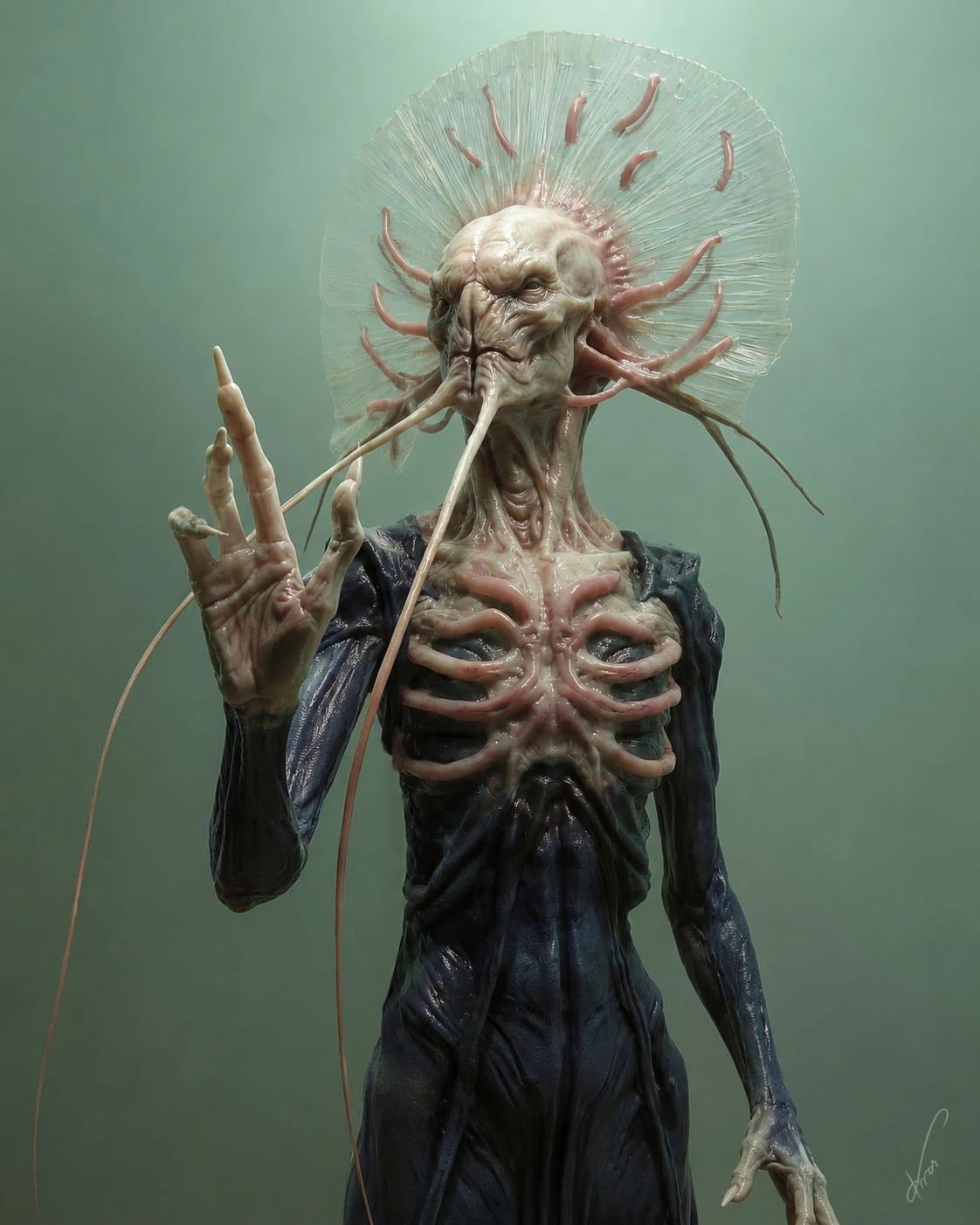
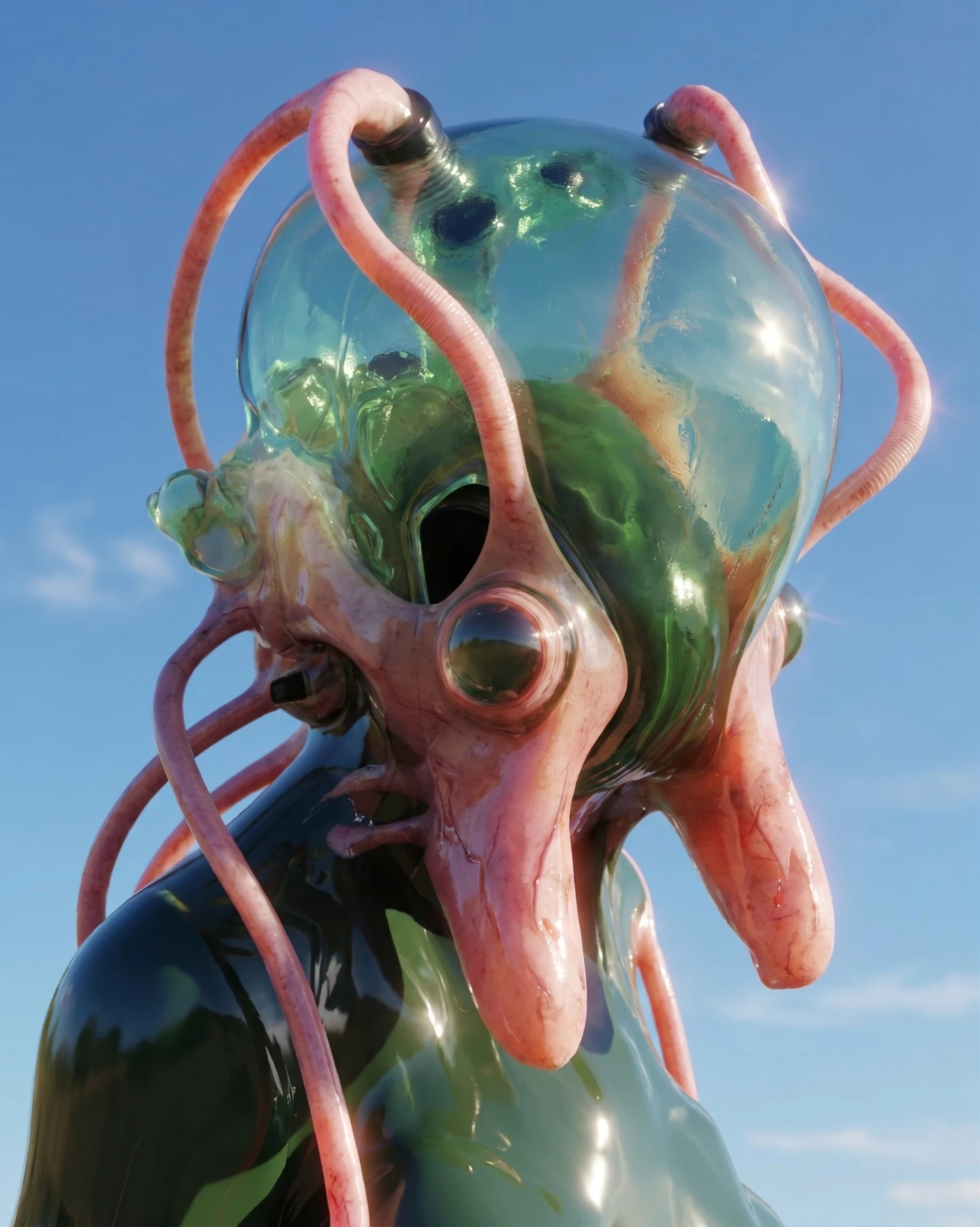
Maggie Kras is a concept artist, visual designer and creator of BioGlitch Ballet — an experimental biopunk sci-fi universe focused on alien biology, creature design, post-human forms and organic technology.
Her creative background began in professional photography, which shaped her understanding of light, composition, mood and visual storytelling. Over time, this foundation evolved into digital illustration, concept art and cinematic worldbuilding.
She developed her skills through professional courses at Gnomon School of Visual Effects, Games & Animation, focusing on Creature Design, and studied Keyframe Illustration at James Paick’s Brainstorm School. Later, she continued refining her visual language through mentorship with Marcin Rubinkowski.
Today, her work combines photography, concept design, 3D, VR sculpting, AI-assisted workflows and film-oriented storytelling. BioGlitch Ballet is the place where these disciplines merge into one evolving visual universe — strange, organic, cinematic and alive.

For inquiries, collaborations, screenings or transmissions from the archive.
Follow BioGlitch Ballet and Maggie Kras across the active archive channels.